


Low-carbohydrate/high-fat diet attenuates pressure overload-induced ventricular remodeling and dysfunction
- PMID: 18474346
- PMCID: PMC2702243
- DOI: 10.1016/j.cardfail.2007.11.003
Low-carbohydrate/high-fat diet attenuates pressure overload-induced ventricular remodeling and dysfunction
Abstract
Background: It is not known how carbohydrate and fat intake affect the development of left ventricular (LV) hypertrophy and contractile dysfunction in response to pressure overload. We hypothesized that a low-carbohydrate/high-fat diet prevents LV hypertrophy and dysfunction compared with high-carbohydrate diets.
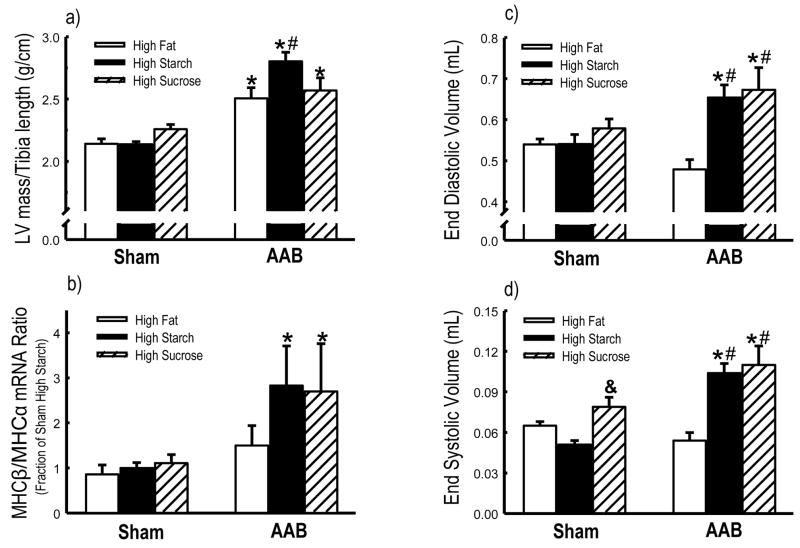
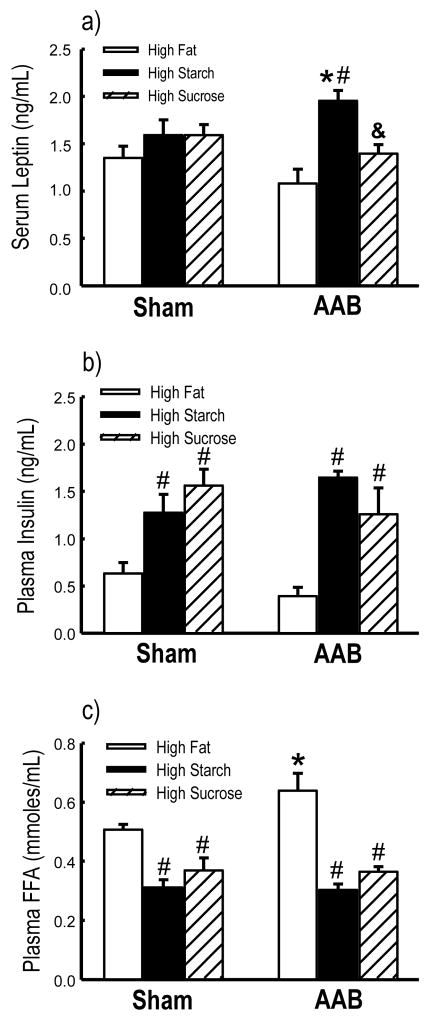
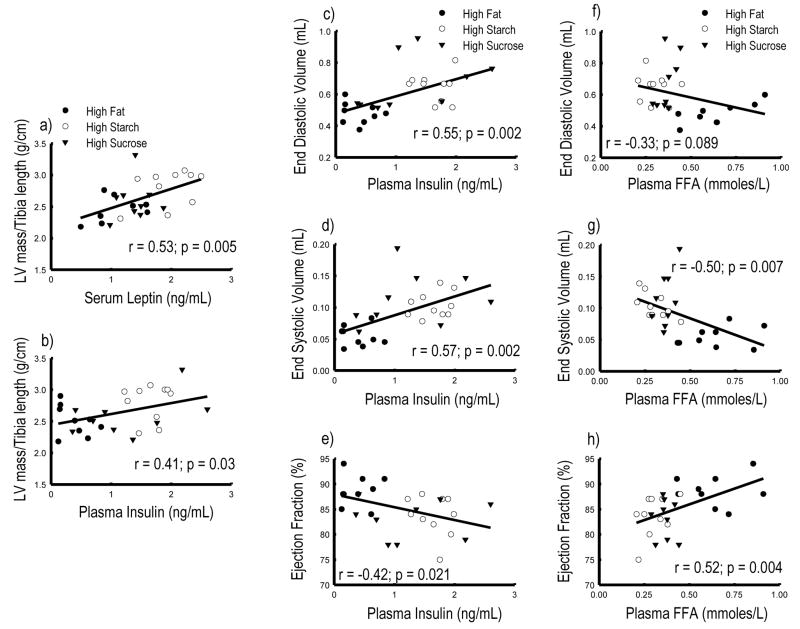
Methods and results: Rats were fed high-carbohydrate diets composed of either starch or sucrose, or a low-carbohydrate/high-fat diet, and underwent abdominal aortic banding (AAB) for 2 months. AAB increased LV mass with all diets. LV end-diastolic and systolic volumes and the ratio of the mRNA for myosin heavy chain beta/alpha were increased with both high-carbohydrate diets but not with the low-carbohydrate/high-fat diet. Circulating levels of insulin and leptin, both stimulants for cardiac growth, were lower, and free fatty acids were higher with the low-carbohydrate/high-fat diet compared with high-carbohydrate diets. Among animals that underwent AAB, LV volumes were positively correlated with insulin and LV mass correlated with leptin.
Conclusion: A low-carbohydrate/high-fat diet attenuated pressure overload-induced LV remodeling compared with high-carbohydrate diets. This effect corresponded to lower insulin and leptin concentrations, suggesting they may contribute to the development of LV hypertrophy and dysfunction under conditions of pressure overload.
Figures
References
-
- Levy D, Larson MG, Vasan RS, Kannel WB, Ho KK. The progression from hypertension to congestive heart failure. JAMA. 1996 May 22;275(20):1557–62. - PubMed
-
- Lloyd-Jones DM, Larson MG, Leip EP, et al. Lifetime risk for developing congestive heart failure: the Framingham Heart Study. Circulation. 2002 December 10;106(24):3068–72. - PubMed
-
- Lichtenstein AH, Appel LJ, Brands M, et al. Diet and lifestyle recommendations revision 2006: a scientific statement from the American Heart Association Nutrition Committee. Circulation. 2006 July 4;114(1):82–96. - PubMed
-
- Halton TL, Willett WC, Liu S, et al. Low-carbohydrate-diet score and the risk of coronary heart disease in women. N Engl J Med. 2006 November 9;355(19):1991–2002. - PubMed
Publication types
MeSH terms
Substances
Grants and funding
LinkOut - more resources
Full Text Sources
Medical
