Cognitive function over time in the Alzheimer's Disease Anti-inflammatory Prevention Trial (ADAPT): results of a randomized, controlled trial of naproxen and celecoxib
- PMID: 18474729
- PMCID: PMC2925195
- DOI: 10.1001/archneur.2008.65.7.nct70006
Cognitive function over time in the Alzheimer's Disease Anti-inflammatory Prevention Trial (ADAPT): results of a randomized, controlled trial of naproxen and celecoxib
Abstract
Background: Observational studies have shown reduced risk of Alzheimer dementia in users of nonsteroidal anti-inflammatory drugs.
Objective: To evaluate the effects of naproxen sodium and celecoxib on cognitive function in older adults.
Design: Randomized, double-masked chemoprevention trial.
Setting: Six US memory clinics.
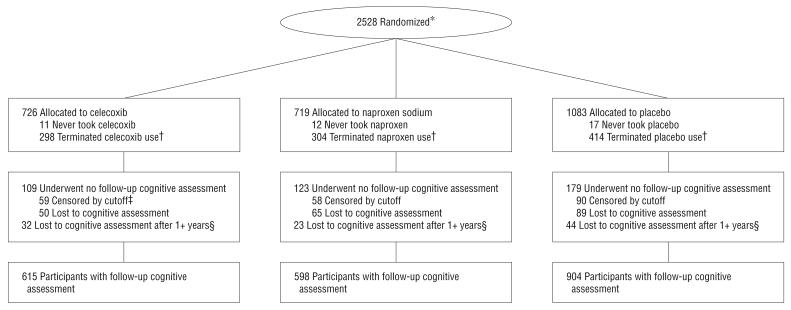
Participants: Men and women aged 70 years and older with a family history of Alzheimer disease; 2117 of 2528 enrolled had follow-up cognitive assessment.
Interventions: Celecoxib (200 mg twice daily), naproxen sodium (220 mg twice daily), or placebo, randomly allocated in a ratio of 1:1:1.5, respectively.
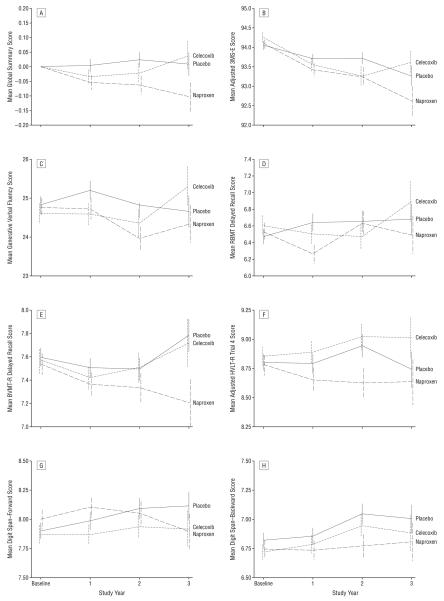
Main outcome measures: Seven tests of cognitive function and a global summary score measured annually.
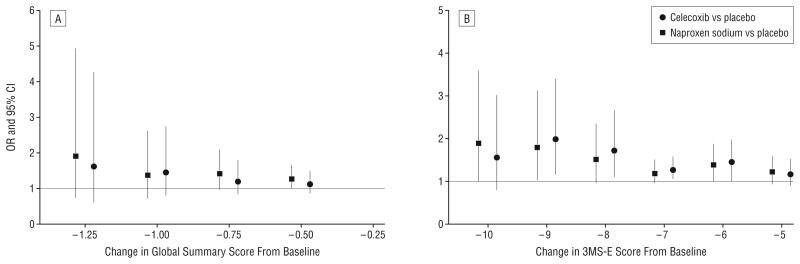
Results: Longitudinal analyses showed lower global summary scores over time for naproxen compared with placebo (- 0.05 SDs; P = .02) and lower scores on the Modified Mini-Mental State Examination over time for both treatment groups compared with placebo (- 0.33 points for celecoxib [P = .04] and - 0.36 points for naproxen [P = .02]). Restriction of analyses to measures collected from persons without dementia attenuated the treatment group differences. Analyses limited to measures obtained while participants were being issued study drugs produced results similar to the intention-to-treat analyses.
Conclusions: Use of naproxen or celecoxib did not improve cognitive function. There was weak evidence for a detrimental effect of naproxen.
Trial registration: ClinicalTrials.gov NCT00007189.
Figures
Comment in
-
Can treatment with nonsteroidal anti-inflammatory drugs protect from dementia?Arch Neurol. 2009 Apr;66(4):539-40; author reply 540. doi: 10.1001/archneurol.2009.52. Arch Neurol. 2009. PMID: 19364945 No abstract available.
References
-
- Szekely CA, Thorne JE, Zandi PP, et al. Nonsteroidal anti-inflammatory drugs for the prevention of Alzheimer's disease: a systematic review. Neuroepidemiology. 2004;23(4):159–169. - PubMed
-
- Rozzini R, Ferrucci L, Losonczy K, et al. Protective effect of chronic NSAID use on cognitive decline in older persons. J Am Geriatr Soc. 1996;44(9):1025–1029. - PubMed
-
- Prince M, Rabe-Hesketh S, Brennan P. Do antiarthritic drugs decrease the risk for cognitive decline? an analysis based on data from the MRC treatment trial of hypertension in older adults. Neurology. 1998;50(2):374–379. - PubMed
-
- Goodwin JS, Regan M. Cognitive dysfunction associated with naproxen and ibuprofen in the elderly. Arthritis Rheum. 1982;25(8):1013–1015. - PubMed
-
- Karplus TM, Saag KG. Nonsteroidal anti-inflammatory drugs and cognitive function: do they have a beneficial or deleterious effect? Drug Saf. 1998;19(6):427–433. - PubMed
Publication types
MeSH terms
Substances
Associated data
Grants and funding
LinkOut - more resources
Full Text Sources
Other Literature Sources
Medical