


Mutations in the C-terminus of the X protein of hepatitis B virus regulate Wnt-5a expression in hepatoma Huh7 cells: cDNA microarray and proteomic analyses
- PMID: 18477650
- PMCID: PMC2443277
- DOI: 10.1093/carcin/bgn111
Mutations in the C-terminus of the X protein of hepatitis B virus regulate Wnt-5a expression in hepatoma Huh7 cells: cDNA microarray and proteomic analyses
Abstract
Background: The hepatitis B virus x gene (HBx) is a promiscuous transactivator implicated in the development of hepatocellular carcinoma (HCC). The present study was designed to investigate the molecular events regulated by HBx.
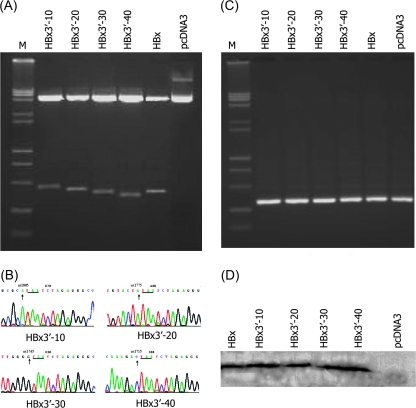
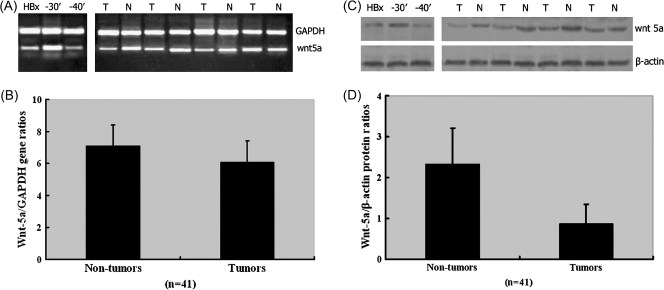
Methods: Genomic and proteomic expression profiling was performed in Huh7 HCC cells transfected with HBx mutants with a C-terminal deletion. The gene and protein expression of wingless-type murine-mammary-tumour virus (MMTV) integration site family, member 5A (Wnt-5a) was validated by analyses of reverse transcription-polymerase chain reaction (RT-PCR), real-time RT-PCR, western blot and immunohistochemistry.
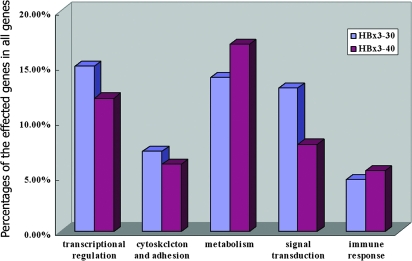
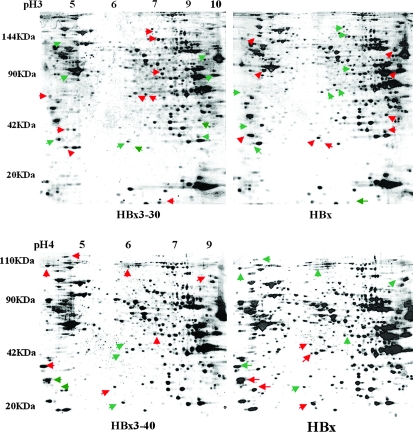
Results: Differentially expressed genes and proteins were found in the transfected Huh7 HCC cells; most of them were involved in transcriptional regulation, although others including oncogenes or tumor suppressor genes, and molecules involved in cell junctions, signal transduction pathways, metabolism or the immune response were also observed. The expression of the Wnt-5a gene was elevated >10-fold in Huh7 cells transfected with the HBx3'-30 amino acid deletion mutant. However, the expression was downregulated by the transfection with the HBx3'-40 amino acid deletion mutant. The changes in Wnt-5a expression were also observed in human HCC tissues, compared with corresponding non-cancerous liver tissues. A negative correlation was found between the expression of Wnt-5a and HBx COOH mutations in HCC tissues.
Conclusions: HBx mutants may participate in the development and progression of HCC, at least in part through the Wnt-5a pathway.
Figures
References
-
- Farazi PA, et al. Hepatocellular carcinoma pathogenesis: from genes to environment. Nat. Rev. Cancer. 2006;6:674–687. - PubMed
-
- Thorgeirsson SS, et al. Molecular pathogenesis of human hepatocellular carcinoma. Nat. Genet. 2002;31:339–346. - PubMed
-
- Feitelson MA, et al. Hepatitis B virus integration, fragile sites, and hepatocarcinogenesis. Cancer Lett. 2007;252:157–170. - PubMed
-
- Sirma H, et al. Hepatitis B virus X mutants, present in hepatocellular carcinoma tissue abrogate both the antiproliferative and transactivation effects of HBx. Oncogene. 1999;18:4848–4859. - PubMed
Publication types
MeSH terms
Substances
Grants and funding
LinkOut - more resources
Full Text Sources
Other Literature Sources
Medical
