


The effect of ambient air pollution on respiratory health of school children: a panel study
- PMID: 18479529
- PMCID: PMC2427023
- DOI: 10.1186/1476-069X-7-16
The effect of ambient air pollution on respiratory health of school children: a panel study
Abstract
Background: Adverse respiratory effects of particulate air pollution have been identified by epidemiological studies. We aimed to examine the health effects of ambient particulate air pollution from wood burning on school-age students in Christchurch, New Zealand, and to explore the utility of urine and exhaled breath condensate biomarkers of exposure in this population.
Methods: A panel study of 93 male students (26 with asthma) living in the boarding house of a metropolitan school was undertaken in the winter of 2004. Indoor and outdoor pollution data was continuously monitored. Longitudinal assessment of lung function (FEV1 and peak flow) and symptoms were undertaken, with event studies of high pollution on biomarkers of exposure (urinary 1-hydroxypyrene) and effect (exhaled breath condensate (EBC) pH and hydrogen peroxide concentration).
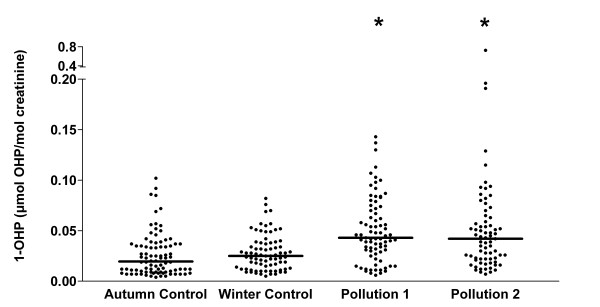
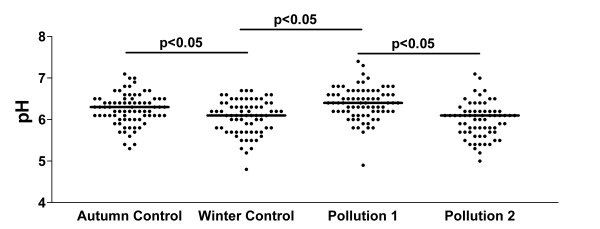
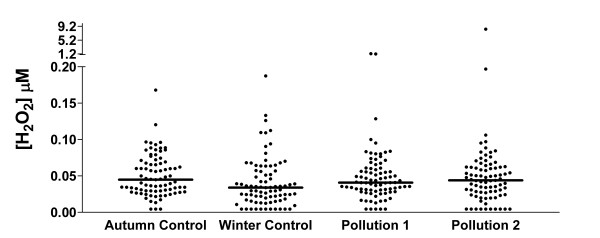
Results: Peak levels of air pollution were associated with small but statistically significant effects on lung function in the asthmatic students, but not healthy students. No significant effect of pollution could be seen either on airway inflammation and oxidative stress either in healthy students or students with asthma. Minor increases in respiratory symptoms were associated with high pollution exposure. Urinary 1-hydroxypyrene levels were raised in association with pollution events by comparison with low pollution control days.
Conclusion: There is no significant effect of ambient wood-smoke particulate air pollution on lung function of healthy school-aged students, but a small effect on respiratory symptoms. Asthmatic students show small effects of peak pollution levels on lung function. Urinary 1-hydroxypyrene shows potential as a biomarker of exposure to wood smoke in this population; however measurement of EBC pH and hydrogen peroxide appears not to be useful for assessment of population health effects of air pollution.Some of the data presented in this paper has previously been published in Kingham and co-workers Atmospheric Environment, 2006 Jan; 40: 338-347 (details of pollution exposure), and Cavanagh and co-workers Sci Total Environ. 2007 Mar 1;374(1):51-9 (urine hydroxypyrene data).
Figures
References
-
- Anonymous Health effects of outdoor air pollution. Committee of the Environmental and Occupational Health Assembly of the American Thoracic Society. Am J Respir Crit Care Med. 1996;153:3–50. - PubMed
-
- Janssen NA, Hoek G, Brunekreef B, Harssema H, Mensink I, Zuidhof A. Personal sampling of particles in adults: relation among personal, indoor, and outdoor air concentrations. Am J Epidemiol. 1998;147:537–547. - PubMed
-
- Janssen NA, Hoek G, Harssema H, Brunekreef B. Personal sampling of airborne particles: method performance and data quality. J Expo Anal Environ Epidemiol. 1998;8:37–49. - PubMed
-
- Kingham S, Durand M, Aberkane T, Harrison J, Wilson JG, Epton M. Winter comparison of TEOM, MiniVol and DustTrak PM10 monitors in a woodsmoke environment. Atmos Environ. 2006;40:338–347.
Publication types
MeSH terms
Substances
LinkOut - more resources
Full Text Sources
Medical
