


Improvement of short-term memory performance in aged beagles by a nutraceutical supplement containing phosphatidylserine, Ginkgo biloba, vitamin E, and pyridoxine
- PMID: 18481547
- PMCID: PMC2275342
Improvement of short-term memory performance in aged beagles by a nutraceutical supplement containing phosphatidylserine, Ginkgo biloba, vitamin E, and pyridoxine
Abstract
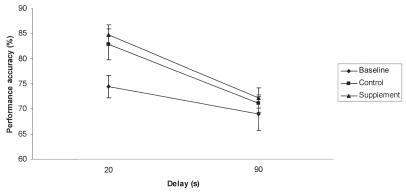
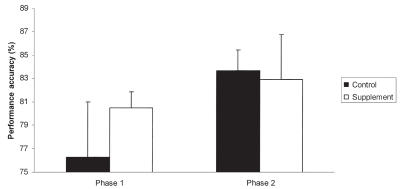
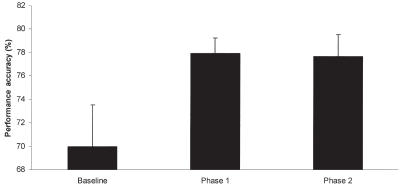
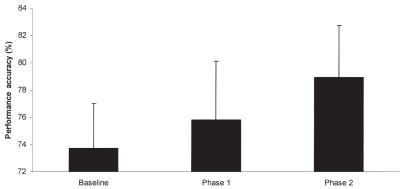
Aged dogs demonstrate cognitive decline that is linked to brain aging. The purpose of the present study was to examine if a commercially available nutraceutical supplement that may be neuroprotective and contains phosphatidylserine, Ginkgo biloba, vitamin E, and pyridoxine could improve cognitive function in aged beagles. Nine aged beagles were tested on performance on a delayed-non-matching-to-position task, which is a neuropsychological test of short-term visuospatial memory. All subjects were tested on 5 baseline sessions; then, to assess the supplement, a crossover design was used in which 1 group received the supplement and the other a control substance in the 1st phase, with treatment conditions being reversed in the 2nd phase. Performance accuracy was significantly improved in supplemented dogs compared with control dogs and the effect was long lasting. These findings suggest that the nutraceutical supplement can improve memory in aged dogs.
Amélioration de la performance de la mémoire à court terme chez des Beagle âgés par un supplément nutraceutique contenant de la phosphatidylsérine, du Ginkgo biloba, de la vitamine E et de la pyridoxine. Les chiens âgés démontrent un déclin cognitif qui est lié au vieillissement du cerveau. La présente étude avait pour but d’examiner si un supplément nutraceutique disponible dans le commerce, qui peut fournir une neuroprotection et contient de la phosphatidylsérine, du Ginkgo biloba, de la vitamine E et de la pyridoxine, pourrait améliorer la fonction cognitive chez des Beagle âgés. Neuf Beagle âgés ont été évalués pour leur performance lors d’une tâche d’appariement différé sans correspondance, qui est un test neuropsychologique de la mémoire visuospatiale à court terme. Tous les sujets ont été testés en fonction de 5 séances de référence; puis, pour évaluer le supplément, un schéma croisé a été utilisé selon lequel un groupe a reçu le supplément et l’autre une substance contrôlée dans la première phase, avec renversement des conditions de traitement dans la deuxième phase. La performance a été significativement améliorée chez les chiens ayant pris le supplément comparativement aux chiens témoins et l’effet a été de longue durée. Ces constatations suggèrent que le supplément nutraceutique peut améliorer la mémoire chez les chiens âgés.
(Traduit par Isabelle Vallières)
Figures
References
-
- Head E, McCleary R, Hahn FF, Milgram NW, Cotman CW. Region-specific age at onset of beta-amyloid in dogs. Neurobiol Aging. 2000;21:89–96. - PubMed
-
- Rofina J, van Andel I, van Ederen AM, van Asten AJAM, Wilhelm J, Gruys E. Canine counterpart of senile dementia of the Alzheimer type: amyloid plaques near capillaries but lack of spatial relationship with activated microglia and macrophages. Amyloid. 2003;10:86–96. - PubMed
-
- Nielson JC, Hart BL, Cliff KD, Ruehl WW. Prevalence of behavioral changes associated with age-related cognitive cognitive impairment in dogs. J Am Vet Med Assoc. 2001;218:1787–1791. - PubMed
-
-
Hills Pet Nutrition, U.S. Marketing Research Summary, Omnibus Study on Aging Pets, Nov. 2000.
-
-
- Osella MC, Re G, Odore R, et al. Canine cognitive dysfunction syndrome; Prevalence, clinical signs and treatment with a neuroprotective nutraceutical. Appl Anim Behav Sci. 2007;105:297–310.
Publication types
MeSH terms
Substances
LinkOut - more resources
Full Text Sources
Other Literature Sources
Medical