Differences in baseline characteristics and outcomes at 1- and 2-year follow-up of cancer survivors accrued via self-referral versus cancer registry in the FRESH START Diet and exercise trial
- PMID: 18483353
- PMCID: PMC3842166
- DOI: 10.1158/1055-9965.EPI-07-0705
Differences in baseline characteristics and outcomes at 1- and 2-year follow-up of cancer survivors accrued via self-referral versus cancer registry in the FRESH START Diet and exercise trial
Abstract
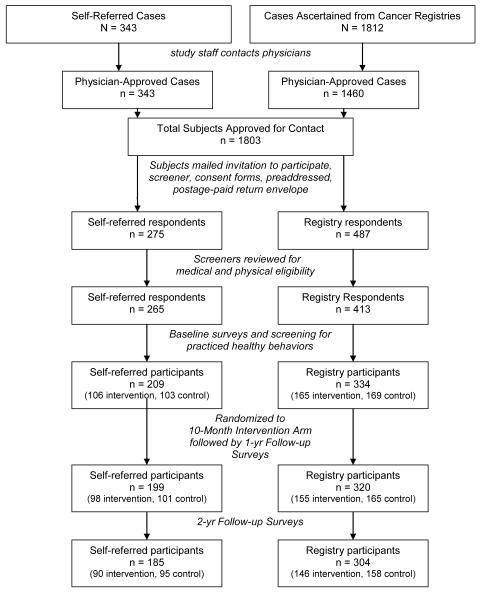
Participant accrual to research studies is a challenge; oftentimes, advertisements are used to supplement cases ascertained through clinic caseloads and cancer registries. It is unknown, however, if cases ascertained through these two sources differ. In this study, we compared self-referred (n = 209) and registry-ascertained (n = 334) participants enrolled in FRESH START, a randomized controlled trial promoting a healthy diet and increased exercise among breast and prostate cancer survivors. The two groups were compared on baseline characteristics, adherence, attrition, and outcomes by study arm. Compared with participants enrolled from registries, self-referrals were significantly younger (54.1 +/- 10.4 versus 58.7 +/- 10.7 years), more likely to have later-stage disease and to have received chemotherapy (40% versus 19%), and more likely to report "fighting spirit" coping styles (50% versus 30%), lower quality-of-life (88.2 +/- 15.1 versus 92.0 +/- 12.9), fewer comorbid conditions (1.87 +/- 1.60 versus 2.24 +/- 1.78), and lower consumption of five or more daily servings of fruits and vegetables (35% versus 45%; P values <0.05). Although no differences in behavior change were observed between self-referred and registry-ascertained cases assigned to the tailored intervention arm, this was not the case within the attention control arm. Among those who received the attention control intervention of standardized materials in the public domain, self-referred versus registry-ascertained participants showed significantly greater increases in exercise at 1-year follow-up and significantly greater increases in fruit and vegetable consumption at both 1- and 2-year follow-up (P values <0.05). Several differences exist between self-referred and registry-ascertained participants, including motivation to respond to standardized educational materials, which appears significantly greater in self-referred populations.
Figures
References
-
- Fost NF, Levine RJ. The dysregulation of human subjects research. JAMA. 2007;298(18):2196–8. - PubMed
-
- Elting LS, Cooksley C, Bekele BN, et al. Generalizability of cancer clinical trial results: prognostic differences between participants and nonparticipants. Cancer. 2006;106:2452–8. - PubMed
-
- Beskow LM, Millikan RC, Sandler RS, Godley PA, Weiner BJ, Weinberger M. The effect of physician permission versus notification on research recruitment through cancer registries (United States) Cancer Causes Contr. 2006;17:315–23. - PubMed
-
- Scholle SH, Peele PB, Kelleher KJ, Frank E, Jansen-McWilliams L, Kupfer D. Effect of different recruitment sources on the composition of a bipolar disorder case registry. Soc Psychiatry Psychiatr Epidemiol. 2000;35:220–7. - PubMed
Publication types
MeSH terms
Grants and funding
LinkOut - more resources
Full Text Sources
Medical