


Pilot study of vaccination with recombinant CEA-MUC-1-TRICOM poxviral-based vaccines in patients with metastatic carcinoma
- PMID: 18483372
- PMCID: PMC2673097
- DOI: 10.1158/1078-0432.CCR-08-0126
Pilot study of vaccination with recombinant CEA-MUC-1-TRICOM poxviral-based vaccines in patients with metastatic carcinoma
Abstract
Purpose: Poxviral vectors have a proven safety record and can be used to incorporate multiple transgenes. Prior clinical trials with poxviral vaccines have shown that immunologic tolerance to self-antigens can be broken. Carcinoembryonic antigen (CEA) and MUC-1 are overexpressed in a substantial proportion of common solid carcinomas. The primary end point of this study was vaccine safety, with immunologic and clinical responses as secondary end points.
Experimental design: We report here a pilot study of 25 patients treated with a poxviral vaccine regimen consisting of the genes for CEA and MUC-1, along with a triad of costimulatory molecules (TRICOM; composed of B7.1, intercellular adhesion molecule 1, and lymphocyte function-associated antigen 3) engineered into vaccinia (PANVAC-V) as a prime vaccination and into fowlpox (PANVAC-F) as a booster vaccination.
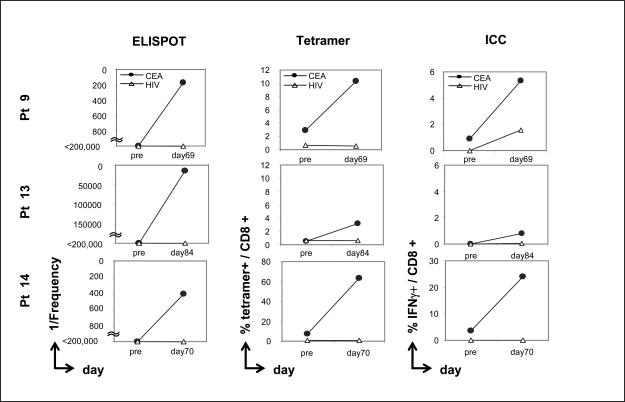
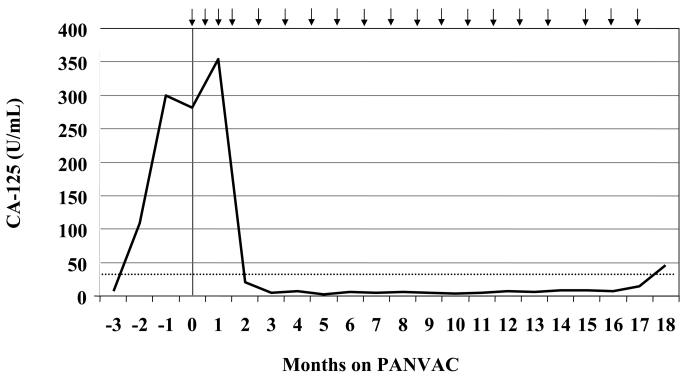
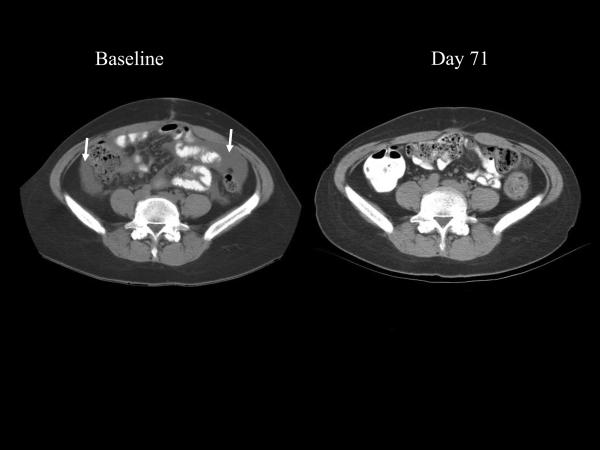
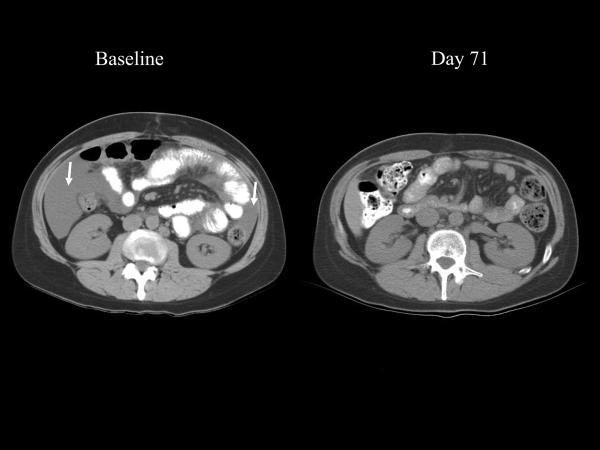
Results: The vaccine was well tolerated. Apart from injection-site reaction, no grade > or =2 toxicity was seen in more than 2% of the cycles. Immune responses to MUC-1 and/or CEA were seen following vaccination in 9 of 16 patients tested. A patient with clear cell ovarian cancer and symptomatic ascites had a durable (18-month) clinical response radiographically and biochemically, and one breast cancer patient had a confirmed decrease of >20% in the size of large liver metastasis.
Conclusions: This vaccine strategy seems to be safe, is associated with both CD8 and CD4 immune responses, and has shown evidence of clinical activity. Further trials with this agent, either alone or in combination with immunopotentiating and other therapeutic agents, are warranted.
Figures
References
-
- Pantuck AJ, van Ophoven A, Gitlitz BJ, et al. Phase I trial of antigen-specific gene therapy using a recombinant vaccinia virus encoding MUC-1 and IL-2 in MUC-1-positive patients with advanced prostate cancer. J Immunother. 2004;27:240–53. - PubMed
-
- Marshall JL, Hoyer RJ, Toomey MA, et al. Phase I study in advanced cancer patients of a diversified prime-and-boost vaccination protocol using recombinant vaccinia virus and recombinant nonreplicating avipox virus to elicit anti-carcinoembryonic antigen immune responses. J Clin Oncol. 2000;18:3964–73. - PubMed
-
- Tsang KY, Palena C, Gulley J, Arlen P, Schlom J. A human cytotoxic T-lymphocyte epitope and its agonist epitope from the nonvariable number of tandem repeat sequence of MUC-1. Clin Cancer Res. 2004;10:2139–49. - PubMed
Publication types
MeSH terms
Substances
Grants and funding
LinkOut - more resources
Full Text Sources
Other Literature Sources
Medical
Molecular Biology Databases
Research Materials
Miscellaneous
