


A multidimensional approach to understanding under-eating in homebound older adults: the importance of social factors
- PMID: 18483434
- PMCID: PMC2756416
- DOI: 10.1093/geront/48.2.223
A multidimensional approach to understanding under-eating in homebound older adults: the importance of social factors
Abstract
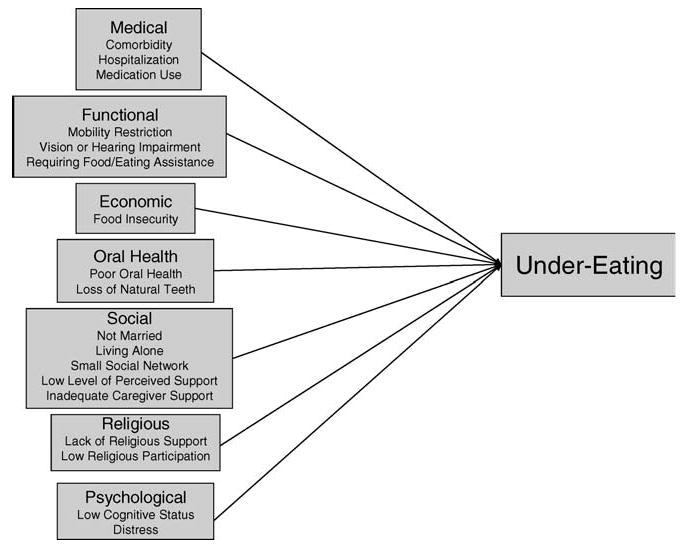
Purpose: The purpose of this study was to identify relationships between medical, functional, economic, oral health, social, religious, and psychological factors and under-eating in homebound older adults. The focus of the study was on identifying potentially modifiable factors amenable to social and behavioral interventions.
Design and methods: A total of 230 homebound older adults who were currently receiving home health services participated in interviews in their homes using a questionnaire to assess eating behaviors and factors that could possibly affect those eating behaviors. Interviewers measured height and weight, and participants completed three 24-hr dietary recalls.
Results: The mean age of participants was 79.1 years. The sample comprised 78% women and 38% African Americans. We found that 70% of participants were under-eating, defined as not consuming enough calories to maintain their current body weight. Participants who were at higher risk of under-eating included men, those receiving either infrequent care or very frequent care by a caregiver, those who had been hospitalized prior to receipt of home health services, and those with a higher body mass index.
Implications: Findings from the study have implications for both practice and policy. Experts must develop evidence-based interventions targeted at under-eating in this particularly vulnerable and growing population of homebound older adults. This study provides an initial foundation for the development of targeted evidence-based behavioral nutritional interventions that are noninvasive and cost effective.
References
-
- Anderson SA. Core indicators of nutritional state for difficult-to-sample populations. Journal of Nutrition. 1990;120:1557–1600. - PubMed
-
- Babwin D. Company develops virtual meal technology. 2006. Retrieved April 6, 2007, from www.usatoday.com/tech/news/techinnovations/2006-12-25-virtual-dinner_x.htm.
-
- Bales CW, Ritchie CS. Nutritional needs and assessment during the life cycle: The elderly. In: Shils ME, editor. Modern nutrition in health and disease. 10th. Philadelphia: Lippincott Williams & Wilkins; 2005. pp. 843–858.
Publication types
MeSH terms
Grants and funding
LinkOut - more resources
Full Text Sources
