


Using WebCt to implement a basic science competency education course
- PMID: 18483605
- PMCID: PMC2384214
- DOI: 10.5688/aj720239
Using WebCt to implement a basic science competency education course
Abstract
Objective: To implement a model of competency-based education in a basic science competency course using WebCT to improve doctor of pharmacy (PharmD) students' understanding and long-term retention of course materials.
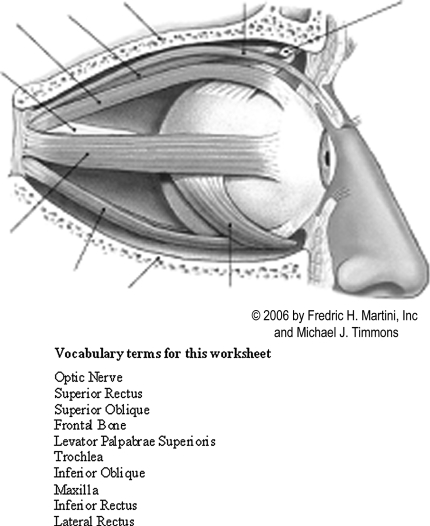
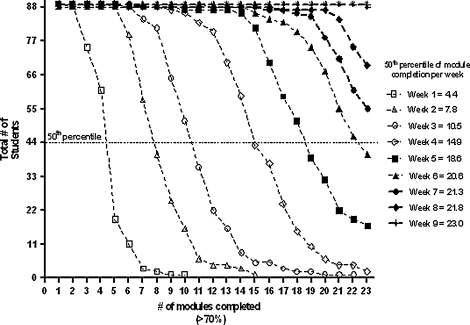
Methods: An anatomy-cell biology course was broken down into 23 modules, and worksheets and mirrored examinations were created for each module. Students were allowed to take the proctored examinations using WebCT as many times as they wanted, with each subsequent test containing a new random subset of questions. Examination scores and the number of attempts required to obtain a passing score were analyzed.
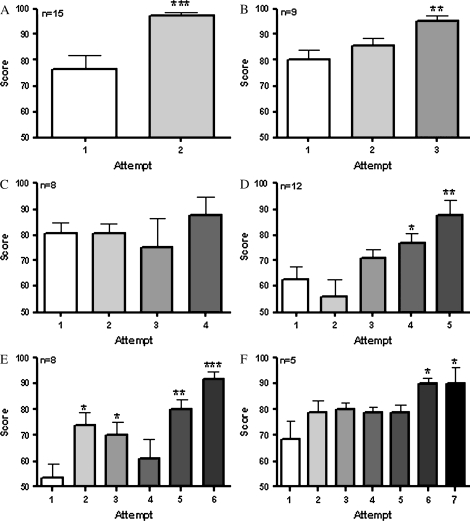
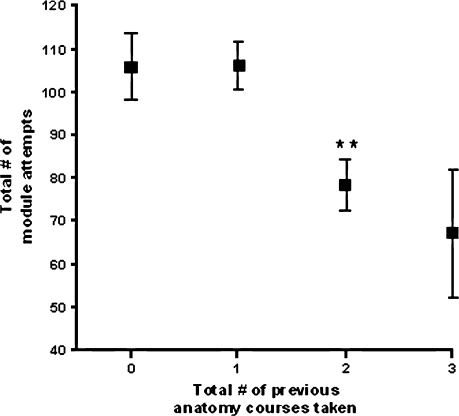
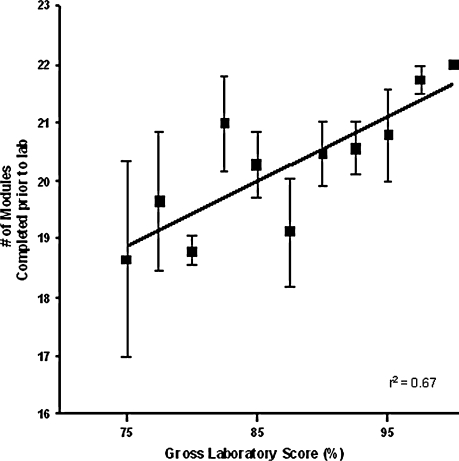
Results: Student performance improved with the number of times a module examination was taken. Students who initially had low scores achieved final competency levels similar to those of students who initially had high scores. Score on module scores (didactic work) correlated with scores on practical work
Conclusions: Using WebCT to implement a model of competency-based education was effective in teaching foundational anatomy and cell biology to pharmacy students and could potentially be applied to other basic science courses.
Keywords: Keller method; WebCT; anatomy; basic sciences; competency.
Figures
References
-
- Twigg CA. The Pew Learning and Technology Program, Monograph at the National Center for Academic Transformation; 2002. Improving learning and reducing costs: redesigning large enrollment courses; pp. 1–28.
-
- Accreditation Council for Pharmacy Education, Accreditation Standards and Guidelines for the Professional Program in Pharmacy Leading to the Doctor of Pharmacy Degree, Standard 12, Available at http://www.acpe-accredit.org/shared_info/standards1_view.htm. Accessed October 31, 2007.
-
- Carroll JB. A model of school learning. Teachers Coll Rec. 1963;64:723–33.
-
- Bloom B. Learning for mastery, evaluation comment (UCLA- Center for the Study of Evaluation of Instructional Programs) 1968;1:2–12.
MeSH terms
LinkOut - more resources
Full Text Sources