


High 5 for Kids: the impact of a home visiting program on fruit and vegetable intake of parents and their preschool children
- PMID: 18486203
- PMCID: PMC3607447
- DOI: 10.1016/j.ypmed.2008.03.016
High 5 for Kids: the impact of a home visiting program on fruit and vegetable intake of parents and their preschool children
Abstract
Objective: The High 5 for Preschool Kids (H5-KIDS) program tested the effectiveness of a home based intervention to teach parents how to ensure a positive fruit-vegetable (FV) environment for their preschool child, and to examine whether changes in parent behavior were associated with improvements in child intake.
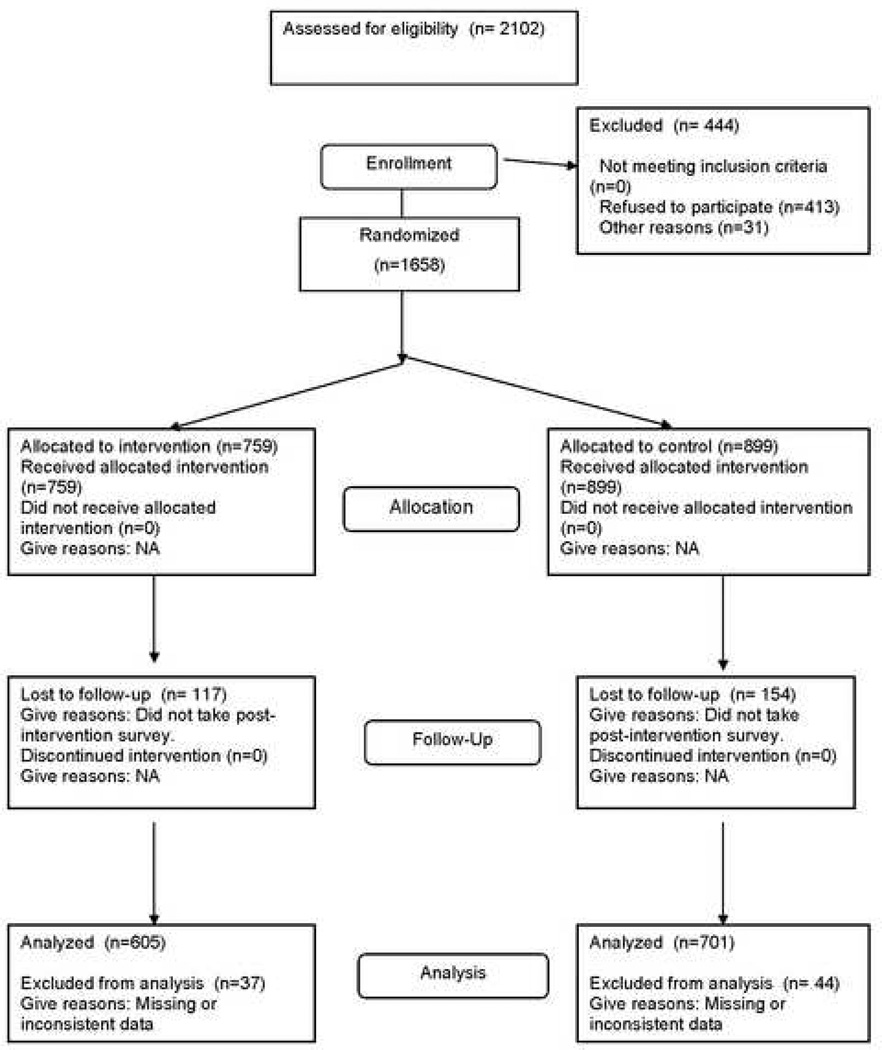
Methods: A group randomized nested cohort design was conducted (2001 to 2006) in rural, southeast Missouri with 1306 parents and their children participating in Parents As Teachers, a national parent education program.
Results: When compared to control parents, H5-KIDS parents reported an increase in FV servings (MN=0.20, p=0.05), knowledge and availability of FV within the home (p=0.01), and decreased their use of noncoercive feeding practices (p=0.02). Among preschoolers, FV servings increased in normal weight (MN=0.35, p=0.02) but not overweight children (MN=-0.10, p=0.48), relative to controls. The parent's change in FV servings was a significant predictor of child's change in FV in the H5-KIDS group (p=0.001).
Conclusion: H5-KIDS suggests the need for, and promise of, early home intervention for childhood obesity prevention. It demonstrates the importance of participatory approaches in developing externally valid interventions, with the potential for dissemination across national parent education programs as a means for improving the intake of parents and young children.
Figures
References
-
- Bandura A. Human agency in social cognitive theory. Am Psychol. 1989;44:1175–1184. - PubMed
-
- Benton D. Role of parents in the determination of the food preferences of children and the development of obesity. Int J Obes Relat Metab Disord. 2004;28:858–869. - PubMed
-
- Blissett J, Meyer C, Haycraft E. Maternal and paternal controlling feeding practices with male and female children. Appetite. 2006;47:212–219. - PubMed
-
- Centers for Disease Control and Prevention. About BMI for adults. Atlanta: Centers for Disease Control and Prevention; 2006b. http://www.cdc.gov/nccdphp/dnpa/bmi/
Publication types
MeSH terms
Grants and funding
LinkOut - more resources
Full Text Sources
Medical
Research Materials
