


Packaging double-helical DNA into viral capsids: structures, forces, and energetics
- PMID: 18487310
- PMCID: PMC2440449
- DOI: 10.1529/biophysj.108.131797
Packaging double-helical DNA into viral capsids: structures, forces, and energetics
Abstract
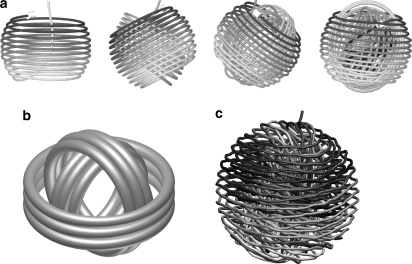
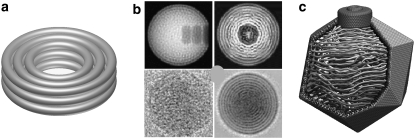
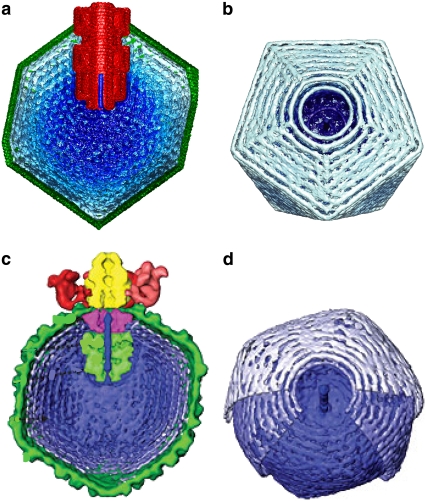
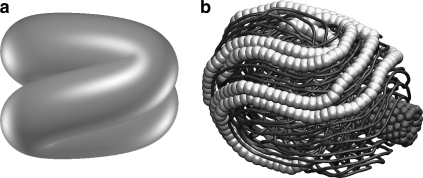
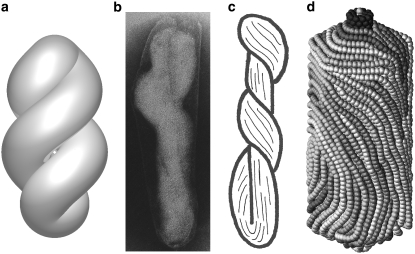
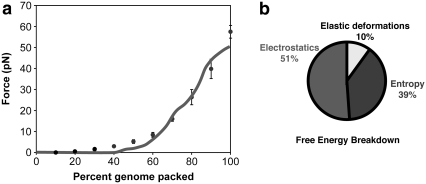
Small, icosahedral double-stranded DNA bacteriophage pack their genomes tightly into preformed protein capsids using an ATP-driven motor. Coarse-grain molecular-mechanics models provide a detailed picture of DNA packaging in bacteriophage, revealing how conformation depends on capsid size and shape, and the presence or absence of a protein core. The forces that oppose packaging have large contributions from both electrostatic repulsions and the entropic penalty of confining the DNA into the capsid, whereas elastic deformations make only a modest contribution. The elastic deformation energy is very sensitive to the final conformation, whereas the electrostatic and entropic penalties are not, so the packaged DNA favors conformations that minimize the bending energy.
Figures
References
-
- Richards, K. E., R. C. Williams, and R. Calendar. 1973. Mode of DNA packing within bacteriophage heads. J. Mol. Biol. 78:255–259. - PubMed
-
- Hall, S. B., and J. A. Schellman. 1982. Flow dichroism of capsid DNA phages. II. Effect of DNA deletions and intercalating dyes. Biopolymers. 21:2011–2031. - PubMed
-
- Earnshaw, W. C., J. King, S. C. Harrison, and F. A. Eiserling. 1978. The structural organization of DNA packaged within the heads of T4 wild-type, isometric and giant bacteriophages. Cell. 14:559–568. - PubMed
-
- Earnshaw, W. C., and S. C. Harrison. 1977. DNA arrangement in isometric phage heads. Nature. 268:598–602. - PubMed
Publication types
MeSH terms
Substances
Grants and funding
LinkOut - more resources
Full Text Sources
