


Intraflagellar transport and the sensory outer segment of vertebrate photoreceptors
- PMID: 18489002
- PMCID: PMC2692564
- DOI: 10.1002/dvdy.21554
Intraflagellar transport and the sensory outer segment of vertebrate photoreceptors
Abstract
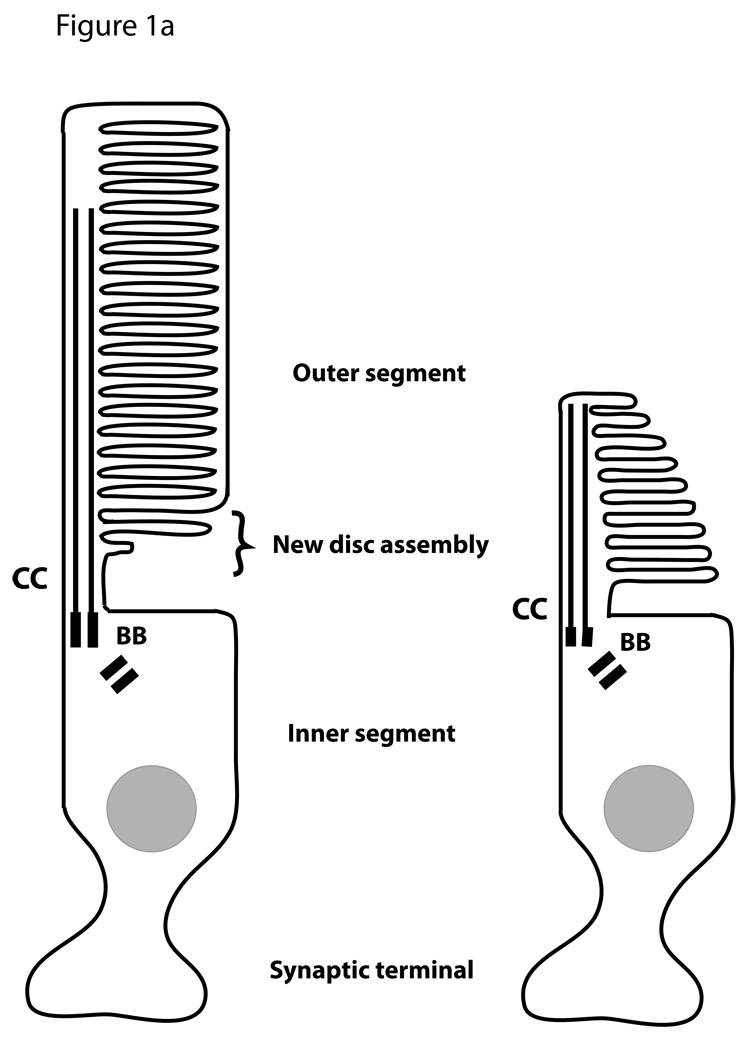
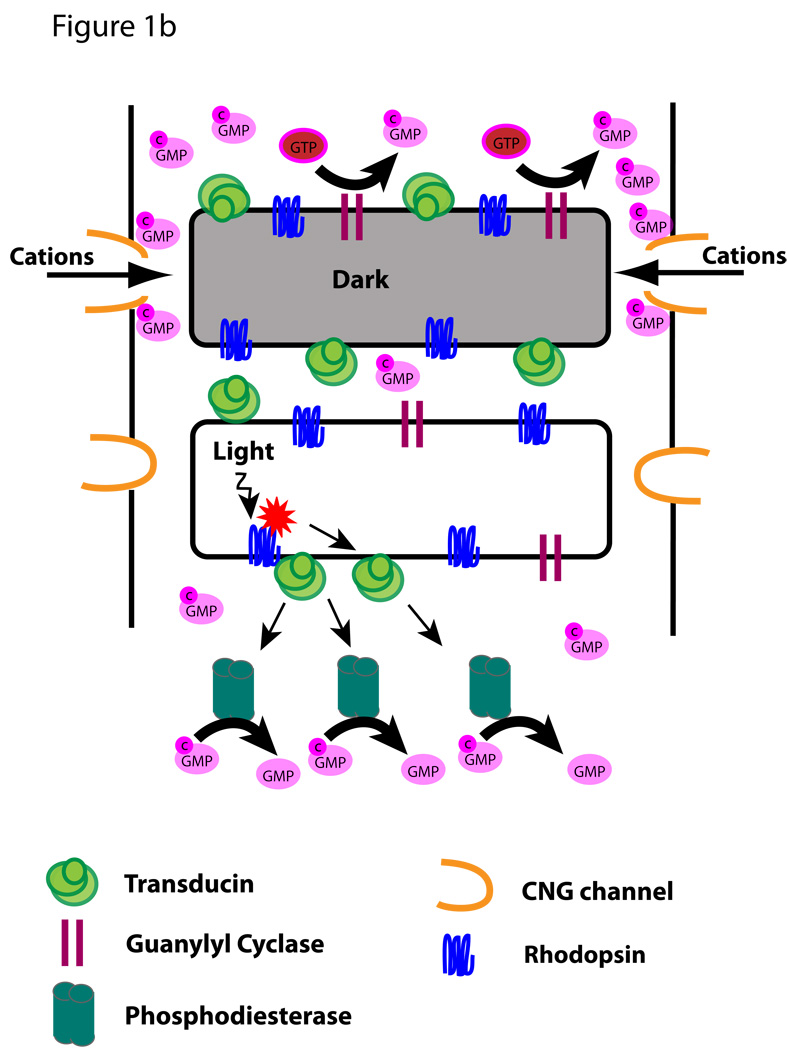
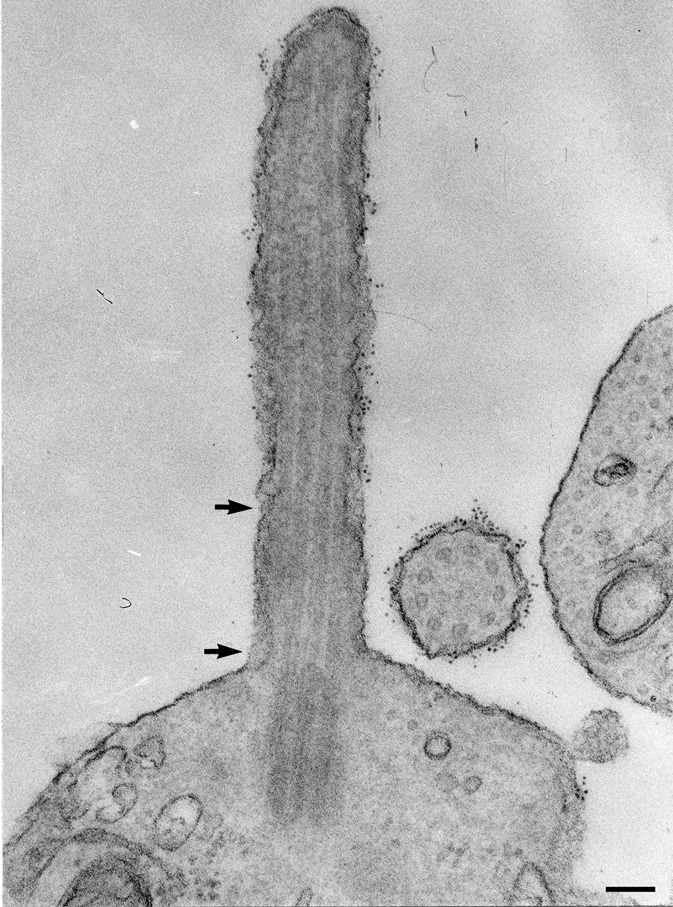
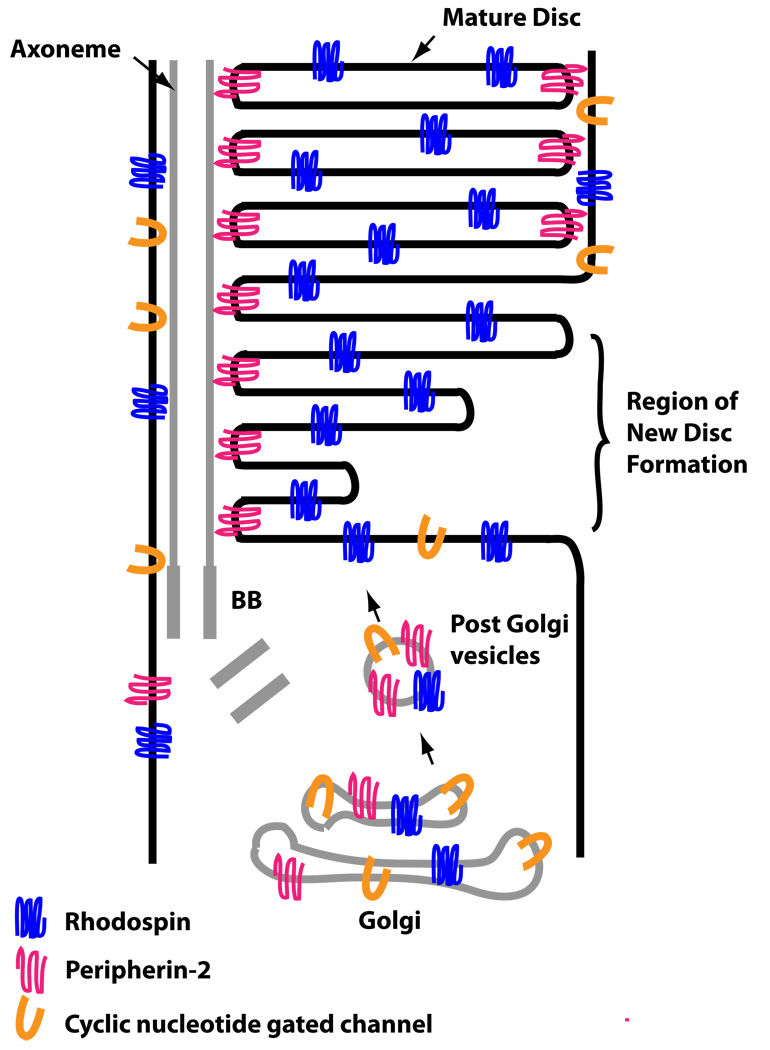
Analysis of the other segments of rod and cone photoreceptors in vertebrates has provided a rich molecular understanding of how light absorbed by a visual pigment can result in changes in membrane polarity that regulate neurotransmitter release. These events are carried out by a large group of phototransduction proteins that are enriched in the outer segment. However, the mechanisms by which phototransduction proteins are sequestered in the outer segment are not well defined. Insight into those mechanisms has recently emerged from the findings that outer segments arise from the plasma membrane of a sensory cilium, and that intraflagellar transport (IFT), which is necessary for assembly of many types of cilia and flagella, plays a crucial role. Here we review the general features of outer segment assembly that may be common to most sensory cilia as well those that may be unique to the outer segment. Those features illustrate how further analysis of photoreceptor IFT may provide insight into both IFT cargo and the role of alternative IFT kinesins.
Copyright (c) 2008 Wiley-Liss, Inc.
Figures
References
-
- Adato A, Lefevre G, Delprat B, Michel V, Michalski N, Chardenoux S, Weil D, El-Amraoui A, Petit C. Usherin, the defective protein in Usher syndrome type IIA, is likely to be a component of interstereocilia ankle links in the inner ear sensory cells. Hum Mol Genet. 2005;14:3921–3932. - PubMed
-
- Bae YK, Qin H, Knobel KM, Hu J, Rosenbaum JL, Barr MM. General and cell-type specific mechanisms target TRPP2/PKD-2 to cilia. Development. 2006;133:3859–3870. - PubMed
Publication types
MeSH terms
Grants and funding
LinkOut - more resources
Full Text Sources
Other Literature Sources
