Bupropion improves attention but does not affect impulsive behavior in healthy young adults
- PMID: 18489015
- PMCID: PMC4270475
- DOI: 10.1037/1064-1297.16.2.113
Bupropion improves attention but does not affect impulsive behavior in healthy young adults
Abstract
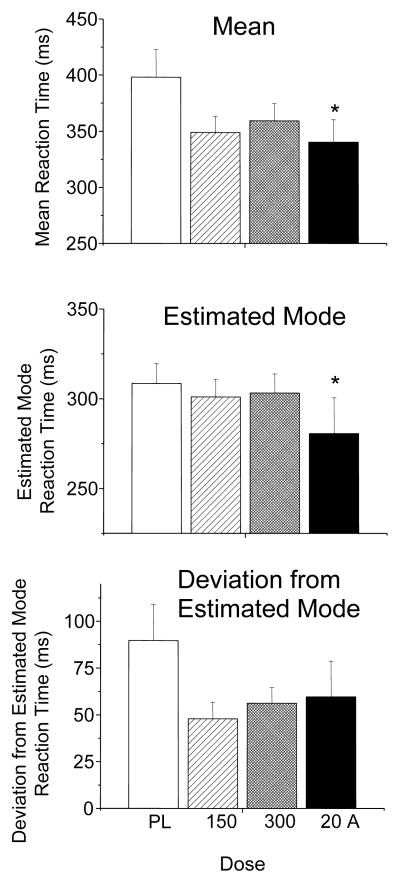
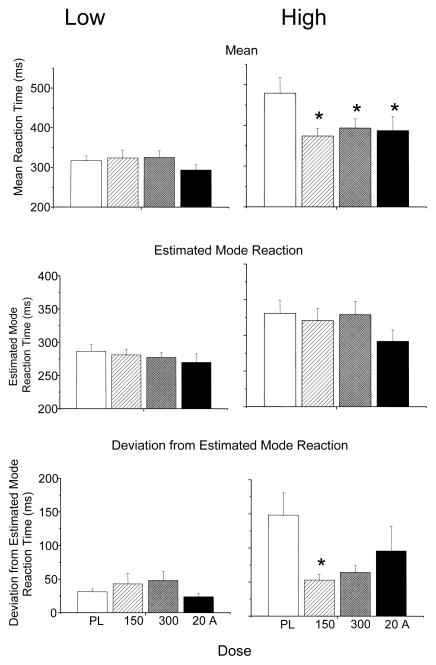
Bupropion is an effective abstinence aid for cessation of smoking and possibly other drug use as well. There is evidence that bupropion improves attention and impulse control in certain patient populations, and improvements in these processes could mediate its efficacy as an abstinence aid. In the present study, we tested the effects of acute bupropion on measures of attention and impulsivity in healthy adults with d-amphetamine included as a positive control. Twenty-two nonsmokers (11 women) and 11 smokers (4 women) completed four 4-hr sessions where they received placebo, bupropion (150 or 300 mg), or d-amphetamine (20 mg) in capsules. Ninety minutes after capsule administration, participants were tested on attention with a simple reaction time task (SRT) and on impulsivity with the stop task, a delay and probability discounting task (DPD), and the balloon analogue risk task (BART). Participants also completed mood questionnaires during sessions. Bupropion (150 mg) decreased lapses in attention on the SRT, but did not affect performance on the stop task, DPD, or BART. Amphetamine decreased lapses in attention and speeded sensory motor processing time on the SRT but did not significantly affect responding on the stop task or DPD. On the BART, d-amphetamine tended to decrease risk taking in men but increased risk taking in women. Bupropion (300 mg) and d-amphetamine increased ratings of arousal. These results suggest that bupropion improves attention without affecting impulsive behavior in healthy adults. Improvements in attention may contribute to the effectiveness of bupropion as a pharmacotherapy for smoking.
Figures
References
-
- Acheson A, Richards JB, de Wit H. Effects of sleep deprivation on impulsive behaviors in men and women. Physiol Behav. 2007;91(5):579–587. - PubMed
-
- Ainslie G. Specious reward: a behavioral theory of impulsiveness and impulse control. Psychol Bull. 1975;82(4):463–496. - PubMed
-
- Aklin WM, Lejuez CW, Zvolensky MJ, Kahler CW, Gwadz M. Evaluation of behavioral measures of risk taking propensity with inner city adolescents. Behav Res Ther. 2005;43(2):215–228. - PubMed
-
- APA. Diagnostic and Statistical Manual of Mental Disorders: DSM-IV-TR. 4. Washington, D.C: American Psychiatric Association; 2000.