


Interleukin-1 inhibits osmotically induced calcium signaling and volume regulation in articular chondrocytes
- PMID: 18495501
- PMCID: PMC3217044
- DOI: 10.1016/j.joca.2008.04.003
Interleukin-1 inhibits osmotically induced calcium signaling and volume regulation in articular chondrocytes
Abstract
Objective: Articular chondrocytes respond to osmotic stress with transient changes in cell volume and the intracellular concentration of calcium ion ([Ca(2+)](i)). The goal of this study was to examine the hypothesis that interleukin-1 (IL-1), a pro-inflammatory cytokine associated with osteoarthritis, influences osmotically induced Ca(2+) signaling.
Methods: Fluorescence ratio imaging was used to measure [Ca(2+)](i) and cell volume in response to hypo- or hyper-osmotic stress in isolated porcine chondrocytes, with or without pre-exposure to 10-ng/ml IL-1alpha. Inhibitors of IL-1 (IL-1 receptor antagonist, IL-1Ra), Ca(2+) mobilization (thapsigargin, an inhibitor of Ca-ATPases), and cytoskeletal remodeling (toxin B, an inhibitor of the Rho family of small GTPases) were used to determine the mechanisms involved in increased [Ca(2+)](i), F-actin remodeling, volume adaptation and active volume recovery.
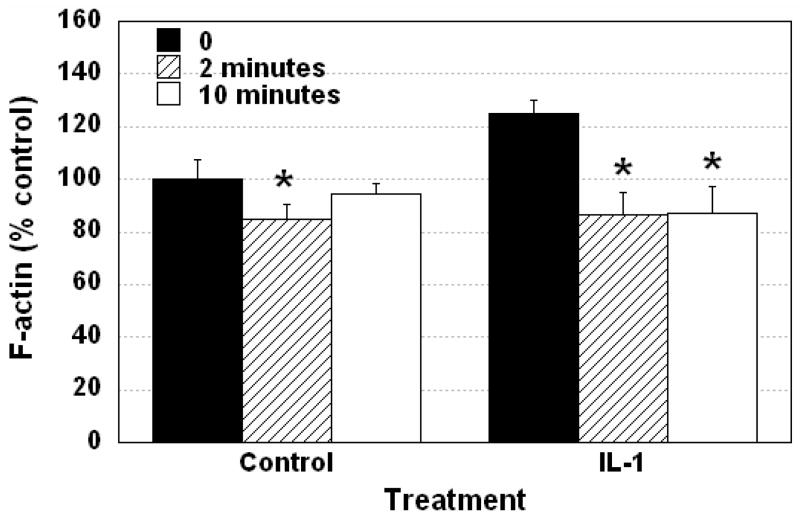
Results: In response to osmotic stress, chondrocytes exhibited transient increases in [Ca(2+)](i), generally followed by decaying oscillations. Pre-exposure to IL-1 significantly inhibited regulatory volume decrease (RVD) following hypo-osmotic swelling and reduced the change in cell volume and the time to peak [Ca(2+)](i) in response to hyper-osmotic stress, but did not affect the peak magnitudes of [Ca(2+)](i) in those cells that did respond. Co-treatment with IL-1Ra, thapsigargin, or toxin B restored these responses to control levels. The effects were associated with alterations in F-actin organization.
Conclusions: IL-1 alters the normal volumetric and Ca(2+) signaling response of chondrocytes to osmotic stress through mechanisms involving F-actin remodeling via small Rho GTPases. These findings provide further insights into the mechanisms by which IL-1 may interfere with normal physiologic processes in the chondrocyte, such as the adaptation or regulatory responses to mechanical or osmotic loading.
Figures



References
-
- Griffin TM, Guilak F. The role of mechanical loading in the onset and progression of osteoarthritis. Exerc Sport Sci Rev. 2005;33:195–200. - PubMed
-
- Grodzinsky AJ, Levenston ME, Jin M, Frank EH. Cartilage tissue remodeling in response to mechanical forces. Annu Rev Biomed Eng. 2000;2:691–713. - PubMed
-
- Guilak F, Sah R, Setton L. Physical regulation of cartilage metabolism. In: Hayes W, Mow V, editors. Basic Orthopaedic Biomechanics. Philadelphia: Lippincott-Raven; 1997. pp. 179–207.
-
- Mow VC, Wang CC, Hung CT. The extracellular matrix, interstitial fluid and ions as a mechanical signal transducer in articular cartilage. Osteoarthritis Cartilage. 1999;7:41–58. - PubMed
-
- Guilak F, Mow VC. The mechanical environment of the chondrocyte: a biphasic finite element model of cell-matrix interactions in articular cartilage. J Biomech. 2000;33:1663–1673. - PubMed
Publication types
MeSH terms
Substances
Grants and funding
LinkOut - more resources
Full Text Sources
Miscellaneous
