


Resolving ambiguity: a psycholinguistic approach to understanding prosody processing in high-functioning autism
- PMID: 18502497
- PMCID: PMC2603133
- DOI: 10.1016/j.bandl.2008.04.002
Resolving ambiguity: a psycholinguistic approach to understanding prosody processing in high-functioning autism
Abstract
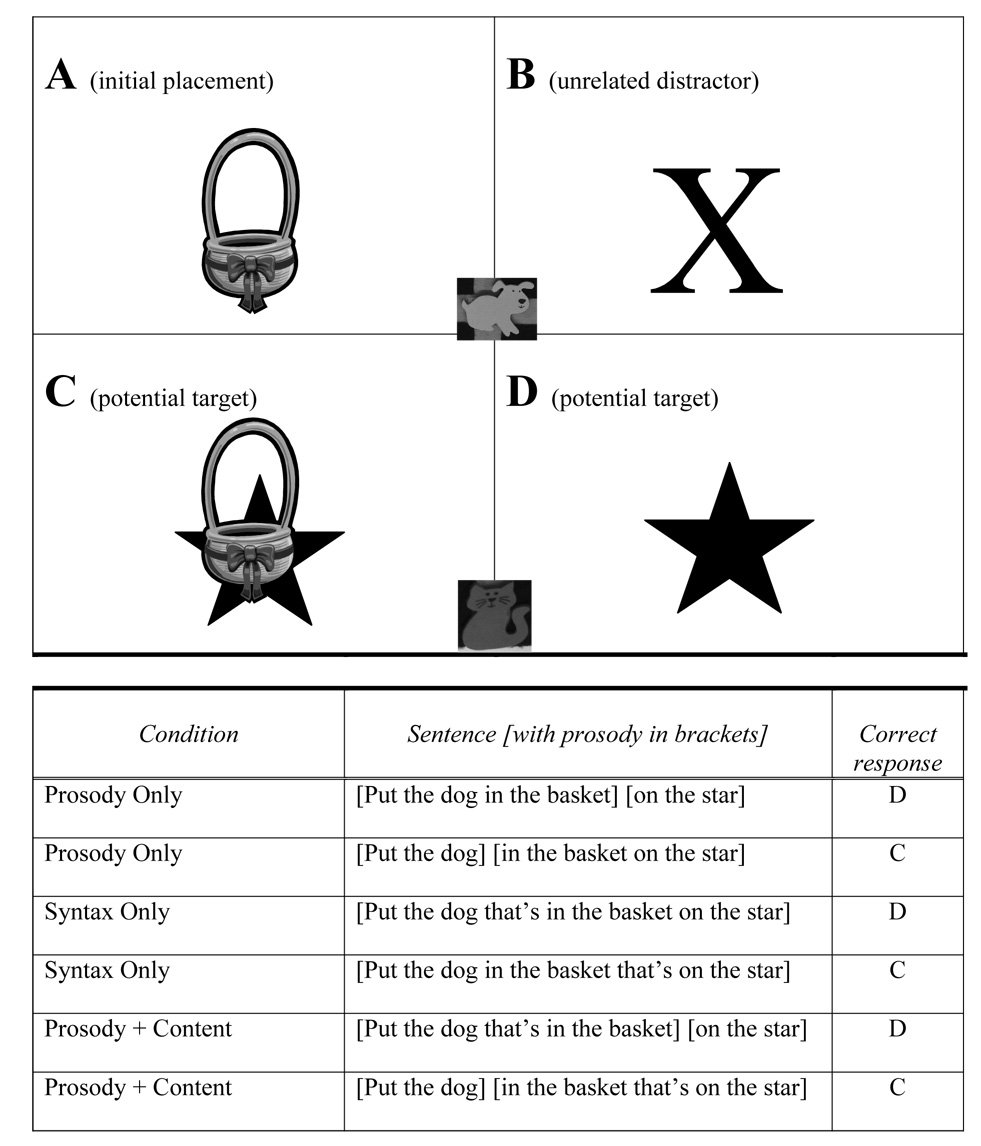
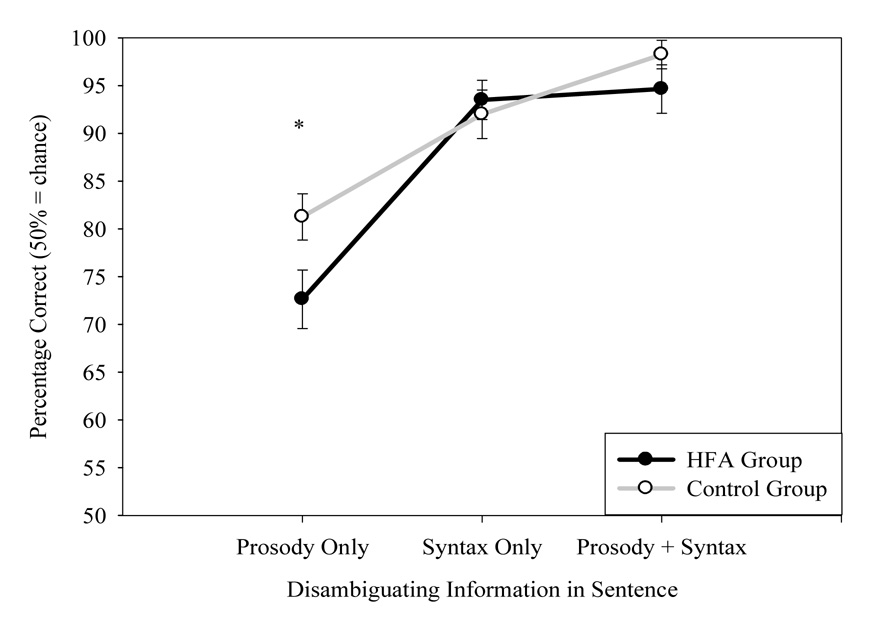
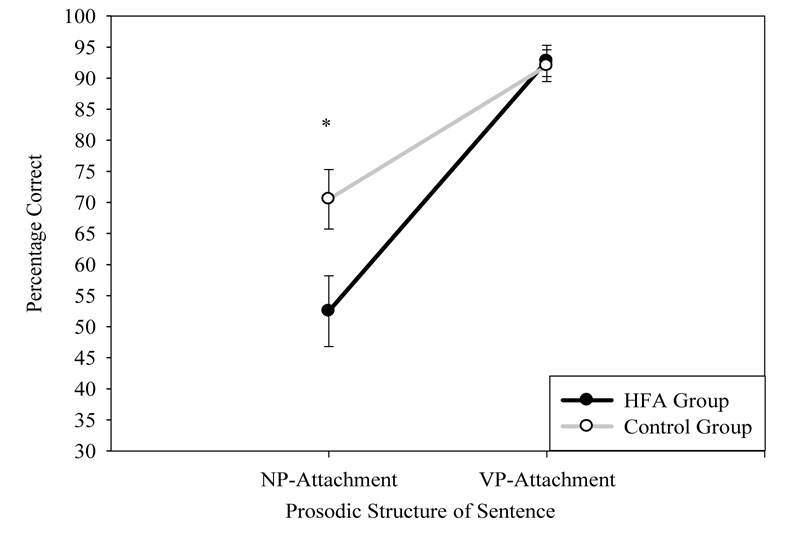
Individuals with autism exhibit significant impairments in prosody production, yet there is a paucity of research on prosody comprehension in this population. The current study adapted a psycholinguistic paradigm to examine whether individuals with autism are able to use prosody to resolve syntactically ambiguous sentences. Participants were 21 adolescents with high-functioning autism (HFA), and 22 typically developing controls matched on age, IQ, receptive language, and gender. The HFA group was significantly less likely to use prosody to disambiguate syntax, but scored comparably to controls when syntax alone or both prosody and syntax indicated the correct response. These findings indicate that adolescents with HFA have difficulty using prosody to disambiguate syntax in comparison to typically developing controls, even when matched on chronological age, IQ, and receptive language. The implications of these findings for how individuals with autism process language are discussed.
Figures
References
-
- Achenbach TM, Rescorla LA. Manual for the ASEBA School-Age Forms & Profiles. Burlington, VT: University of Vermont, Research Center for Children, Youth, & Families; 2001.
-
- Amoroso H. Disorders of vocal signaling in children. In: Papousek H, Jurgens U, Papousek M, editors. Nonverbal Vocal Communication: Comparative and developmental approaches. Cambridge: Cambridge University Press; 1992. pp. 192–204.
-
- Baltaxe C. Use of contrastive stress in normal, aphasic, and autistic children. Journal of Speech and Hearing Research. 1984;27:97–105. - PubMed
-
- Baron-Cohen S. Mind blindness. Cambridge, MA: MIT Press; 1995.
-
- Berckmoes C, Vingerhoets G. Neural foundations of emotional speech processing. Current Directions in Psychological Science. 2004;13:182–185.
Publication types
MeSH terms
Grants and funding
LinkOut - more resources
Full Text Sources
Medical
