


Predictors of wheezing in prematurely born children
- PMID: 18507597
- PMCID: PMC2709492
- DOI: 10.1111/j.1552-6909.2008.00238.x
Predictors of wheezing in prematurely born children
Abstract
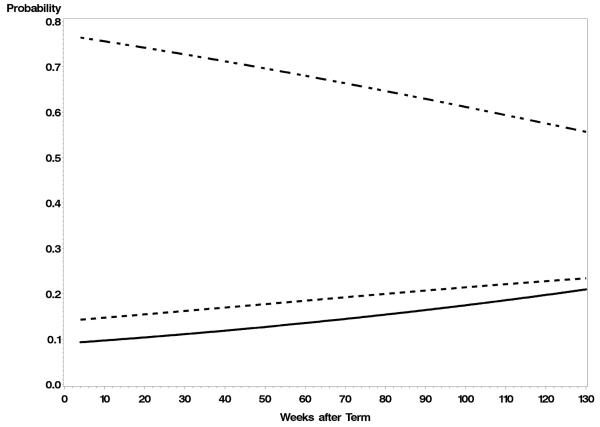
Objective: To examine the degree to which neonatal illness severity, postneonatal health problems, child characteristics, parenting quality as measured by the HOME Inventory, and maternal characteristics are related to the development of wheezing in prematurely born children over the first 27 months after term.
Design: Longitudinal predictive study.
Setting: Infants were recruited from two neonatal intensive care units, one in southeast and one in Midwest.
Participants: One hundred thirteen preterm infants who weighed less than 1,500 g or required mechanical ventilation and their mothers.
Main outcome measures: The presence of wheezing was obtained from maternal report at 2, 6, 9, 13, 18, 22, and 27 months. Wheezing was considered to be medically significant if the child was using bronchodilators or pulmonary antiinflammatory medications.
Results: Sixty-eight percent of the children had wheezing at least one or more ages; 47% of the children were also taking bronchodilators or pulmonary antiinflammatory medications and thus had medically significant wheezing.
Conclusion: Postneonatal health problems and the social environment appear to be more important in developing wheezing in prematurely born children than neonatal medical complications.
Figures
References
-
- Akinbami LJ, Rhodes JC, Lara M. Racial and ethnic differences in asthma diagnosis among children who wheeze. Pediatrics. 2005;115:1254–12. - PubMed
-
- Arif AA, Borders TF, Patterson PJ, Rohrer JE, Xu KT. Prevalence and correlates of paediatric asthma and wheezing in a largely rural USA population. Journal of Paediatrics and Child Health. 2004;40:189–194. - PubMed
-
- Bardin C, Piuze G, Papageorgiou A. Outcome at 5 years of age of SGA and AGA infants born less than 28 weeks of gestation. Seminars in Perinatology. 2004;28:288–294. - PubMed
-
- Berz JB, Carter AS, Wagmiller RL, Horwitz SM, Murdock KK, Briggs-Gowan M. Prevalence and correlates of early onset asthma and wheezing in a healthy birth cohort of 2- to 3-year olds. Journal of Pediatric Psychology. 2007;32:154–166. - PubMed
-
- Brooks AM, Byrd RS, Weitzman M, Auinger P, McBride JT. Impact of low birth weight on early childhood asthma in the United States. Archives of Pediatric and Adolescent Medicine. 2001;155:404–406. - PubMed
