


Influenza A virus (H3N8) in dogs with respiratory disease, Florida
- PMID: 18507900
- PMCID: PMC2600298
- DOI: 10.3201/eid1406.071270
Influenza A virus (H3N8) in dogs with respiratory disease, Florida
Abstract
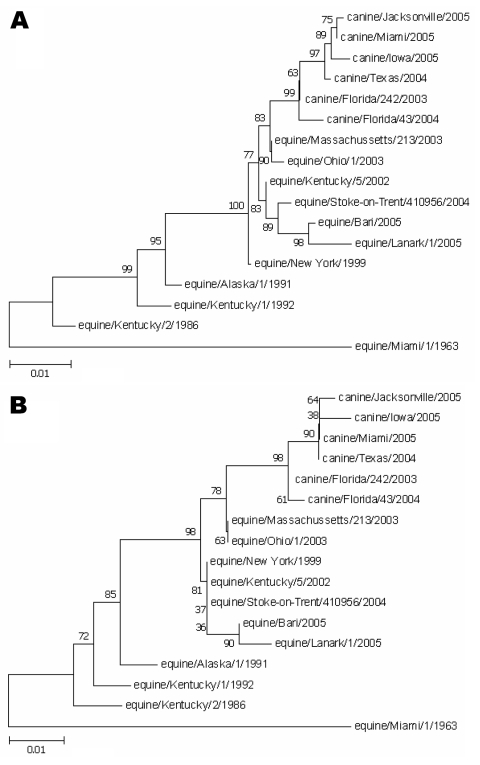
In 2004, canine influenza virus subtype H3N8 emerged in greyhounds in the United States. Subsequent serologic evidence indicated virus circulation in dog breeds other than greyhounds, but the virus had not been isolated from affected animals. In 2005, we conducted virologic investigation of 7 nongreyhound dogs that died from respiratory disease in Florida and isolated influenza subtype H3N8 virus. Antigenic and genetic analysis of A/canine/Jacksonville/2005 (H3N8) and A/canine/Miami/2005 (H3N8) found similarity to earlier isolates from greyhounds, which indicates that canine influenza viruses are not restricted to greyhounds. The hemagglutinin contained 5 conserved amino acid differences that distinguish canine from equine lineages. The antigenic homogeneity of the canine viruses suggests that measurable antigenic drift has not yet occurred. Continued surveillance and antigenic analyses should monitor possible emergence of antigenic variants of canine influenza virus.
Figures
References
-
- Burleson F, Chambers T, Wiedbrauk D. Virology: a laboratory manual. San Diego (CA): Academic Press; 1992.
Publication types
MeSH terms
Associated data
- Actions
- Actions
- Actions
- Actions
- Actions
- Actions
- Actions
- Actions
- Actions
- Actions
- Actions
- Actions
- Actions
- Actions
LinkOut - more resources
Full Text Sources
Other Literature Sources