


RESPONSES OF MALE TROPICAL MOCKINGBIRDS TO VARIATION IN WITHIN-SONG AND BETWEEN-SONG VERSATILITY
- PMID: 18509510
- PMCID: PMC2396498
- DOI: 10.1642/0004-8038(2007)124[185:ROMTMM]2.0.CO;2
RESPONSES OF MALE TROPICAL MOCKINGBIRDS TO VARIATION IN WITHIN-SONG AND BETWEEN-SONG VERSATILITY
Abstract
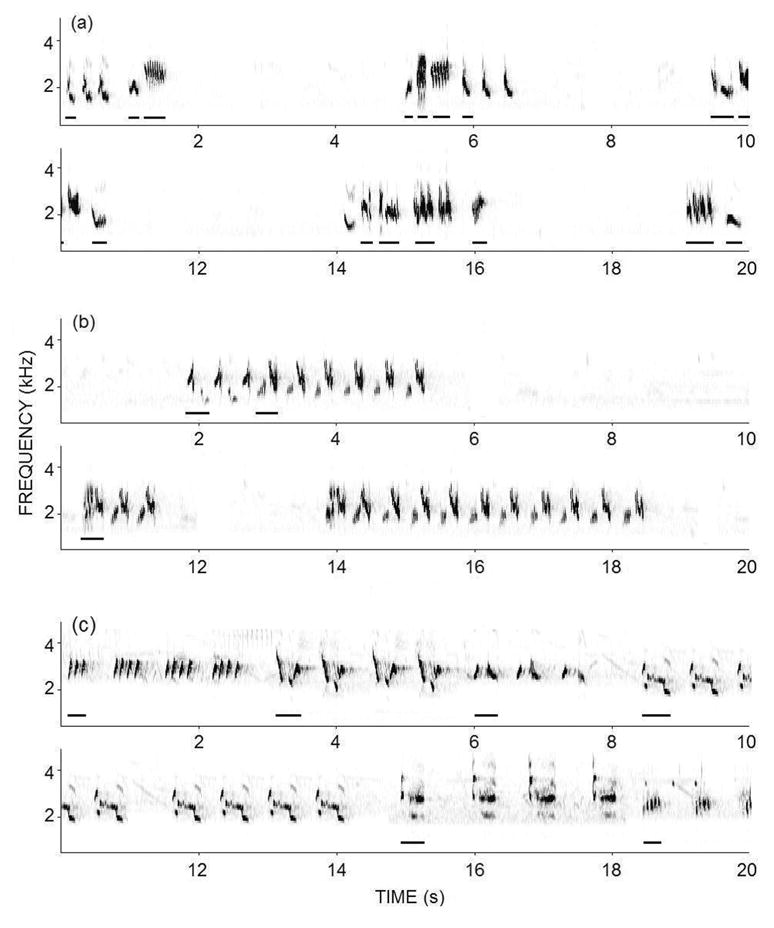
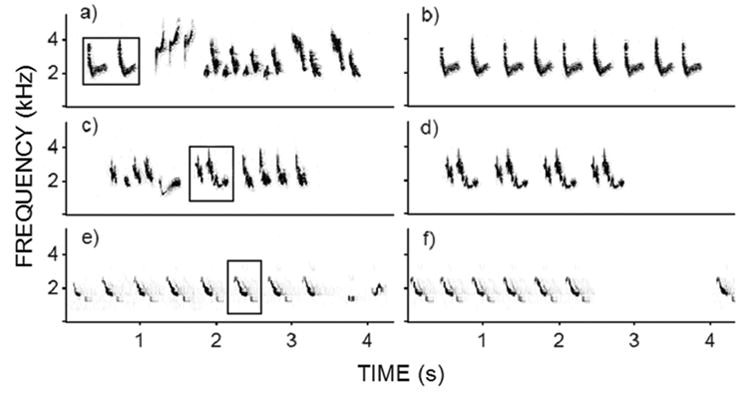
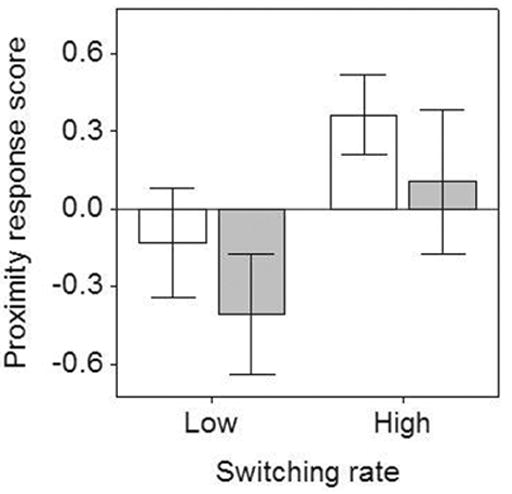
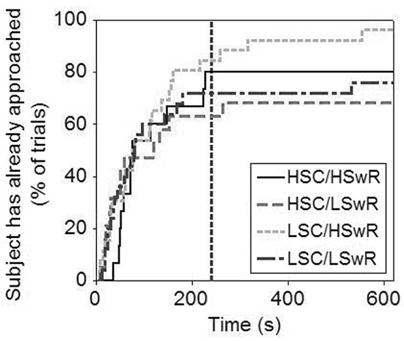
Despite their large vocal repertoires and otherwise highly versatile singing style, male mockingbirds sometimes sing in a highly repetitive fashion. We conducted a playback experiment to determine the possible signal value of different syllable presentation patterns during simulated male intrusions in the Tropical Mockingbird (Mimus gilvus) testing the hypothesis that more repetitive singing represents a stronger threat and generates a stronger aggressive response. Responses were measured in terms of approach and singing behavior and were analyzed using McGregor's (1992) multivariate method. We also introduce the use of survival analysis for analyzing response variables for which subjects do not perform the behavior in question in at least one of the replicates (known as 'right-censored variables' in the statistical literature). As predicted by theory, experimental subjects responded more aggressively to songs composed of a single note than to variable ones. However, versatility at the between-song level had an opposite effect as high song switching rates generated stronger responses than low ones. Given the lack of a statistical interaction between within-song versatility and switching rate, we conclude that these two parameters may serve independent purposes and possibly transmit different information. We discuss the possibility that the signal value of variation in vocal versatility lies in the mediation of territorial conflicts, the attraction of female partners and/or the mediation of conflicts over access to reproductive females.
Figures
References
-
- Berglund A, Bisazza A, Pilastro A. Armaments and ornaments: An evolutionary explanation of traits of dual utility. Biological Journal of the Linnean Society. 1996;58:385–399.
-
- Biedenweg DW. Time and energy budgets of the mockingbird (Mimus polyglottos) during the breeding season. Auk. 1983;100:149–160.
-
- Brewer D, MacKay K. Wrens, dippers and thrashers. Yale University Press; New Haven, Connecticut: 2001.
-
- Buchanan KL, Catchpole CK. Female choice in the sedge warbler, Acrocephalus schoenobaenus: Multiple cues from song and territory quality. Proceedings of the Royal Society of London, Series B. 1997;264:521–526.
-
- Burnett LJ. MS thesis. University of North Carolina; Greensboro: 1978. Mockingbird song (Mimus polyglottos): An investigation within and across seasons.
Grants and funding
LinkOut - more resources
Full Text Sources
Research Materials