


Development of clinical trials in a cooperative group setting: the eastern cooperative oncology group
- PMID: 18519773
- PMCID: PMC2723742
- DOI: 10.1158/1078-0432.CCR-07-5060
Development of clinical trials in a cooperative group setting: the eastern cooperative oncology group
Abstract
Purpose: We examine the processes and document the calendar time required to activate phase II and III clinical trials by an oncology group: the Eastern Cooperative Oncology Group (ECOG).
Methods: Setup steps were documented by (a) interviewing ECOG headquarters and statistical center staff, and committee chairs, (b) reviewing standard operating procedure manuals, and (c) inspecting study records, documents, and e-mails to identify additional steps. Calendar time was collected for each major process for each study in this set.
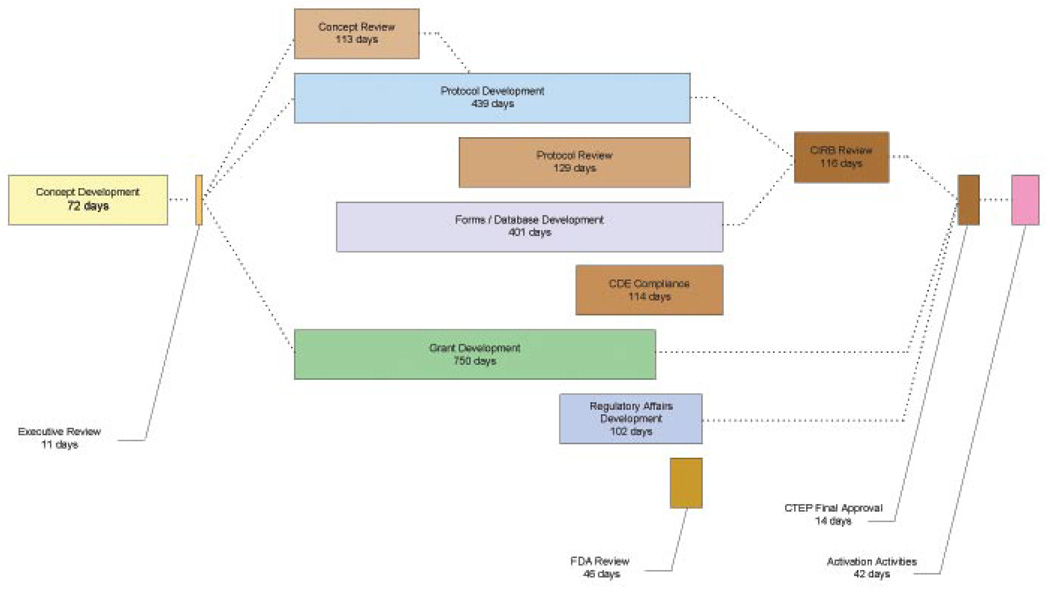
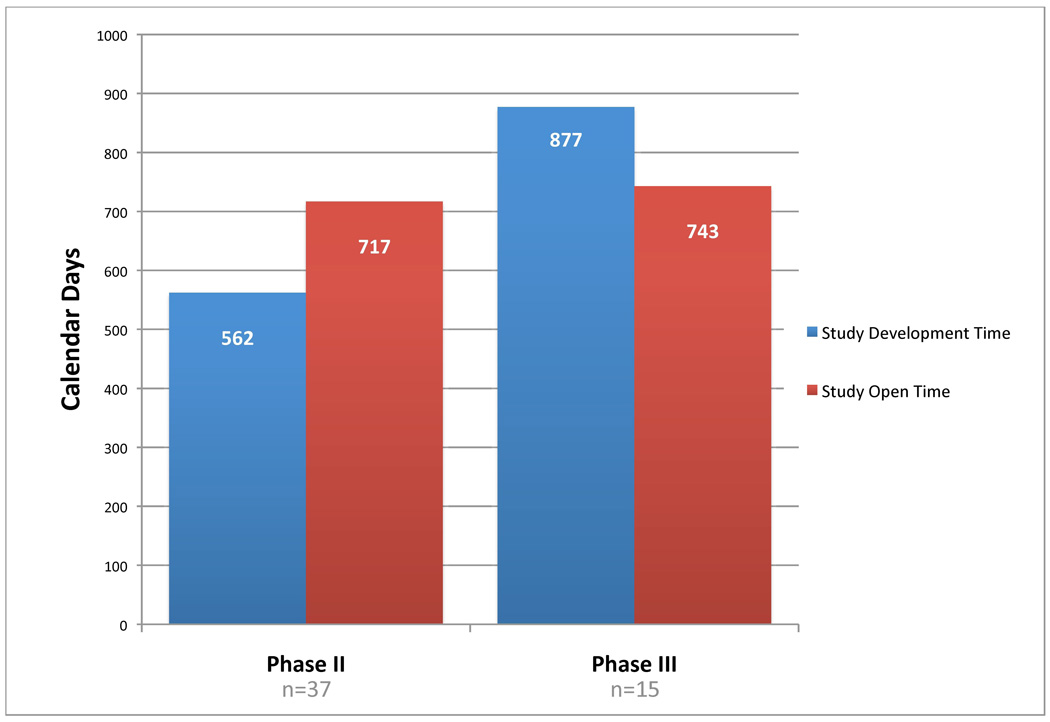
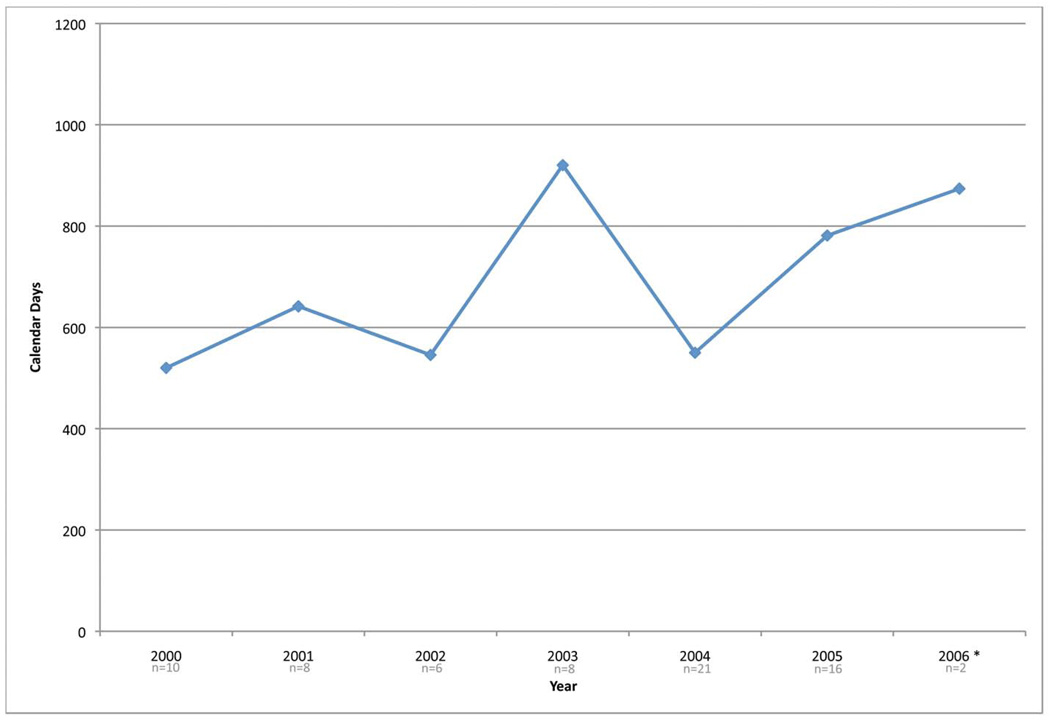
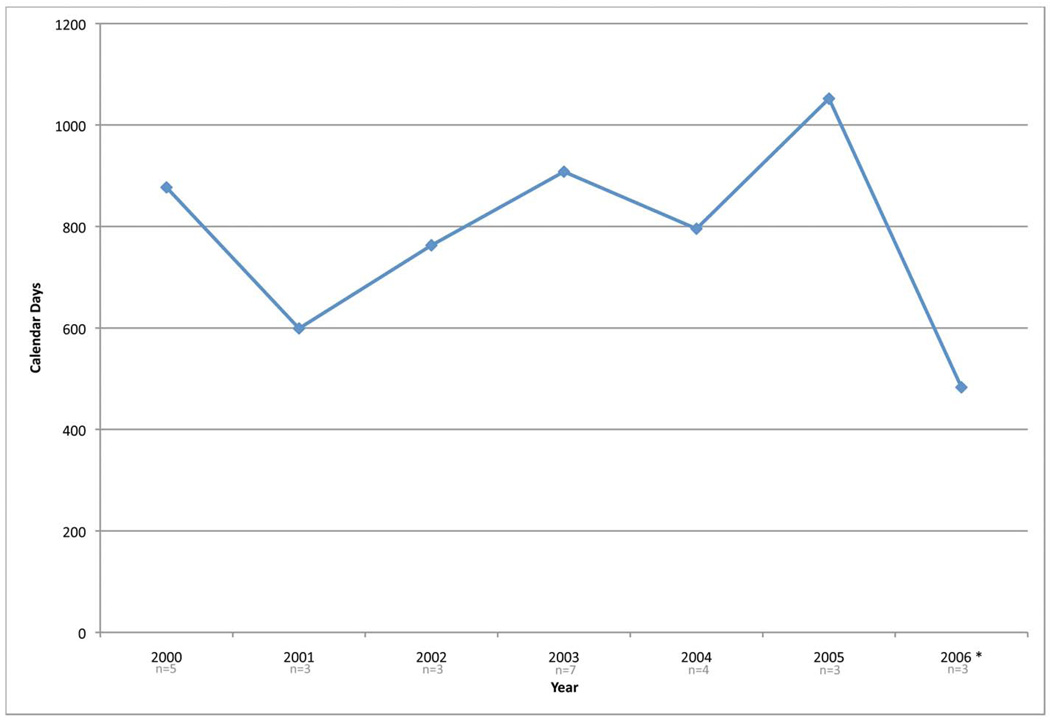
Results: Twenty-eight phase III studies were activated by ECOG during the January 2000 to July 2006 study period. We examined a sample from 16 of those studies in detail. More than 481 distinct processes were required for study activation: 420 working steps, 61 major decision points, 26 processing loops, and 13 stopping points. Median calendar days to activate a trial in the phase III subset was 783 days (range, 285-1,542 days) from executive approval and 808 days (range, 435-1,604 days) from initial conception of the study. Data were collected for all phase II and phase III trials activated and completed during this time period (n = 52) for which development time represented 43.9% and 54.1% of the total trial time, respectively.
Conclusion: The steps required to develop and activate a clinical trial may require as much or more time than the actual completion of a trial. The data shows that to improve the activation process, research should to be directed toward streamlining both internal and external groups and processes.
Figures
References
-
- Dilts DM, Sandler AB, Baker M, et al. Processes to activate phase III clinical trials in a Cooperative Oncology Group: the Case of Cancer and Leukemia Group B. J Clin Oncol. 2006;24:4553–4557. - PubMed
-
- Dilts DM, Sandler AB. Invisible barriers to clinical trials: the impact of structural, infrastructural, and procedural barriers to opening oncology clinical trials. J Clin Oncol. 2006;24:4545–4552. - PubMed
-
- Fukuda H. Infrastructure of cancer clinical trial cooperative groups in western countries. Gan To Kagaku Ryoho. 2000;27:1144–1151. - PubMed
-
- National Cancer Institute. Cancer Therapy Evaluation Program: NCI Clinical Trials Cooperative Group Program Guidelines. Bethesda, MD: Division of Cancer Treatment and Diagnosis, National Cancer Institute; 2005.
-
- Eastern Cooperative Oncology Group. ECOG Homepage. [cited; Available from: http://ecog.dfci. harvard.edu/general/intro.html.
Publication types
MeSH terms
Grants and funding
LinkOut - more resources
Full Text Sources
