


HIV infection is associated with a lower incidence of constriction in presumed tuberculous pericarditis: a prospective observational study
- PMID: 18523576
- PMCID: PMC2386966
- DOI: 10.1371/journal.pone.0002253
HIV infection is associated with a lower incidence of constriction in presumed tuberculous pericarditis: a prospective observational study
Abstract
Background: Pericardial constriction is a serious complication of tuberculous pericardial effusion that occurs in up to a quarter of patients despite anti-tuberculosis chemotherapy. The impact of human immunodeficiency virus (HIV) infection on the incidence of constrictive pericarditis following tuberculous pericardial effusion is unknown.
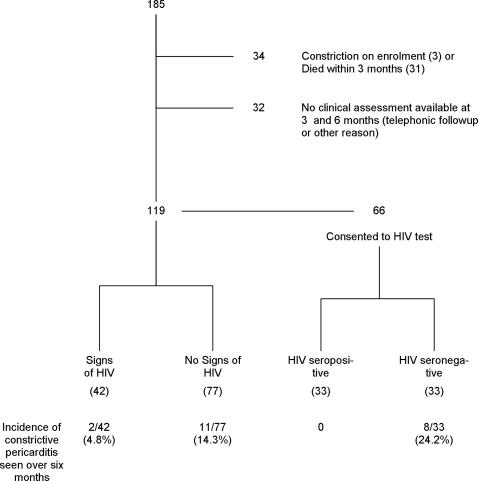
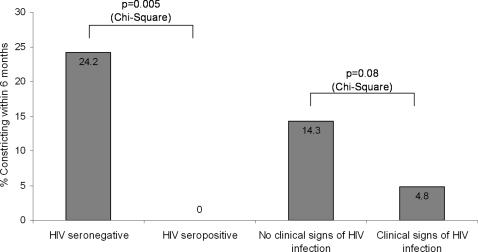
Methods and results: We conducted a prospective observational study to determine the association between HIV infection and the incidence of constrictive pericarditis among 185 patients (median age 33 years) with suspected tuberculous pericardial effusion. These patients were recruited consecutively between March and October 2004 on commencement of anti-tuberculosis treatment, from 15 hospitals in Cameroon, Nigeria and South Africa. Surviving patients (N = 119) were assessed for clinical evidence of constrictive pericarditis at 3 and 6 months of follow-up. Clinical features of HIV infection were present in 42 (35.2%) of the 119 patients at enrolment into the study. 66 of the 119 (56.9%) patients consented to HIV testing at enrolment. During the 6 months of follow-up, a clinical diagnosis of constrictive pericarditis was made in 13 of the 119 patients (10.9 %, 95% confidence interval [CI] 5.9-18%). Patients with clinical features of HIV infection appear less likely to develop constriction than those without (4.8% versus 14.3%; P = 0.08). None of the 33 HIV seropositive patients developed constriction, but 8 (24.2%, 95%CI 11.1-42.3%) of the 33 HIV seronegative patients did (P = 0.005). In a multivariate logistic regression model adjusting simultaneously for several baseline characteristics, only clinical signs of HIV infection were significantly associated with a lower risk of constriction (odd ratio 0.14, 95% CI 0.02-0.87, P = 0.035).
Conclusions: These data suggest that HIV infection is associated with a lower incidence of pericardial constriction in patients with presumed tuberculous pericarditis.
Conflict of interest statement
Figures
References
-
- Mayosi BM, Burgess LJ, Doubell AF. Tuberculous Pericarditis. Circulation. 2005;112:3608–3616. - PubMed
-
- Schrire V. Experience with pericarditis of Groote Schuur Hospital, Cape Town: an analysis of one hundred and sixty cases over a six-year period. S Afr Med J. 1959;33:810–817. - PubMed
-
- Strang JI. Tuberculous pericarditis in Transkei. Clin Cardiol. 1984;7:667–670. - PubMed
-
- Sagrista-Sauleda J, Permanyer-Miralda G, Soler-Soler J. Tuberculous pericarditis: ten year experience with a prospective protocol for diagnosis and treatment. J Am Coll Cardiol. 1988;11:724–728. - PubMed
Publication types
MeSH terms
LinkOut - more resources
Full Text Sources
Medical
