


The efficacy of behavioral interventions in reducing HIV risk behaviors and incident sexually transmitted diseases in heterosexual African Americans
- PMID: 18525264
- PMCID: PMC3749047
- DOI: 10.1097/QAD.0b013e3282ff624e
The efficacy of behavioral interventions in reducing HIV risk behaviors and incident sexually transmitted diseases in heterosexual African Americans
Erratum in
- AIDS. 2008 Jul 31;22(12):i
Abstract
Objective: To conduct a meta-analytic review of HIV interventions for heterosexual African Americans to determine the overall efficacy in reducing HIV-risk sex behaviors and incident sexually transmitted diseases and identify intervention characteristics associated with efficacy.
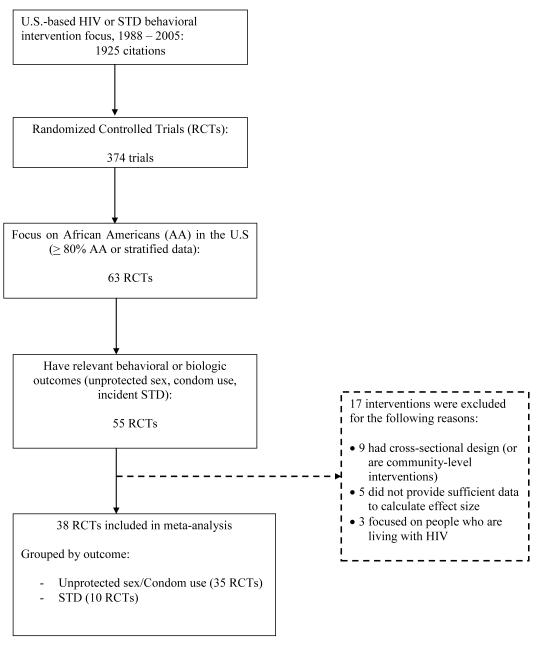
Methods: Comprehensive searches included electronic databases from 1988 to 2005, handsearches of journals, reference lists of articles, and contacts with researchers. Thirty-eight randomized controlled trials met the selection criteria. Random-effects models were used to aggregate data.
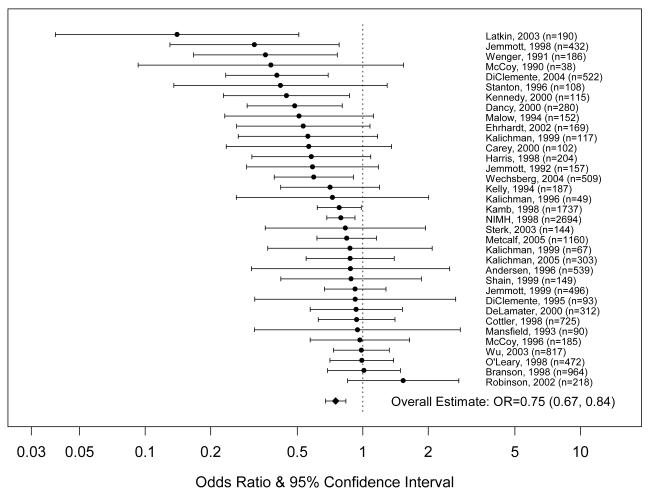
Results: Interventions significantly reduced unprotected sex (odds ratio = 0.75; 95% confidence interval = 0.67, 0.84; 35 trials; N = 14 682) and marginally significantly decreased incident sexually transmitted diseases (odds ratio = 0.88; 95% confidence interval = 0.72, 1.07; 10 trials; N = 10 944). Intervention characteristics associated with efficacy include cultural tailoring, aiming to influence social norms in promoting safe sex behavior, utilizing peer education, providing skills training on correct use of condoms and communication skills needed for negotiating safer sex, and multiple sessions and opportunities to practice learned skills.
Conclusion: Interventions targeting heterosexual African Americans are efficacious in reducing HIV-risk sex behaviors. Efficacious intervention components identified in this study should be incorporated into the development of future interventions and further evaluated for effectiveness.
Figures
References
-
- Centers for Disease Control and Prevention . HIV/AIDS Surveillance Report, 2004. Vol. 16. US Department of Health and Human Services, Centers for Disease Control and Prevention; Atlanta: 2005. Also available at: http://www.cdc.gov/hiv/stats/hasrlink.htm.
-
- Centers for Disease Control and Prevention Racial ethnic disparities in diagnoses of HIV/AIDS – 33 states, 2001-2004. Morbidity and Mortality weekly Report (MMWR) 2006;55:121–125. - PubMed
-
- Herbst JH, Sherba RT, Crepaz N, DeLuca JB, Zohrabyah L, Stall RD, Lyles CM, for the HIV/AIDS Prevention Research Synthesis Team A meta-analytic review of HIV behavioral interventions for reducing sexual risk behavior of men who have sex with men. JAIDS. 2005;39:228–241. - PubMed
-
- Johnson WD, Hedges LV, Ramirez G, Semann S, Norman LR, Sogolow E, et al. HIV prevention research for men who have sex with men: a systematic review and meta-analysis. J Acquir Immune Defic Syndr. 2002 Jul 1;30(Suppl 1):S118–129. - PubMed
-
- Johnson WD, Holtgrave DR, McClellan WM, Flanders WD, Hill AN, Goodman M. HIV intervention research for men who have sex with men: a 7-year update. AIDS Education and Prevention. 2005;17(6):568–589. - PubMed
Publication types
MeSH terms
Grants and funding
LinkOut - more resources
Full Text Sources
Medical
Miscellaneous
