


Safety and efficacy of acupuncture in children: a review of the evidence
- PMID: 18525459
- PMCID: PMC2518962
- DOI: 10.1097/MPH.0b013e318165b2cc
Safety and efficacy of acupuncture in children: a review of the evidence
Abstract
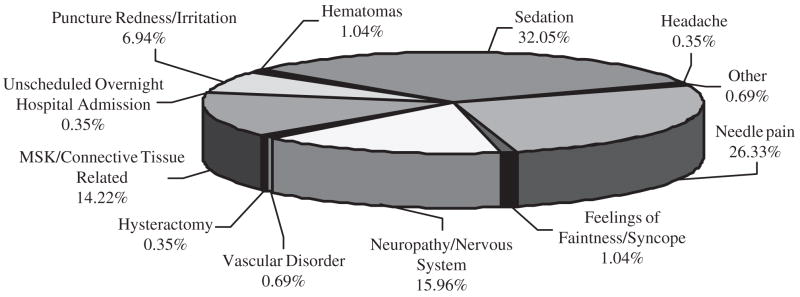
Acupuncture has been used therapeutically in China for thousands of years and is growing in prominence in Europe and the United States. In a recent review of complementary and alternative medicine use in the US population, an estimated 2.1 million people or 1.1% of the population sought acupuncture care during the past 12 months. Four percent of the US population used acupuncture at any time in their lives. We reviewed 31 different published journal articles, including 23 randomized controlled clinical trials and 8 meta-analysis/systematic reviews. We found evidence of some efficacy and low risk associated with acupuncture in pediatrics. From all the conditions we reviewed, the most extensive research has looked into acupuncture's role in managing postoperative and chemotherapy-induced nausea/vomiting. Postoperatively, there is far more evidence of acupuncture's efficacy for pediatrics than for children treated with chemotherapy. Acupuncture seems to be most effective in preventing postoperative induced nausea in children. For adults, research shows that acupuncture can inhibit chemotherapy-related acute vomiting, but conclusions about its effects in pediatrics cannot be made on the basis of the available published clinical trials data to date. Besides nausea and vomiting, research conducted in pain has yielded the most convincing results on acupuncture efficacy. Musculoskeletal and cancer-related pain commonly affects children and adults, but unfortunately, mostly adult studies have been conducted thus far. Because the manifestations of pain can be different in children than in adults, data cannot be extrapolated from adult research. Systematic reviews have shown that existing data often lack adequate control groups and sample sizes. Vas et al, Alimi et al, and Mehling et al demonstrated some relief for adults treated with acupuncture but we could not find any well-conducted randomized controlled studies that looked at pediatrics and acupuncture exclusively. Pain is often unresolved from drug therapy, thus there is a need for more studies in this setting. For seasonal allergic rhinitis, we reviewed studies conducted by Ng et al and Xue et al in children and adults, respectively. Both populations showed some relief of symptoms through acupuncture, but questions remain about treatment logistics. Additionally, there are limited indications that acupuncture may help cure children afflicted with nocturnal enuresis. Systematic reviews show that current published trials have suffered from low trial quality, including small sample sizes. Other areas of pediatric afflictions we reviewed that suffer from lack of research include asthma, other neurologic conditions, gastrointestinal disorders, and addiction. Acupuncture has become a dominant complementary and alternative modality in clinical practice today, but its associated risk has been questioned. The National Institutes of Health Consensus Statement states "one of the advantages of acupuncture is that the incidence of adverse effects is substantially lower than that of many drugs or other accepted procedures for the same conditions." A review of serious adverse events by White et al found the risk of a major complication occurring to have an incidence between 1:10,000 and 1:100,000, which is considered "very low." Another study found that the risk of a serious adverse event occurring from acupuncture therapy is the same as taking penicillin. The safety of acupuncture is a serious concern, particularly in pediatrics. Because acupuncture's mechanism is not known, the use of needles in children becomes questionable. For example, acupoints on the vertex of infants should not be needled when the fontanel is not closed. It is also advisable to apply few needles or delay treatment to the children who have overeaten, are overfatigued, or are very weak. Through our review of pediatric adverse events, we found a 1.55 risk of adverse events occurring in 100 treatments of acupuncture that coincides with the low risk detailed in the studies mentioned previously. The actual risk to an individual patient is hard to determine because certain patients, such as an immunosuppressed patient, can be predisposed to an increased risk, acupuncturist's qualifications differ, and practices vary in certain parts of the world. Nevertheless, it seems acupuncture is a safe complementary/alternative medicine modality for pediatric patients on the basis of the data we reviewed.
Figures
References
-
- Aung SKH, Chen WP-D. Clinical Introduction to Medical Acupuncture. New York: Thieme; 2007.
-
- Barnes PM, Powell-Griner E, McFann K, et al. Complementary and alternative medicine use among adults: United States, 2002. Adv Data. 2004;343:1–19. - PubMed
-
-
Acupuncture. NIH Consensus Statement Online 1997 Nov 3–5; 15:1–34.
-
-
- Dune LS, Shiao SY. Metaanalysis of acustimulation effects on postoperative nausea and vomiting in children. Explore (NY) 2006;2:314–320. - PubMed
-
- Lin YC, Lee AC, Kemper KJ, et al. Use of complementary and alternative medicine in pediatric pain management service: a survey. Pain Med. 2005;6:452–458. - PubMed
MeSH terms
Grants and funding
LinkOut - more resources
Full Text Sources
Medical
Miscellaneous
