A genome-wide scan for common genetic variants with a large influence on warfarin maintenance dose
- PMID: 18535201
- PMCID: PMC2515139
- DOI: 10.1182/blood-2008-01-134247
A genome-wide scan for common genetic variants with a large influence on warfarin maintenance dose
Abstract
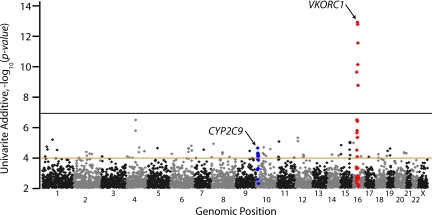
Warfarin dosing is correlated with polymorphisms in vitamin K epoxide reductase complex 1 (VKORC1) and the cytochrome P450 2C9 (CYP2C9) genes. Recently, the FDA revised warfarin labeling to raise physician awareness about these genetic effects. Randomized clinical trials are underway to test genetically based dosing algorithms. It is thus important to determine whether common single nucleotide polymorphisms (SNPs) in other gene(s) have a large effect on warfarin dosing. A retrospective genome-wide association study was designed to identify polymorphisms that could explain a large fraction of the dose variance. White patients from an index warfarin population (n = 181) and 2 independent replication patient populations (n = 374) were studied. From the approximately 550 000 polymorphisms tested, the most significant independent effect was associated with VKORC1 polymorphisms (P = 6.2 x 10(-13)) in the index patients. CYP2C9 (rs1057910 CYP2C9*3) and rs4917639) was associated with dose at moderate significance levels (P approximately 10(-4)). Replication polymorphisms (355 SNPs) from the index study did not show any significant effects in the replication patient sets. We conclude that common SNPs with large effects on warfarin dose are unlikely to be discovered outside of the CYP2C9 and VKORC1 genes. Randomized clinical trials that account for these 2 genes should therefore produce results that are definitive and broadly applicable.
Figures
References
-
- Rettie AE, Tai G. The pharmocogenomics of warfarin: closing in on personalized medicine. Mol Interv. 2006;6:223–227. - PubMed
-
- Rieder MJ. Pharmacogenetics of warfarin for potential clinical application. Curr Cardiovasc Rep. 2007;1:420–426.
-
- Fihn SD, Callahan CM, Martin DC, McDonell MB, Henikoff JG, White RH. The risk for and severity of bleeding complications in elderly patients treated with warfarin: the National Consortium of Anticoagulation Clinics. Ann Intern Med. 1996;124:970–979. - PubMed
-
- Rettie AE, Haining RL, Bajpai M, Levy RH. A common genetic basis for idiosyncratic toxicity of warfarin and phenytoin. Epilepsy Res. 1999;35:253–255. - PubMed
Publication types
MeSH terms
Substances
Grants and funding
LinkOut - more resources
Full Text Sources
Other Literature Sources
Medical
Molecular Biology Databases