Randomized trial of behavioral activation, cognitive therapy, and antidepressant medication in the prevention of relapse and recurrence in major depression
- PMID: 18540740
- PMCID: PMC2648513
- DOI: 10.1037/0022-006X.76.3.468
Randomized trial of behavioral activation, cognitive therapy, and antidepressant medication in the prevention of relapse and recurrence in major depression
Abstract
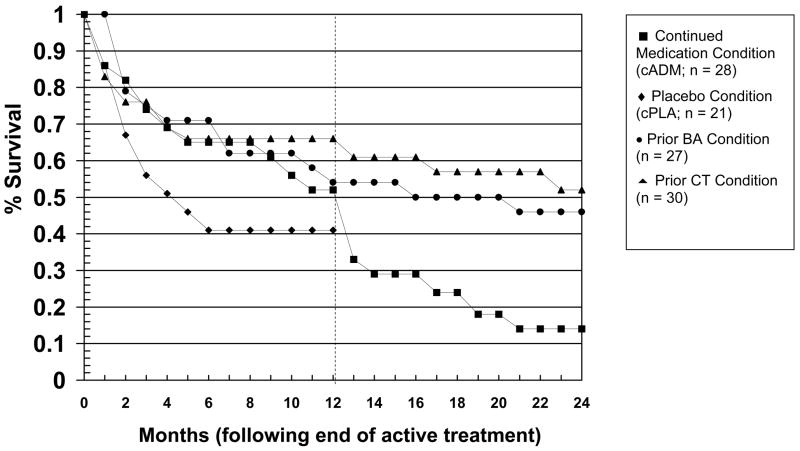
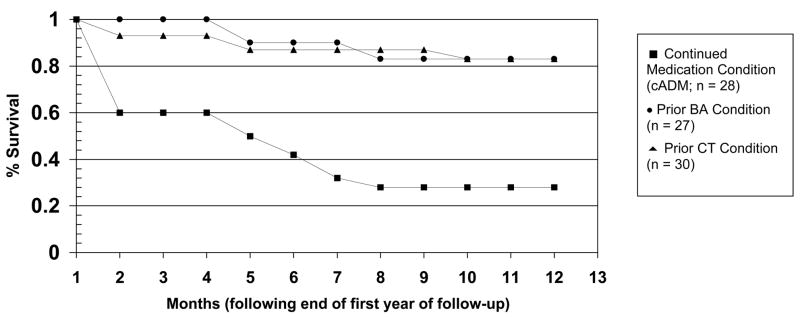
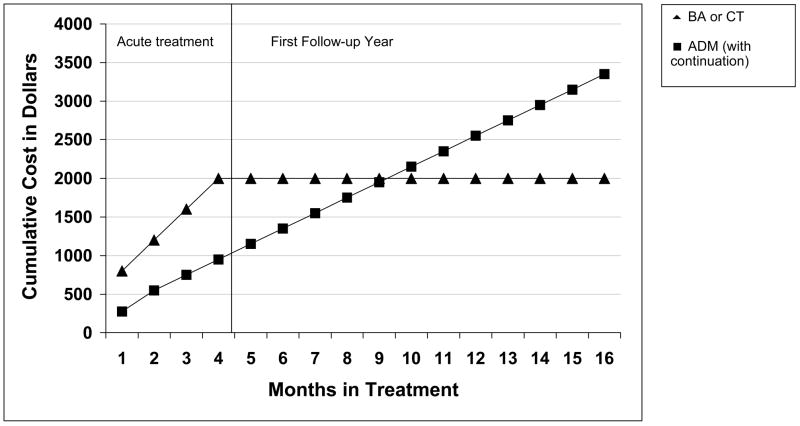
This study followed treatment responders from a randomized controlled trial of adults with major depression. Patients treated with medication but withdrawn onto pill-placebo had more relapse through 1 year of follow-up compared to patients who received prior behavioral activation, prior cognitive therapy, or continued medication. Prior psychotherapy was also superior to medication withdrawal in the prevention of recurrence across the 2nd year of follow-up. Specific comparisons indicated that patients previously exposed to cognitive therapy were significantly less likely to relapse following treatment termination than patients withdrawn from medication, and patients previously exposed to behavioral activation did almost as well relative to patients withdrawn from medication, although the difference was not significantly different. Differences between behavioral activation and cognitive therapy were small in magnitude and not significantly different across the full 2-year follow-up, and each therapy was at least as efficacious as the continuation of medication. These findings suggest that behavioral activation may be nearly as enduring as cognitive therapy and that both psychotherapies are less expensive and longer lasting alternatives to medication in the treatment of depression.
(c) 2008 APA, all rights reserved
Figures
References
-
- American Psychiatric Association. Diagnostic and statistical manual of mental disorders. 4. Washington, DC: Author; 1994.
-
- American Psychiatric Association. Practice guidelines for the treatment of patients with major depressive disorder (revision) American Journal of Psychiatry. 2000;157:1–45. - PubMed
-
- Antonuccio DO, Thomas M, Danton WG. A cost-effectiveness analysis of cognitive behavior therapy and fluoxetine (Prozac) in the treatment of depression. Behavior Therapy. 1997;28:187–210.
-
- Beck AT, Rush AJ, Shaw BF, Emery G. Cognitive Therapy of Depression. New York: Guilford Press; 1979.
-
- Beck AT, Steer RA, Brown GK. Manual for the BDI-II. San Antonio, TX: The Psychological Corporation; 1996.
Publication types
MeSH terms
Substances
Grants and funding
LinkOut - more resources
Full Text Sources
Other Literature Sources
Medical