


A placebo-controlled randomized clinical trial of naltrexone in the context of different levels of psychosocial intervention
- PMID: 18540910
- PMCID: PMC3812909
- DOI: 10.1111/j.1530-0277.2008.00698.x
A placebo-controlled randomized clinical trial of naltrexone in the context of different levels of psychosocial intervention
Abstract
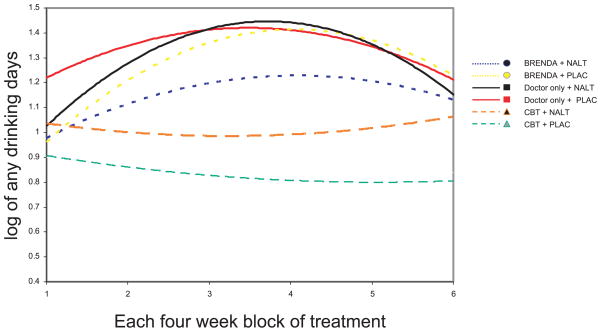
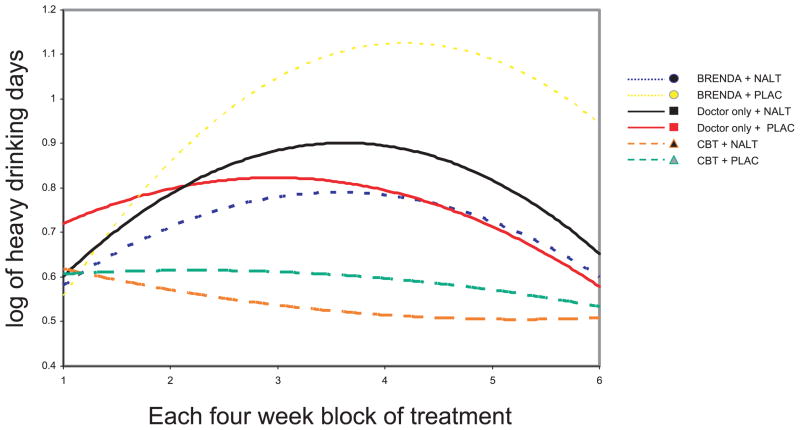
Background: Naltrexone is approved for the treatment of alcohol dependence when used in conjunction with a psychosocial intervention. This study was undertaken to examine the impact of 3 types of psychosocial treatment combined with either naltrexone or placebo treatment on alcohol dependency over 24 weeks of treatment: (1) Cognitive-Behavioral Therapy (CBT) + medication clinic, (2) BRENDA (an intervention promoting pharmacotherapy) + medication clinic, and (3) a medication clinic model with limited therapeutic content.
Methods: Two hundred and forty alcohol-dependent subjects were enrolled in a 24-week double-blind placebo-controlled study of naltrexone (100 mg/d). Subjects were also randomly assigned to 1 of 3 psychosocial interventions. All patients were assessed for alcohol use, medication adherence, and adverse events at regularly scheduled research visits.
Results: There was a modest main treatment effect for the psychosocial condition favoring those subjects randomized to CBT. Intent-to-treat analyses suggested that there was no overall efficacy of naltrexone and no medication by psychosocial intervention interaction. There was a relatively low level of medication adherence (50% adhered) across conditions, and this was associated with poor outcome.
Conclusions: Results from this 24-week treatment study demonstrate the importance of the psychosocial component in the treatment of alcohol dependence. Moreover, results demonstrate a substantial association between medication adherence and treatment outcomes. The findings suggest that further research is needed to determine the appropriate use of pharmacotherapy in maximizing treatment response.
Figures
References
-
- Anton RF. New methodologies for pharmacological treatment trials for alcohol dependence. Alcohol Clin Exp Res. 1996;20:3A–9A. - PubMed
-
- Anton RF, Moak DH, Latham P, Waid LR, Myrick H, Voronin K, Thevos A, Wang W, Woolson R. Naltrexone combined with either cognitive behavioral or motivational enhancement therapy for alcohol dependence. J Clin Psychopharmacol. 2005;25:349–357. - PubMed
-
- Anton RF, Moak DH, Waid LR, Latham PK, Malcolm RJ, Dias JK. Naltrexone and cognitive behavioral therapy for the treatment of outpatient alcoholics: results of a placebo-controlled trial. Am J Psychiatry. 1999;156:1758–1764. - PubMed
-
- Anton RF, O’Malley SS, Ciraulo DA, Cisler RA, Couper D, Donovan DM, Gastfriend DR, Hosking JD, Johnson BA, LoCastro JS, Longabaugh R, Mason BJ, Mattson ME, Miller WR, Pettinati HM, Randall CL, Swift R, Weiss RD, Williams LD, Zweben A. Combined pharmacotherapies and behavioral interventions for alcohol dependence: the COMBINE study: a randomized controlled trial. JAMA. 2006;295:2003–2017. - PubMed
-
- Bouza C, Magro A, Munoz A, Amate JM. Efficacy and safety of naltrexone and acamprosate in the treatment of alcohol dependence: a systematic review. Addiction. 2004;99:811–828. - PubMed
Publication types
MeSH terms
Substances
Grants and funding
LinkOut - more resources
Full Text Sources
Medical
