


Effect of calcium supplementation on fracture risk: a double-blind randomized controlled trial
- PMID: 18541589
- PMCID: PMC3773875
- DOI: 10.1093/ajcn/87.6.1945
Effect of calcium supplementation on fracture risk: a double-blind randomized controlled trial
Abstract
Background: The effect of supplementation with calcium alone on risk fractures in a healthy population is not clear.
Objective: The objective was to determine whether 4 y of calcium supplementation would reduce the fracture risk during treatment and subsequent follow-up in a randomized placebo-controlled trial.
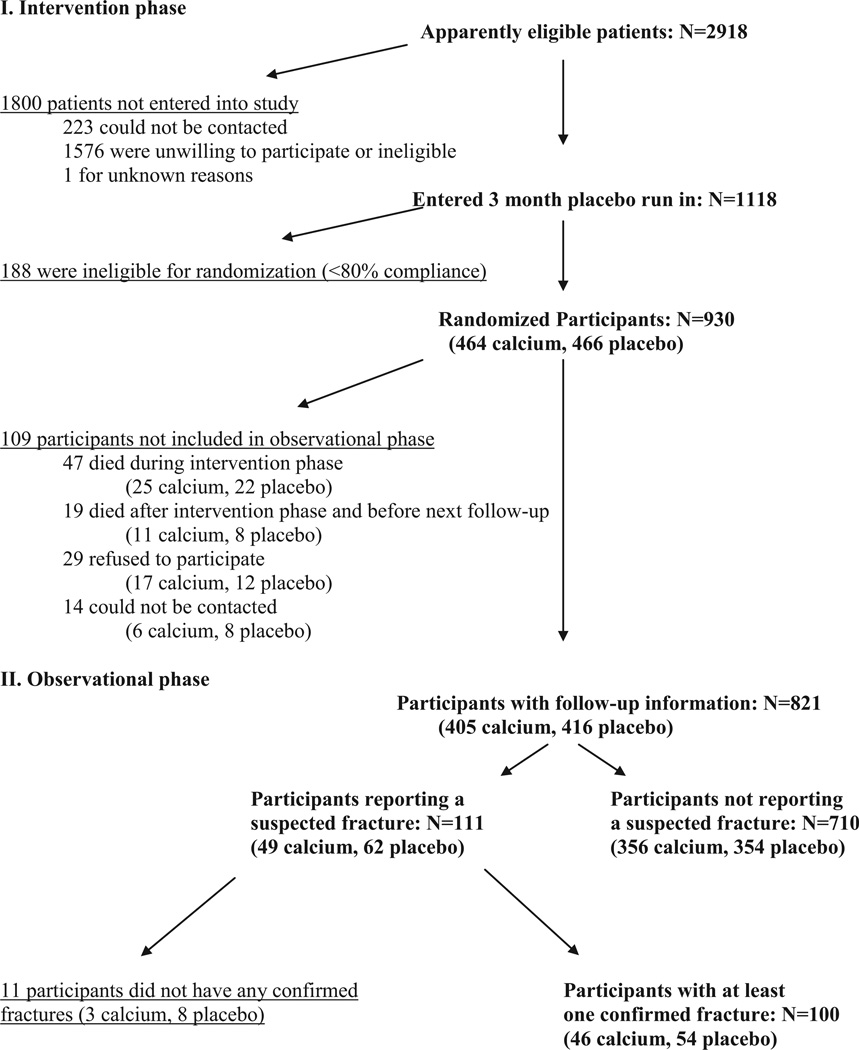
Design: The participants were aged <80 y at study entry (mean age: 61 y), were generally healthy, and had a recent diagnosis of colorectal adenoma. A total of 930 participants (72% men; mean age: 61 y) were randomly assigned to receive 4 y of treatment with 3 g CaCO(3) (1200 mg elemental Ca) daily or placebo and were followed for a mean of 10.8 y. The primary outcomes of this analysis were all fractures and minimal trauma fractures (caused by a fall from standing height or lower while sitting, standing, or walking).
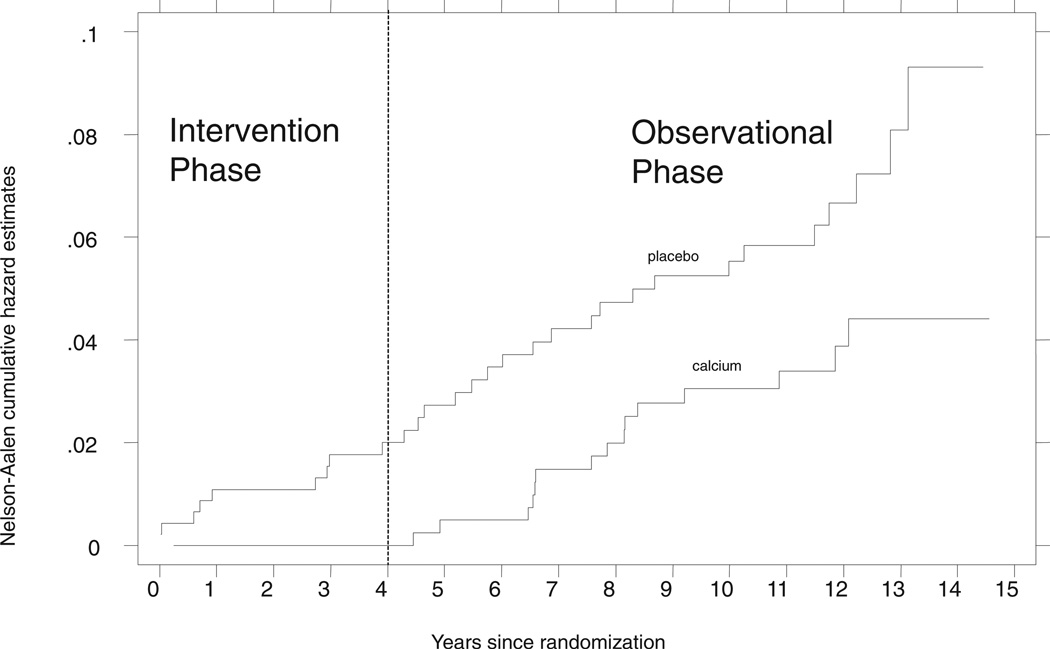
Results: There were 46 fractures (15 from minimal trauma) in 464 participants in the calcium group and 54 (29 from minimal trauma) in 466 participants in the placebo group. The overall risk of fracture differed significantly between groups during the treatment phase [hazard ratio (HR): 0.28; 95% CI: 0.09, 0.85], but not during the subsequent posttreatment follow-up (HR: 1.10; 95% CI: 0.71, 1.69). Minimal trauma fractures were also less frequent in the calcium group during treatment (HR: 0; 95% CI: 0, 0.50).
Conclusion: Calcium supplementation reduced the risk of all fractures and of minimal trauma fractures among healthy individuals. The benefit appeared to dissipate after treatment was stopped. This trial was registered at clinicaltrials.gov as NCT00153816.
Conflict of interest statement
The authors’ responsibilities were as follows—HAB-F: had full access to all of the data in the study and takes responsibility for the integrity of the data and the accuracy of the data analysis; HAB-F, JRR, and JAB: study concept and design; JAB: administrative, technical, and material support; HAB-F and JAB: obtained funding; HAB-F, JRR, MVG, and JAB: acquisition of data; and HAB-F, JRR, and MVG: conducted the statistical analysis. All authors drafted the manuscript, critically revised the manuscript for important intellectual content, and analyzed and interpreted the data. No sponsors participated in the design and conduct of the study; in the collection, analysis, and interpretation of the data; or in the preparation, review, or approval of the manuscript. No conflicts of interest were declared.
Figures
References
-
- AACE. American Association of Clinical Endocrinologists medical guidelines for clinical practice for the prevention and treatment of post-menopausal osteoporosis: 2001 ed, with selected updates for 2003. [accessed 29 March 2004]; Internet: http://www.guideline.gov/summary/summary.aspx?doc_id=4157&nbr=003185&str.... - PubMed
-
- General S. Bone health and osteoporosis: a report of the Surgeon General. 2004 Internet: http://www.surgeongeneral.gov/library/bonehealth/content.html. - PubMed
-
- Health NIo. Osteoporosis prevention, diagnosis, and therapy. NIH Consensus Statement. 2000 Internet: http://consensus.nih.gov/2000/2000Osteoporosis111html.htm. - PubMed
-
- Shea B, Wells G, Cranney A, et al. Meta-analyses of therapies for postmenopausal osteoporosis. VII. Meta-analysis of calcium supplementation for the prevention of postmenopausal osteoporosis. Endocr Rev. 2002;23(4):552–559. - PubMed
-
- Chevalley T, Rizzoli R, Nydegger V, et al. Effects of calcium supplements on femoral bone mineral density and vertebral fracture rate in vitamin-D-replete elderly patients. Osteoporos Int. 1994;4(5):245–252. - PubMed
Publication types
MeSH terms
Substances
Associated data
Grants and funding
LinkOut - more resources
Full Text Sources
Medical
