


Virus adaptation by manipulation of host's gene expression
- PMID: 18545680
- PMCID: PMC2398778
- DOI: 10.1371/journal.pone.0002397
Virus adaptation by manipulation of host's gene expression
Abstract
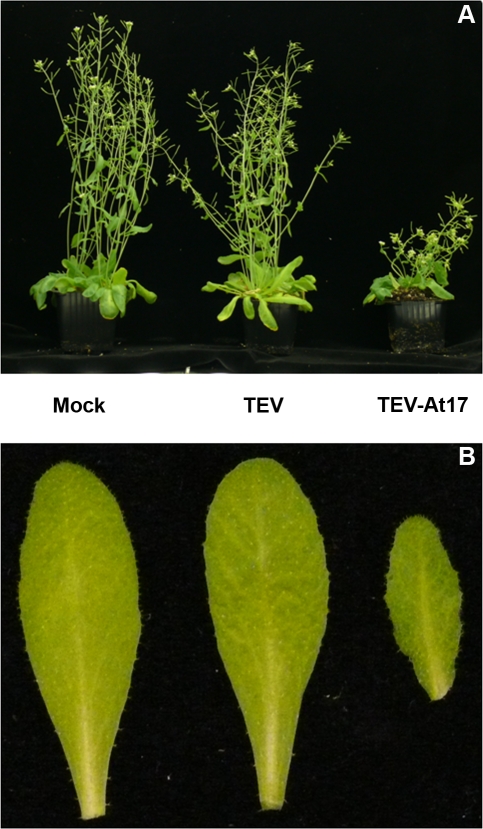
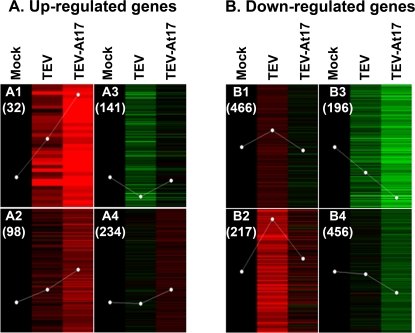
Viruses adapt to their hosts by evading defense mechanisms and taking over cellular metabolism for their own benefit. Alterations in cell metabolism as well as side-effects of antiviral responses contribute to symptoms development and virulence. Sometimes, a virus may spill over from its usual host species into a novel one, where usually will fail to successfully infect and further transmit to new host. However, in some cases, the virus transmits and persists after fixing beneficial mutations that allow for a better exploitation of the new host. This situation would represent a case for a new emerging virus. Here we report results from an evolution experiment in which a plant virus was allowed to infect and evolve on a naïve host. After 17 serial passages, the viral genome has accumulated only five changes, three of which were non-synonymous. An amino acid substitution in the viral VPg protein was responsible for the appearance of symptoms, whereas one substitution in the viral P3 protein the epistatically contributed to exacerbate severity. DNA microarray analyses show that the evolved and ancestral viruses affect the global patterns of host gene expression in radically different ways. A major difference is that genes involved in stress and pathogen response are not activated upon infection with the evolved virus, suggesting that selection has favored viral strategies to escape from host defenses.
Conflict of interest statement
Figures

References
-
- Bohannan BJM, Lenski RE. Linking genetic change to community evolution: insights from studies of bacteria and bacteriophage. Ecol Lett. 2000;3:362–377.
-
- Chao L, Levin BR, Stewart FM. A complex community in a simple habitat: an experimental study with bacteria and phage. Ecology. 1977;58:369–378.
-
- Tilman D. Princeton: Princeton University Press; 1982. Resources Competition and Community Structure. - PubMed
-
- Rainey PB, Travisano M. Adaptive radiation in a heterogeneous environment. Nature. 1998;394:69–72. - PubMed
-
- Bull JJ. Virulence. Evolution. 1994;48:1423–1437. - PubMed
