


High-sugar diets increase cardiac dysfunction and mortality in hypertension compared to low-carbohydrate or high-starch diets
- PMID: 18551017
- PMCID: PMC3103886
- DOI: 10.1097/HJH.0b013e3283007dda
High-sugar diets increase cardiac dysfunction and mortality in hypertension compared to low-carbohydrate or high-starch diets
Abstract
Objective: Sugar consumption affects insulin release and, in hypertension, may stimulate cardiac signaling mechanisms that accelerate left ventricular hypertrophy and the development of heart failure. We investigated the effects of high-fructose or sucrose diets on ventricular function and mortality in hypertensive Dahl salt-sensitive rats.
Methods: Rats were fed chows that were either high starch (70% starch, 10% fat by energy), high fat (20% carbohydrates, 60% fat), high fructose (61% fructose, 9% starch, 10% fat), or high sucrose (61% sucrose, 9% starch, 10% fat). Hypertension was induced by adding 6% salt to the chow (n = 8-11/group).
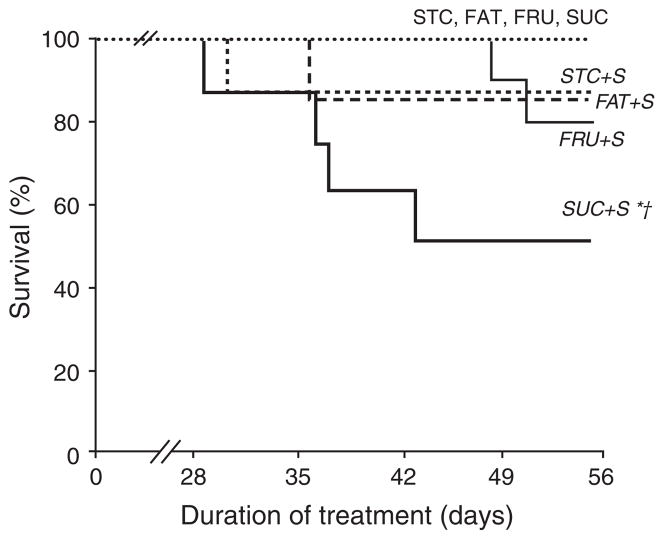
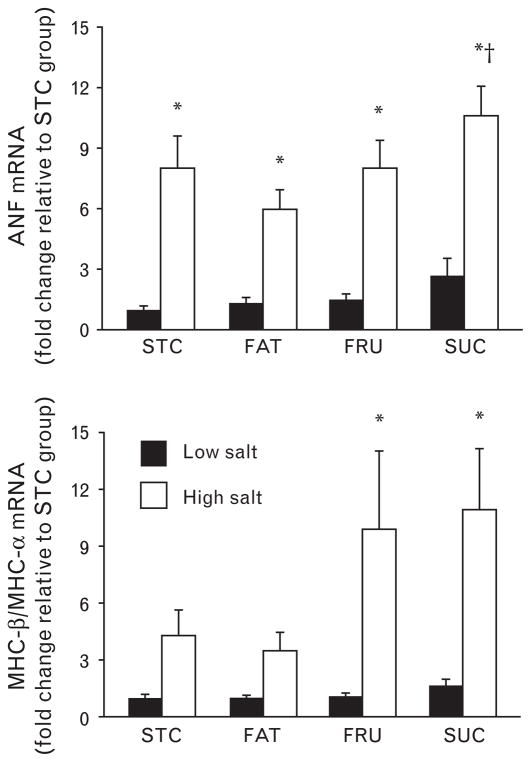
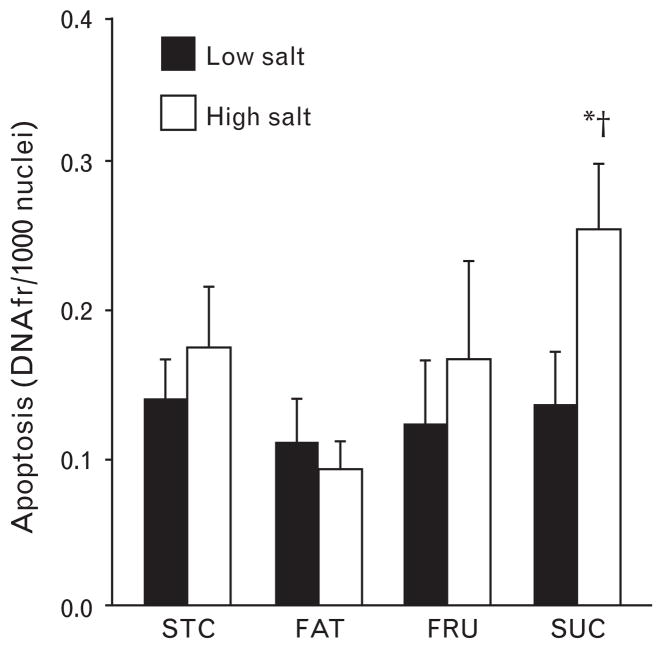
Results: After 8 weeks of treatment, systolic blood pressure and left ventricular mass were similarly increased in all rats that were fed high-salt diets. Hypertension caused a switch in mRNA myosin heavy chain isoform from alpha to beta, and this effect was greater in the high-salt sucrose and fructose groups than in starch and fat groups. The cardiac mRNA for atrial natriuretic factor was also increased in all high-salt groups compared to respective controls, with the increase being significantly greater in the hypertensive sucrose fed group. Mortality was greater in the sucrose group (44%) compared to all the other hypertensive groups (12-18%), as was cardiomyocyte apoptosis. Left ventricular ejection fraction was lower in the high-salt sucrose group, which was due to an increase in end-systolic volume, and not increased end-diastolic volume.
Conclusion: Diets high in sugar accelerated cardiac systolic dysfunction and mortality in hypertension compared to either a low-carbohydrate/high-fat or high-starch diet.
Conflict of interest statement
There are no conflicts of interest.
Figures
References
-
- Gradman AH, Alfayoumi F. From left ventricular hypertrophy to congestive heart failure: management of hypertensive heart disease. Prog Cardiovasc Dis. 2006;48:326–341. - PubMed
-
- Kannel WB. Incidence and epidemiology of heart failure. Heart Fail Rev. 2000;5:167–173. - PubMed
-
- Lichtenstein AH, Appel LJ, Brands M, Carnethon M, Daniels S, Franch HA, et al. Diet and lifestyle recommendations revision 2006: a scientific statement from the American Heart Association Nutrition Committee. Circulation. 2006;114:82–96. - PubMed
-
- Okere IC, Chess DJ, McElfresh TA, Johnson J, Rennison J, Ernsberger P, et al. High-fat diet prevents cardiac hypertrophy and improves contractile function in the hypertensive Dahl salt-sensitive rat. Clin Exp Pharmacol Physiol. 2005;32:825–831. - PubMed
-
- Okere IC, Young ME, McElfresh TA, Chess DJ, Sharov VG, Sabbah HN, et al. Low carbohydrate/high-fat diet attenuates cardiac hypertrophy, remodeling, and altered gene expression in hypertension. Hypertension. 2006;48:1116–1123. - PubMed
Publication types
MeSH terms
Substances
Grants and funding
LinkOut - more resources
Full Text Sources
Other Literature Sources
Medical
