


Xanthones from the botanical dietary supplement mangosteen (Garcinia mangostana) with aromatase inhibitory activity
- PMID: 18558747
- PMCID: PMC2572570
- DOI: 10.1021/np8000255
Xanthones from the botanical dietary supplement mangosteen (Garcinia mangostana) with aromatase inhibitory activity
Abstract
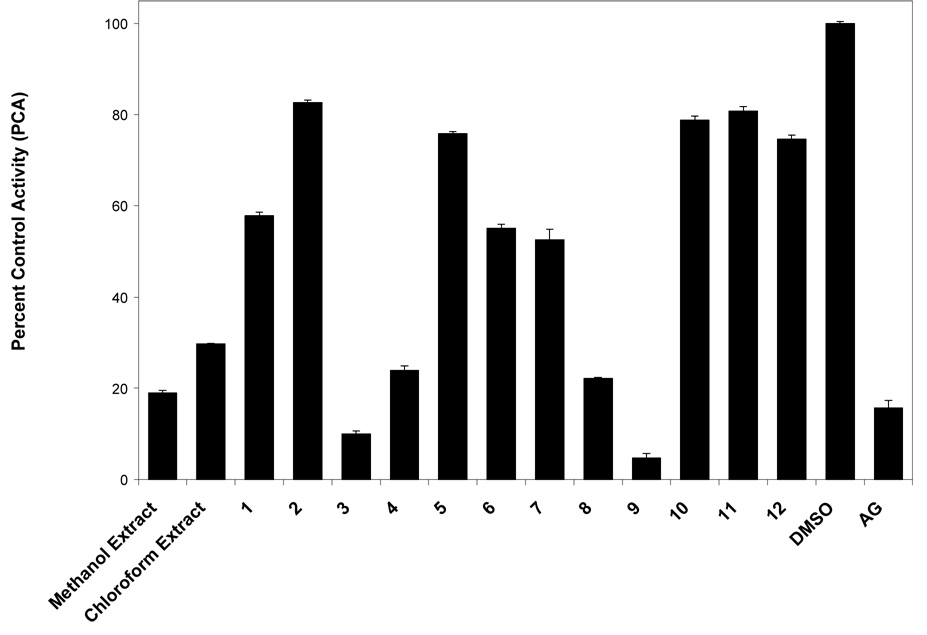
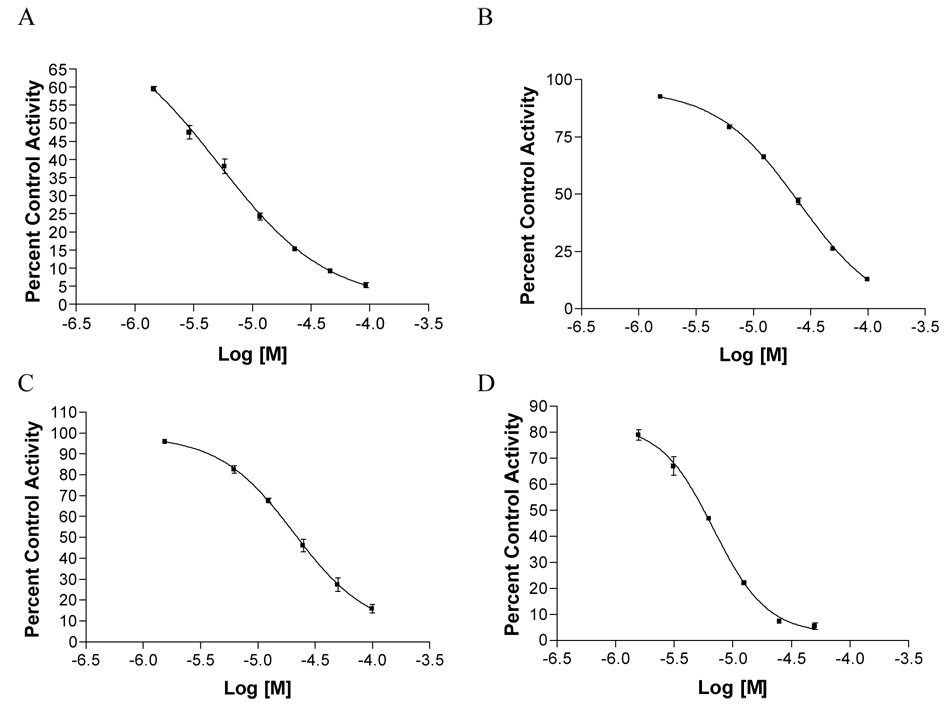
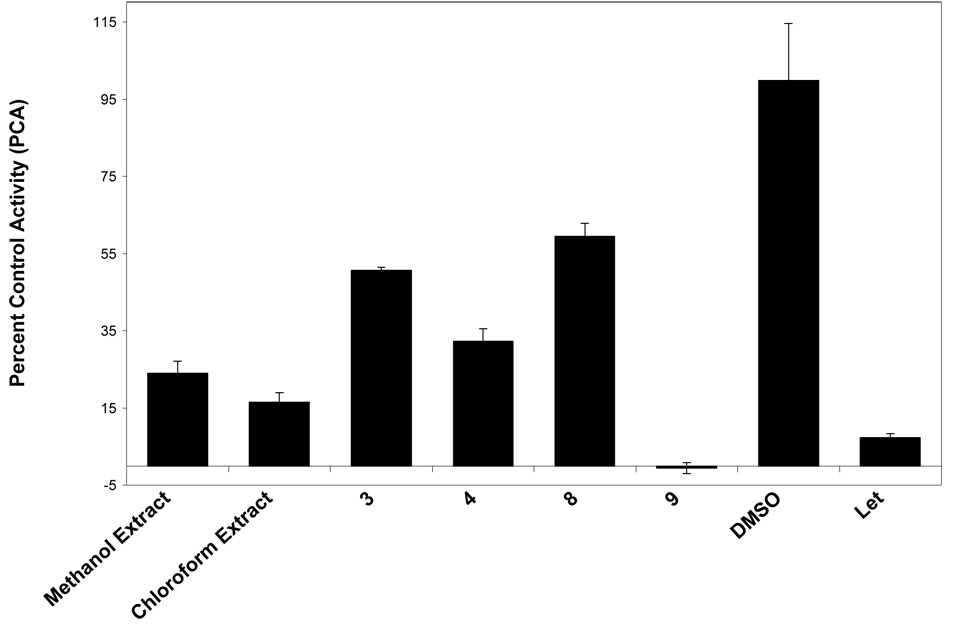
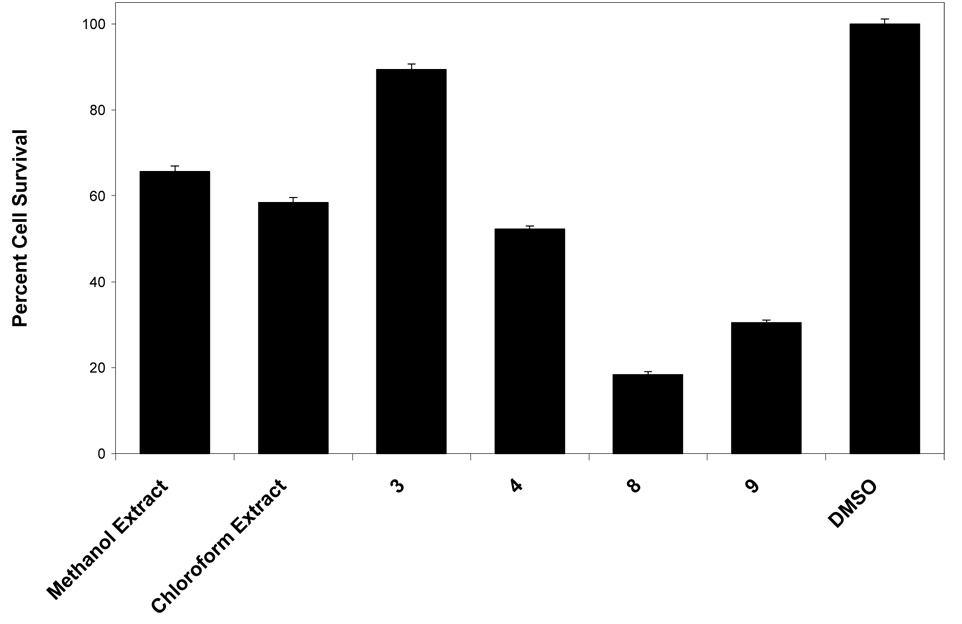
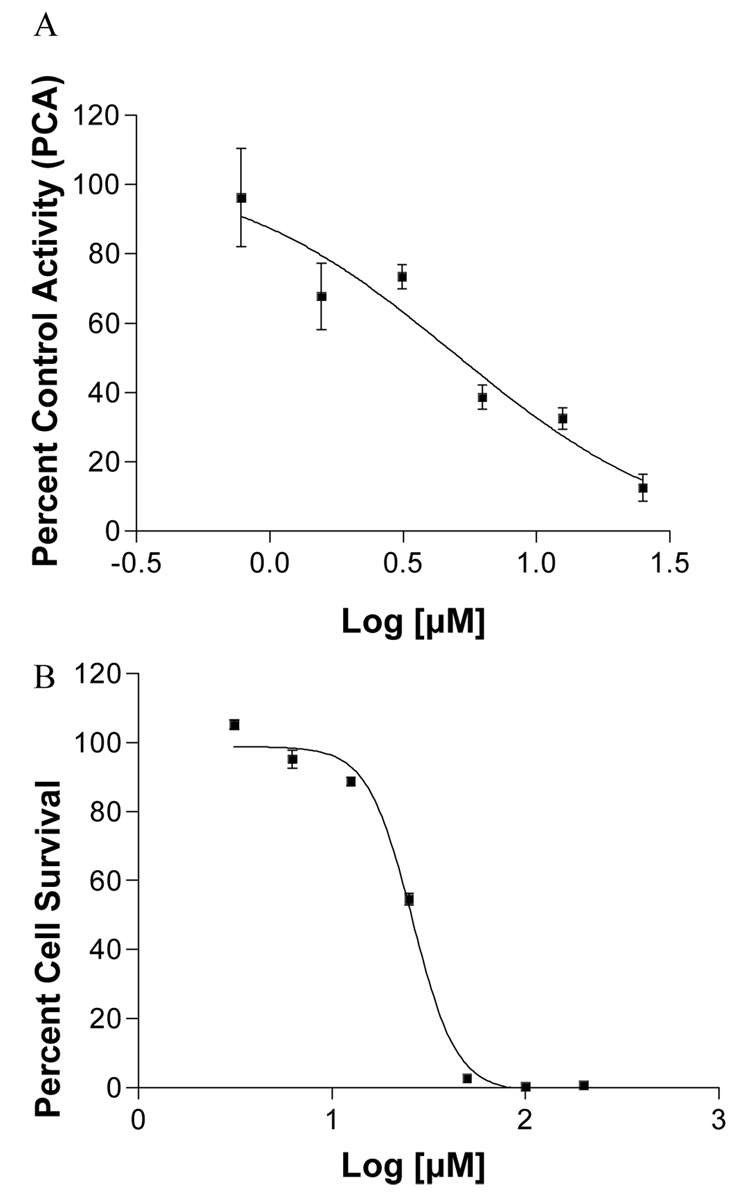
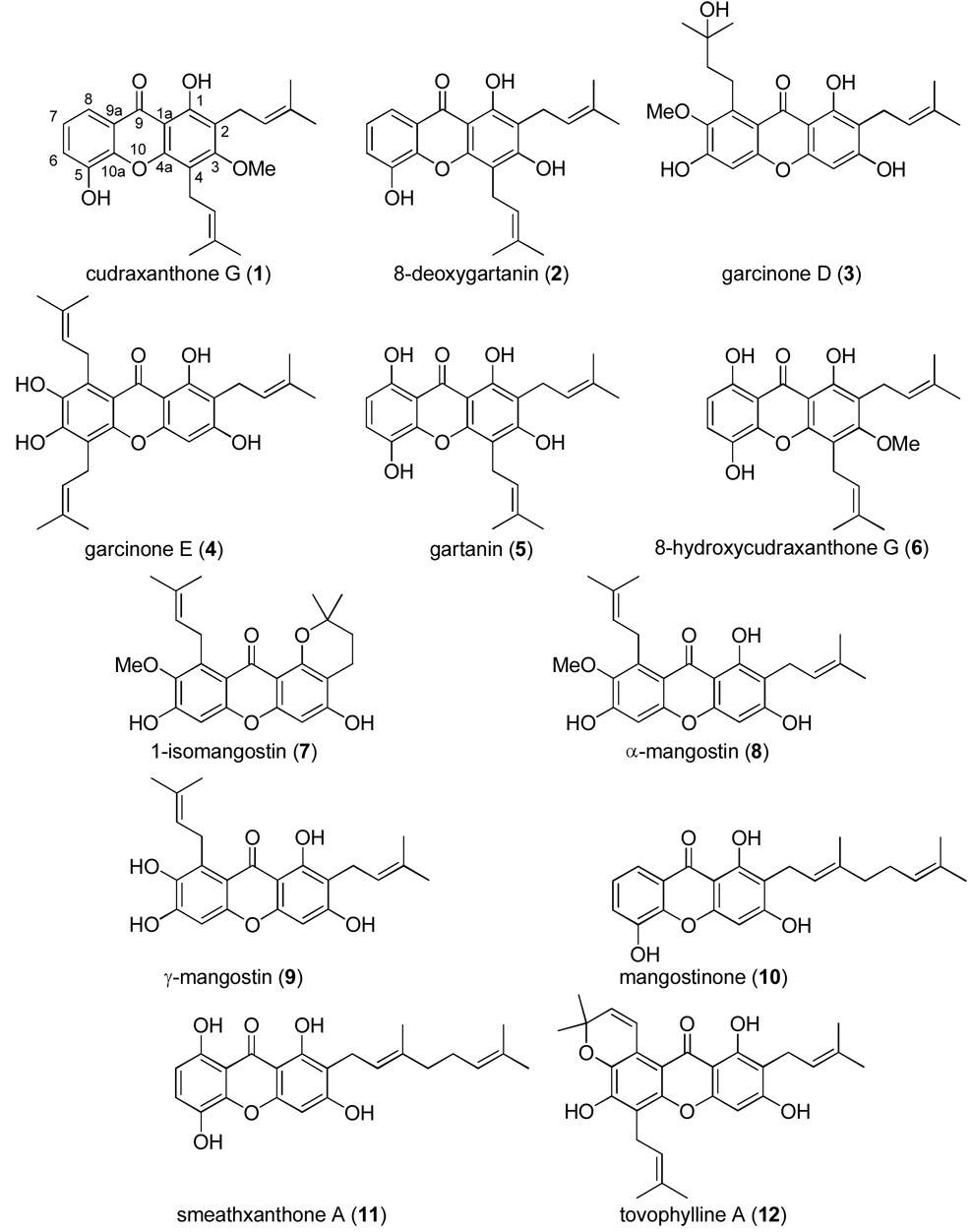
Twelve xanthone constituents of the botanical dietary supplement mangosteen (the pericarp of Garcinia mangostana) were screened using a noncellular, enzyme-based microsomal aromatase inhibition assay. Of these compounds, garcinone D (3), garcinone E (5), alpha-mangostin (8), and gamma-mangostin (9) exhibited dose-dependent inhibitory activity. In a follow-up cell-based assay using SK-BR-3 breast cancer cells that express high levels of aromatase, the most potent of these four xanthones was gamma-mangostin (9). Because xanthones may be consumed in substantial amounts from commercially available mangosteen products, the consequences of frequent intake of mangosteen botanical dietary supplements require further investigation to determine their possible role in breast cancer chemoprevention.
Figures
References
-
- Parkin DM. Lancet Oncol. 2001;2:533–543. - PubMed
-
- Jemal A, Siegel R, Ward E, Murray T, Xu J, Thun MJ. CA Cancer J. Clin. 2007;57:43–66. - PubMed
-
- Osborne CK, Schiff R, Fuqua SAW, Shou J. Clin. Cancer Res. 2001;7:4338s–4342s. - PubMed
-
- Brueggemeier RW, Richards JA, Petrel TA. J. Steroid Biochem. Mol. Biol. 2003;86:501–507. - PubMed
-
- Kuller LH, Matthews KA, Meilahn EN. J. Steroid Biochem. Mol. Biol. 2000;74:297–309. - PubMed
Publication types
MeSH terms
Substances
Grants and funding
LinkOut - more resources
Full Text Sources
Other Literature Sources
Chemical Information
