


Neuroimmunology of central nervous system viral infections: the cells, molecules and mechanisms involved
- PMID: 18562249
- PMCID: PMC2613975
- DOI: 10.1016/j.coph.2008.05.002
Neuroimmunology of central nervous system viral infections: the cells, molecules and mechanisms involved
Abstract
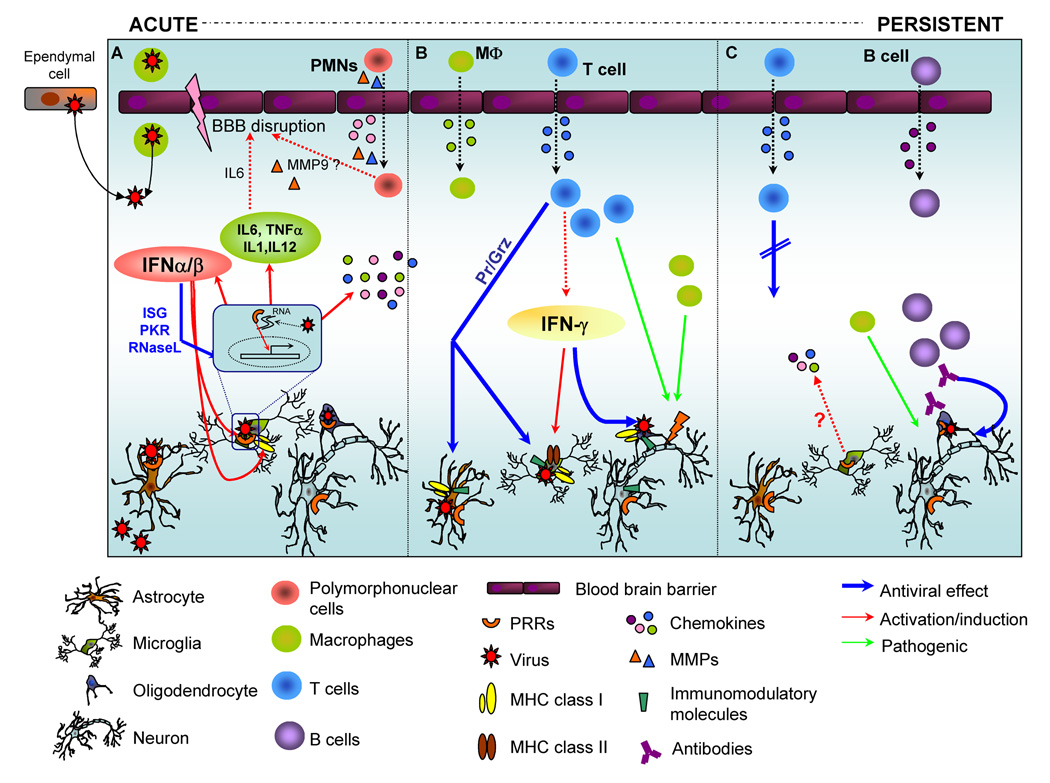
Viral infections of the central nervous system (CNS) necessitate rapid, yet tightly controlled responses to contain viral spread while limiting tissue damage. All CNS resident cell types are equipped with pattern recognition receptors (PRRs) to respond to viruses. The resulting activation of IFN-alpha/beta, pro-inflammatory cytokines and chemokines is dependent on the virus replication strategy, tropism and PRR distribution. Although IFN-alpha/beta induced antiviral mediators are essential to restrict initial viral spread, adaptive immunity promoted by chemokines, cytokines and metalloproteinases is equally crucial in lowering viral burden. Recognition of viral antigen presented by MHC molecules is crucial for T cell retention and function. Non-lytic clearance mechanisms mediated by IFN-gamma and antibodies prevail in providing protection. Targeted intervention can be achieved by PRR stimulation, chemokine-receptor blockade and immune modulation of T cell function. However, owing to the extensive positive and negative feedback signaling cascades linking innate and adaptive immune responses, enhanced anti-viral functions will have to be counterbalanced to avoid pathology.
Figures

References
-
- Galea I, Bechmann I, Perry VH. What is immune privilege (not)? Trends Immunol. 2007;28:12–18. - PubMed
-
- Pichlmair A, Reis e Sousa C. Innate recognition of viruses. Immunity. 2007;27:370–383. - PubMed
-
- Takeuchi O, Akira S. MDA5/RIG-I and virus recognition. Curr Opin Immunol. 2008;20:17–22. - PubMed
-
-
Paul S, Ricour C, Sommereyns C, Sorgeloos F, Michiels T. Type I interferon response in the central nervous system. Biochimie. 2007;89:770–778. A review of protective and toxic effects of IFN-α/β responses during CNS diseases, including cell types expressing TLRs, IFNs and ISGs.
-
Publication types
MeSH terms
Substances
Grants and funding
LinkOut - more resources
Full Text Sources
Research Materials
