


Vaginal microbicide and diaphragm use for sexually transmitted infection prevention: a randomized acceptability and feasibility study among high-risk women in Madagascar
- PMID: 18562985
- PMCID: PMC5826650
- DOI: 10.1097/OLQ.0b013e318175d8ab
Vaginal microbicide and diaphragm use for sexually transmitted infection prevention: a randomized acceptability and feasibility study among high-risk women in Madagascar
Abstract
Background: In preparation for a randomized controlled trial (RCT), we conducted a pilot RCT of the acceptability and feasibility of diaphragms and candidate vaginal microbicide for sexually transmitted infection prevention among high-risk women in Madagascar.
Methods: Participants were randomized to four arms: (1) diaphragm (worn continuously) with Acidform applied in the dome; (2) diaphragm (worn continuously) with placebo gel hydroxyethylcellulose (HEC) in the dome; (3) HEC applied intravaginally before sex; (4) Acidform applied intravaginally before sex. All women were given condoms. Participants were followed weekly for 4 weeks. We fit unadjusted negative binomial regression models with robust variance estimators to generate the proportion of sex acts with casual partners where condoms and experimental study products were used.
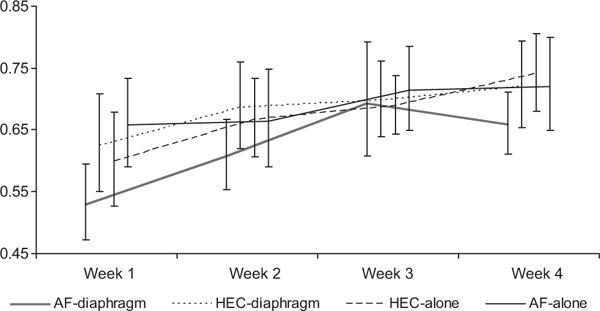
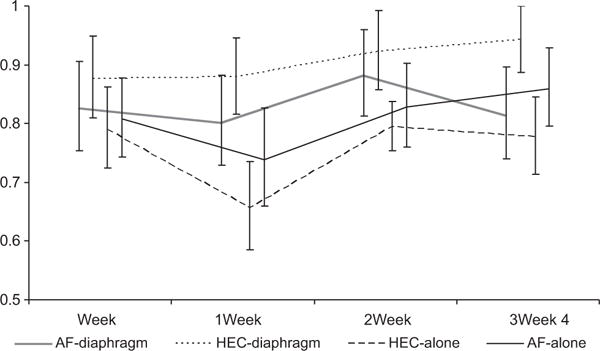
Results: Retention was 98% among 192 participants. Experimental product use with casual partners was high, reported in 85%, 91%, 74%, and 81% of sex acts for women in the Acidform-diaphragm, HEC-diaphragm, HEC-alone, and Acidform-alone arms, respectively. However, the proportion reporting product use during 100% of acts with casual partners over the full follow-up period was much lower: 28% to 29% in the gel-diaphragm arms and 6% to 10% in gel-alone arms. Women used condoms in 62% to 67% of sex acts with casual partners, depending on the randomization arm. Participants found diaphragms easy to insert (97%) and remove (96%). Acidform users (with or without the diaphragm) reported more genitourinary symptoms than HEC users (14% vs. 5% of visits).
Conclusions: A sexually transmitted infection prevention RCT of candidate microbicide with and without the diaphragm appears acceptable and feasible in this population.
Figures
References
-
- Glasier A, Gulmezoglu AM, Schmid GP, et al. Sexual and reproductive health: A matter of life and death. Lancet. 2006;368:1595–1607. - PubMed
-
- Behets FM, Rasolofomanana JR, Van Damme K, et al. Evidence-based treatment guidelines for sexually transmitted infections developed with and for female sex workers. Trop Med Int Health. 2003;8:251–258. - PubMed
Publication types
MeSH terms
Substances
Grants and funding
LinkOut - more resources
Full Text Sources
Medical
