


Induction and effector functions of T(H)17 cells
- PMID: 18563156
- PMCID: PMC6280661
- DOI: 10.1038/nature07036
Induction and effector functions of T(H)17 cells
Abstract
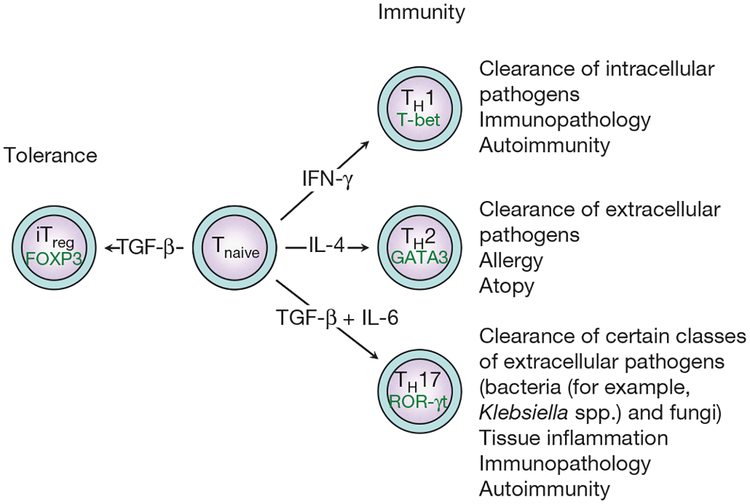
T helper (T(H)) cells constitute an important arm of the adaptive immune system because they coordinate defence against specific pathogens, and their unique cytokines and effector functions mediate different types of tissue inflammation. The recently discovered T(H)17 cells, the third subset of effector T helper cells, have been the subject of intense research aimed at understanding their role in immunity and disease. Here we review emerging data suggesting that T(H)17 cells have an important role in host defence against specific pathogens and are potent inducers of autoimmunity and tissue inflammation. In addition, the differentiation factors responsible for their generation have revealed an interesting reciprocal relationship with regulatory T (T(reg)) cells, which prevent tissue inflammation and mediate self-tolerance.
Figures
References
-
- Mosmann TR & Coffman RL TH1 and TH2 cells: different patterns of lymphokine secretion lead to different functional properties. Annu. Rev. Immunol 7, 145–173 (1989). - PubMed
-
- Fort MM et al. IL-25 induces IL-4, IL-5, and IL-13 and Th2-associated pathologies in vivo. Immunity 15, 985–995 (2001). - PubMed
-
- Kolls JK & Linden A Interleukin-17 family members and inflammation. Immunity 21, 467–476 (2004). - PubMed
-
- Gunimaladevi I, Savan R & Sakai M Identification, cloning and characterization of interleukin-17 and its family from zebrafish. Fish Shellfish Immunol. 21, 393–403 (2006). - PubMed
Publication types
MeSH terms
Substances
Grants and funding
LinkOut - more resources
Full Text Sources
Other Literature Sources
