Review
. 2008 Jul;29(4):569-76.
doi: 10.1016/j.neuro.2008.04.022. Epub 2008 May 14.

Manganese transport in eukaryotes: the role of DMT1

Affiliations
Review

Manganese transport in eukaryotes: the role of DMT1

Catherine Au et al. Neurotoxicology. 2008 Jul.

Abstract

Manganese (Mn) is a transition metal that is essential for normal cell growth and development, but is toxic at high concentrations. While Mn deficiency is uncommon in humans, Mn toxicity is known to be readily prevalent due to occupational overexposure in miners, smelters and possibly welders. Excessive exposure to Mn can cause Parkinson's disease-like syndrome; patients typically exhibit extrapyramidal symptoms that include tremor, rigidity and hypokinesia [Calne DB, Chu NS, Huang CC, Lu CS, Olanow W. Manganism and idiopathic parkinsonism: similarities and differences. Neurology 1994;44(9):1583-6; Dobson AW, Erikson KM, Aschner M. Manganese neurotoxicity. Ann NY Acad Sci 2004;1012:115-28]. Mn-induced motor neuron diseases have been the subjects of numerous studies; however, this review is not intended to discuss its neurotoxic potential or its role in the etiology of motor neuron disorders. Rather, it will focus on Mn uptake and transport via the orthologues of the divalent metal transporter (DMT1) and its possible implications to Mn toxicity in various categories of eukaryotic systems, such as in vitro cell lines, in vivo rodents, the fruitfly, Drosophila melanogaster, the honeybee, Apis mellifera L., the nematode, Caenorhabditis elegans and the baker's yeast, Saccharomyces cerevisiae.


Figures
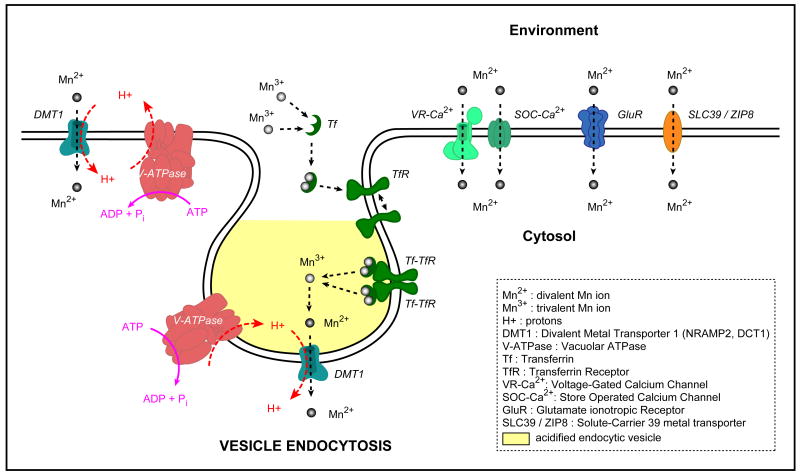
Figure 1
Figure 1. Molecular mechanisms of Mn uptake across the membrane at the blood-brain barrier (BBB)
DMT1 is a symporter energized by the proton-motive force generated by the Vacuolar-ATPase (V-ATPase) which extrudes protons from the cell. The uptake of protons from the extracellular space provides the energy for the transport of Mn2+ cations into the cell. The V-ATPase-generated proton gradient is also responsible for the acidification of endocytic vesicles. Upon acidification, Mn3+ ions released by the transferrin-transferrin receptor system are converted to Mn2+ ions available for transport by DMT1. Transporters such as the voltage-gated and store-operated calcium channels, the glutamate ionotropic receptor and the solute carrier 39 family member ZIP8, are suggested to play a role in Mn uptake at the BBB.
Figure 2
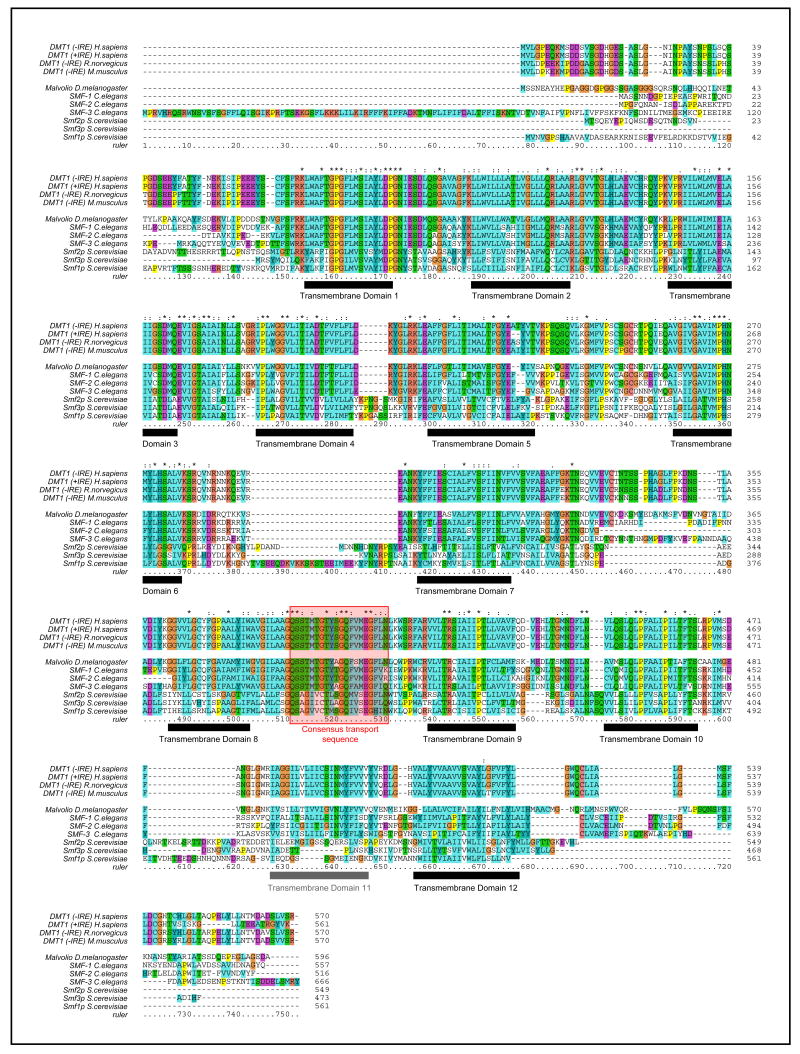
Figure 2. Multiple alignments of DMT1 orthologues in various model organisms
Two splice variants of DMT1 (-IRE and +IRE) are expressed in vertebrates (H. sapiens, R. norvegicus, M. musculus) differing for the very last 18 or 25 amino acids. Only the −IRE is reported here for the rat and the mouse isoforms. DMT1 orthologues are also encoded by the genomes of the fly, D. melanogaster (Malvolio), the nematode, C. elegans (SMF-1, -2, -3) and the baker's yeast, S. cerevisiae (Smf1p, 2p, 3p). All orthologues share the same topology with 12 conserved transmembrane domains (TMD, black and gray boxes) except for the yeast variants, which only contain 11 predicted TMD. All of them also contain a consensus transport sequence between TMD8 and TMD9 (red box).
Figure 3
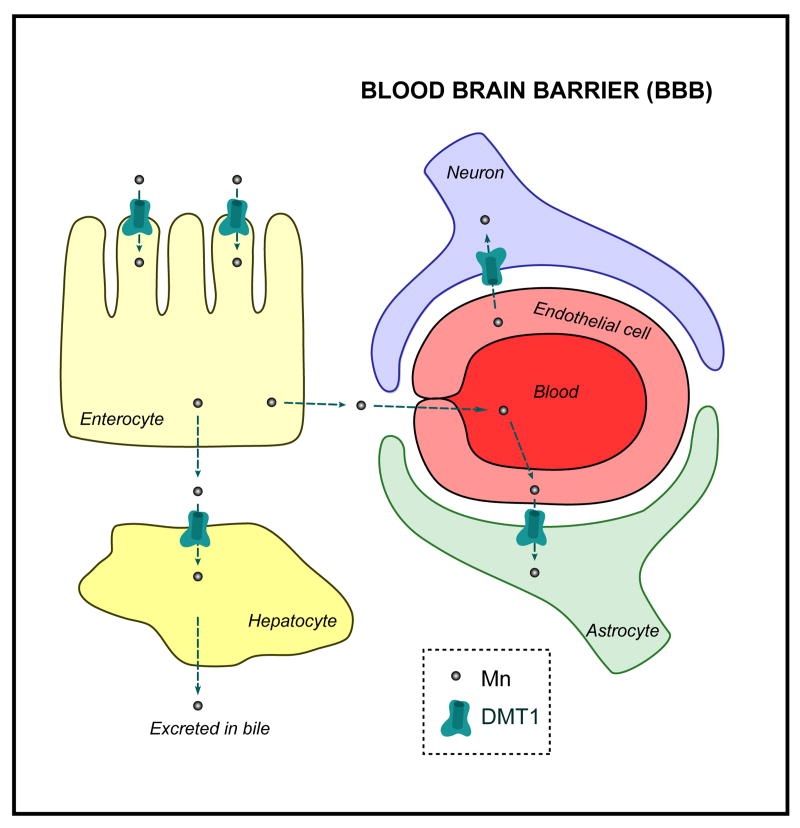
Figure 3. Mn uptake via DMT1 in vertebrates
DMT1 is present at the plasma membrane where it is responsible for Mn cellular uptake. Mn is primarily taken up by entorocytes via DMT1 before reaching the adjacent tissues and the blood. Part of it is then excreted in the bile after absorption by the liver, while some accumulates in the brain after crossing the BBB via DMT1 expressed in glial cells and neurons. Mn uptake mechanisms independent of DMT1 are not represented here.
Figure 4
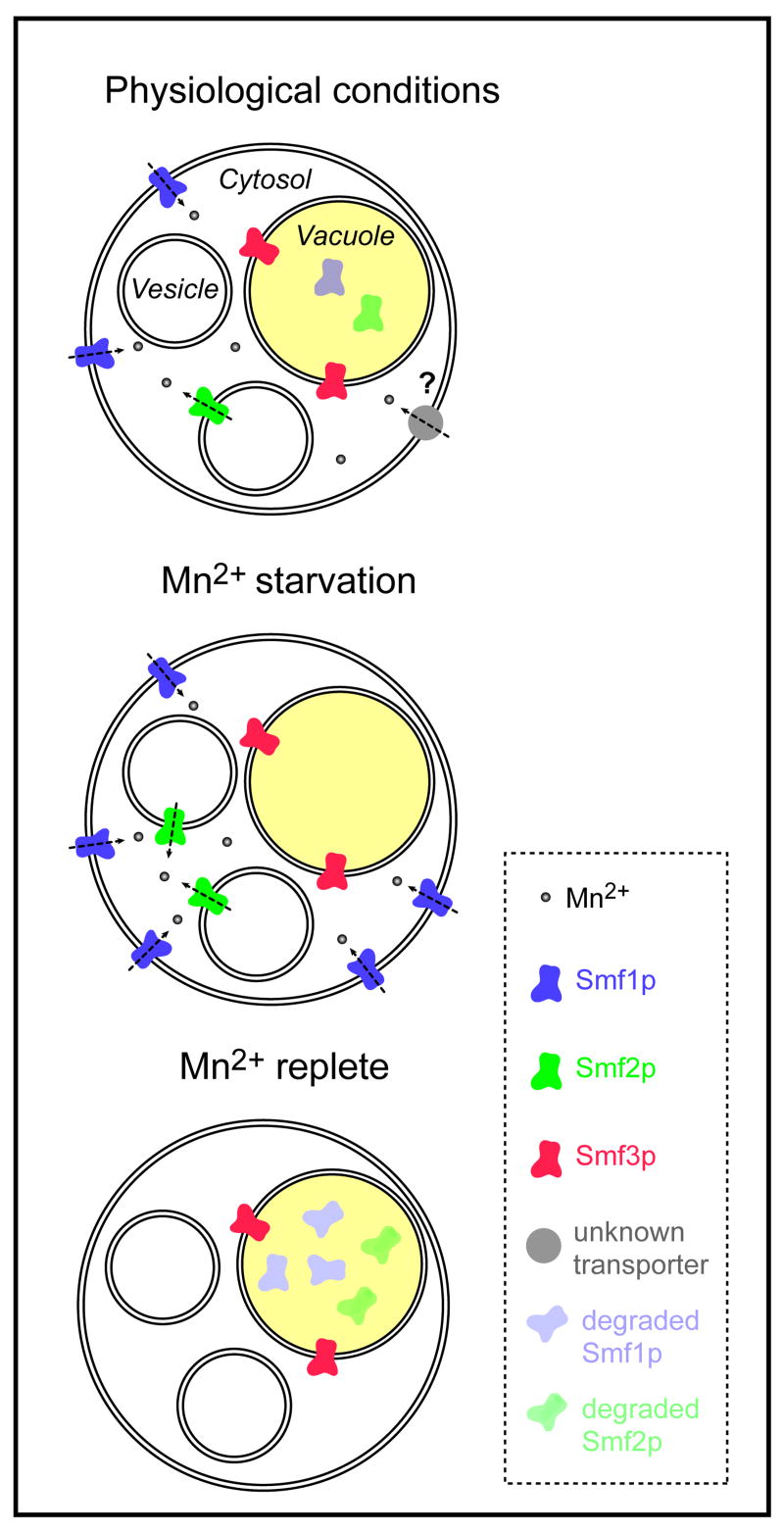
Figure 4. Localization of DMT1 isoforms in yeast upon environmental Mn concentration changes
The yeast genome expresses three DMT1 isoforms: Smf1p, Smf2p and Smf3p. Smf1p is the only form localized at the plasma membrane and is probably responsible for most of the Mn uptake from the environment. Smf2p is localized in intracellular compartments but undetectable at the plasma membrane or at the vacuolar membrane. Smf3p is stably localized at the vacuole. Smf1p and Smf2p levels increase with Mn depletion, whereas in replete conditions, both Smf1p and Smf2p are targeted to the vacuole for degradation. In contrast, neither SMF3 expression levels nor Smf3p seem affected upon Mn concentration changes although they are sensitive to Fe levels. Knockout mutants of the three SMF genes are still able to take up Mn, suggesting the existence of an alternative transporter for Mn uptake from the environment. This figure is modified from Portnoy et al., 2000 and .

References

    1. Addess KJ, Basilion JP, Klausner RD, Rouault TA, Pardi A. Structure and dynamics of the iron responsive element RNA: implications for binding of the RNA by iron regulatory binding proteins. J Mol Biol. 1997;274(1):72–83. - PubMed
    1. Andrews NC. The iron transporter DMT1. Int J Biochem Cell Biol. 1999;31(10):991–4. - PubMed
    1. Aschner M. Manganese: brain transport and emerging research needs. Environ Health Perspect. 2000;108 3:429–32. - PMC - PubMed
    1. Aschner M, Aschner JL. Manganese neurotoxicity: cellular effects and blood-brain barrier transport. Neurosci Biobehav Rev. 1991;15(3):333–40. - PubMed
    1. Aschner M, Gannon M. Manganese (Mn) transport across the rat blood-brain barrier: saturable and transferrin-dependent transport mechanisms. Brain Res Bull. 1994;33(3):345–9. - PubMed

Publication types