


What explains between-school differences in rates of smoking?
- PMID: 18570635
- PMCID: PMC2442834
- DOI: 10.1186/1471-2458-8-218
What explains between-school differences in rates of smoking?
Abstract
Background: Schools have the potential to influence their pupils' behaviour through the school's social organisation and culture (non-formal school characteristics), as well as through the formal curriculum. This paper examines whether these school characteristics (which include a measure of quality of social relationships) can account for school differences in smoking rates.
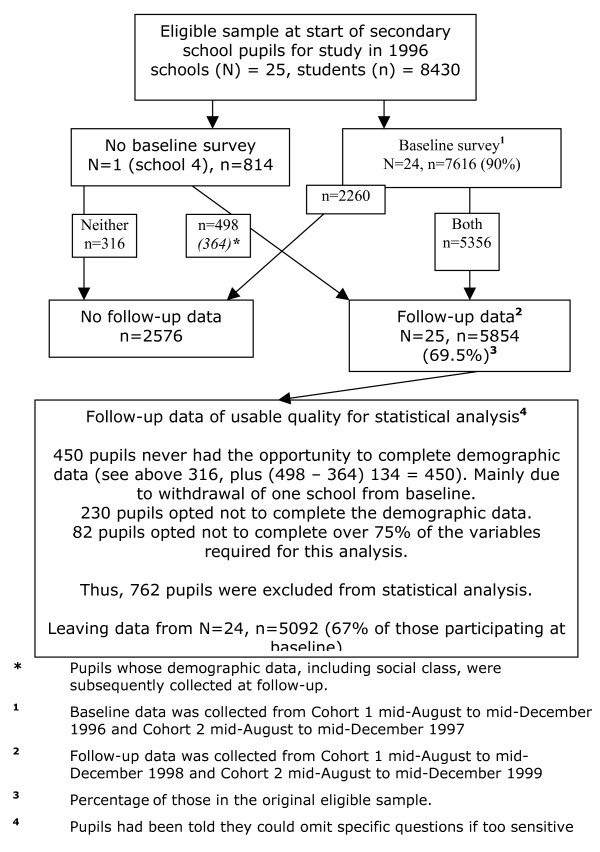
Methods: This study uses a longitudinal survey involving 5,092 pupils in 24 Scottish schools. Pupils' smoking (at age 15/16), cognitive measures, attitude to school and pupils' rating of teacher pupil relationships (at age 13/14) were linked to school level data comprising teacher assessed quality of pupil-staff relationships, school level deprivation, staying on rates and attendance. Analysis involved multi-level modelling.
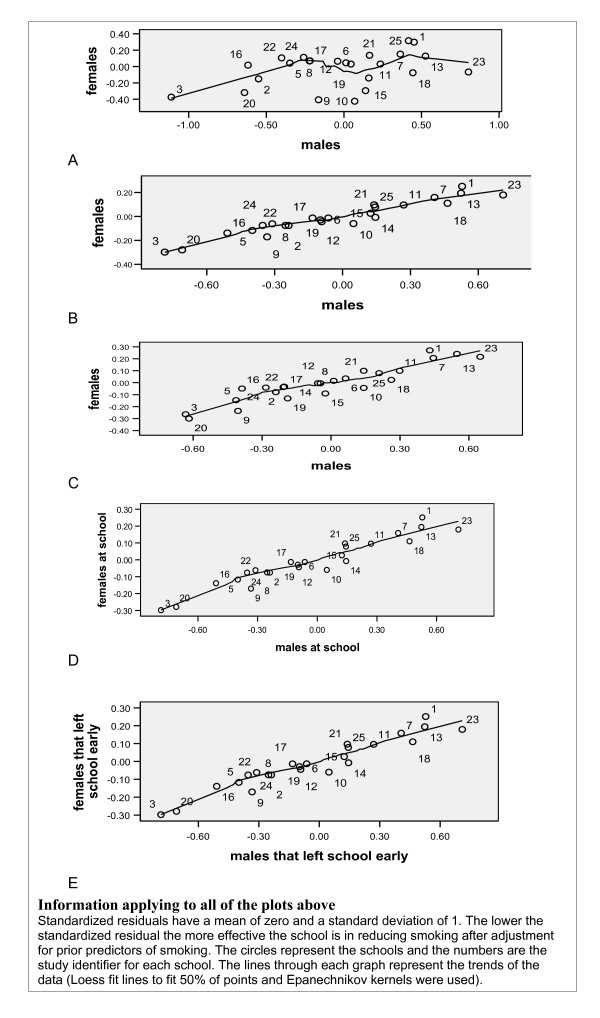
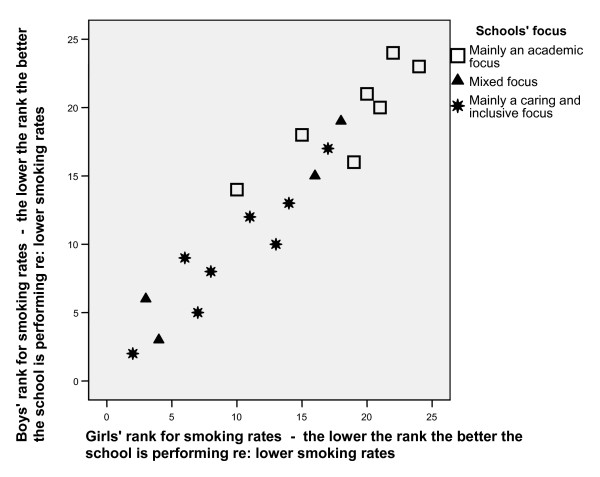
Results: Overall, 25% of males and 39% of females reported smoking, with rates by school ranging from 8% to 33% for males and from 28% to 49% for females. When individual socio-economic and socio-cultural factors were controlled for there was still a large school effect for males and a smaller (but correlated) school effect for females at 15/16 years. For girls their school effect was explained by their rating of teacher-pupil relationships and attitude to school. These variables were also significant in predicting smoking among boys. However, the school effect for boys was most radically attenuated and became insignificant when the interaction between poor quality of teacher - pupil relationships and school level affluence was fitted, explaining 82% of the variance between schools. In addition, researchers' rating of the schools' focus on caring and inclusiveness was also significantly associated with both male and female smoking rates.
Conclusion: School-level characteristics have an impact on male and female pupils' rates of smoking up to 15/16 years of age. The size of the school effect is greater for males at this age. The social environment of schools, in particular the quality of teacher-pupil relationships, pupils' attitude to school and the school's focus on caring and inclusiveness, can influence both boys' and girls' smoking. This provides support for the school-wide or "Health Promoting School" approach to smoking prevention.
Figures
References
-
- Choosing Health . Choosing Health: a consultation to improve people's health. London , HMSO; 2004.
-
- Coambs RB, Li S, Kozlowski LT. Age Interacts with Heaviness of Smoking in Predicting Success in Cessation of Smoking. American Journal of Epidemiology. 1992;135:240–246. - PubMed
-
- ASH Action on smoking and health: young people and smoking. Fact sheet no.3 http://www.ash.org.uk
Publication types
MeSH terms
Grants and funding
LinkOut - more resources
Full Text Sources
Medical
