


A computational analysis of protein-protein interaction networks in neurodegenerative diseases
- PMID: 18570646
- PMCID: PMC2443111
- DOI: 10.1186/1752-0509-2-52
A computational analysis of protein-protein interaction networks in neurodegenerative diseases
Abstract
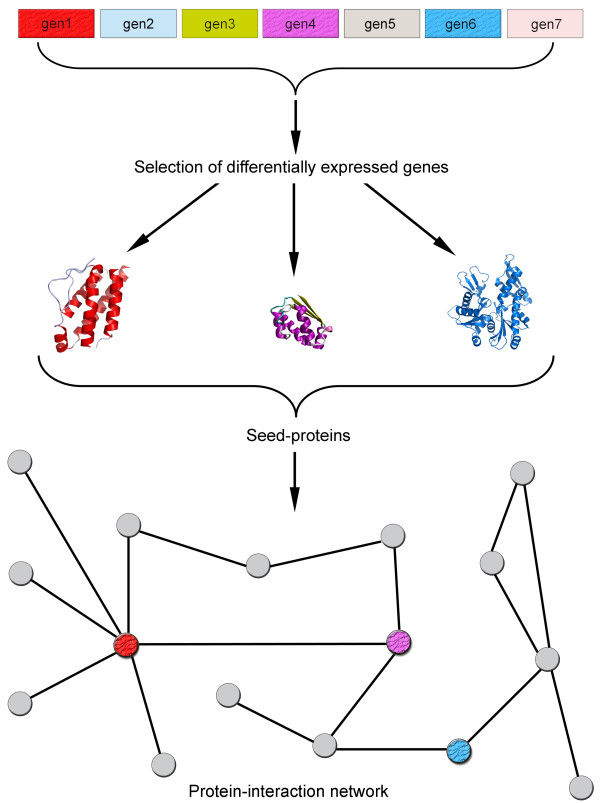
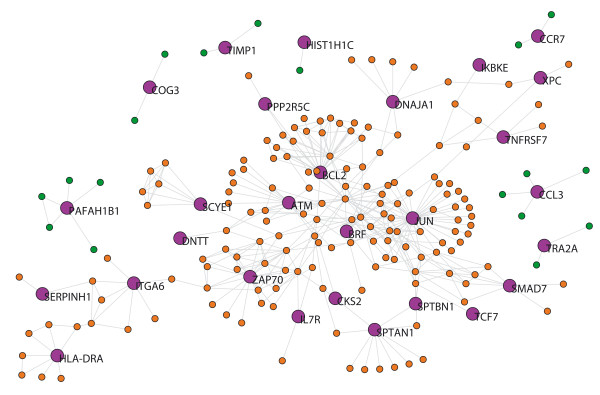
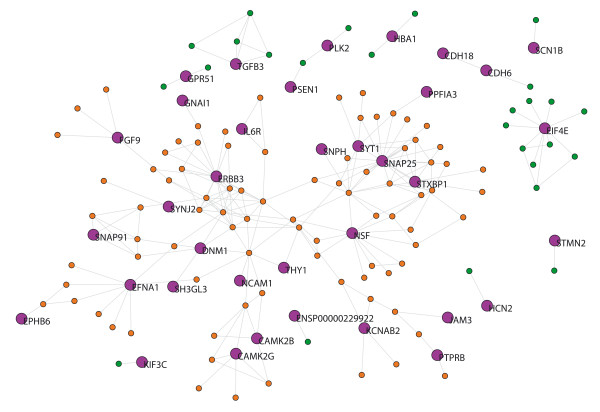
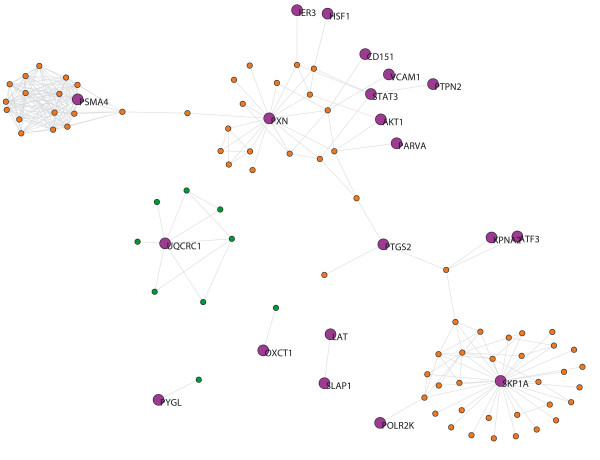
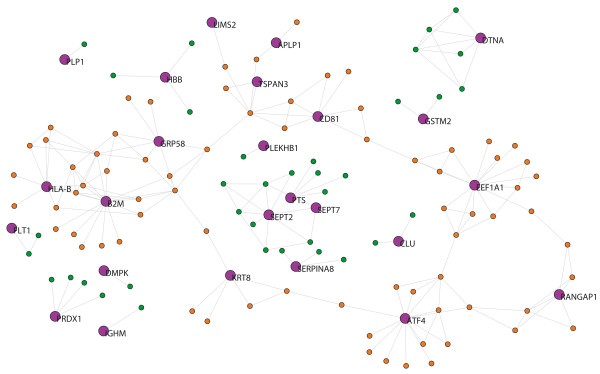
Background: Recent developments have meant that network theory is making an important contribution to the topological study of biological networks, such as protein-protein interaction (PPI) networks. The identification of differentially expressed genes in DNA array experiments is a source of information regarding the molecular pathways involved in disease. Thus, considering PPI analysis and gene expression studies together may provide a better understanding of multifactorial neurodegenerative diseases such as Multiple Sclerosis (MS) and Alzheimer disease (AD). The aim of this study was to assess whether the parameters of degree and betweenness, two fundamental measures in network theory, are properties that differentiate between implicated (seed-proteins) and non-implicated nodes (neighbors) in MS and AD. We used experimentally validated PPI information to obtain the neighbors for each seed group and we studied these parameters in four networks: MS-blood network; MS-brain network; AD-blood network; and AD-brain network.
Results: Specific features of seed-proteins were revealed, whereby they displayed a lower average degree in both diseases and tissues, and a higher betweenness in AD-brain and MS-blood networks. Additionally, the heterogeneity of the processes involved indicate that these findings are not pathway specific but rather that they are spread over different pathways.
Conclusion: Our findings show differential centrality properties of proteins whose gene expression is impaired in neurodegenerative diseases.
Figures
References
-
- Lodish H, Berk A, Zipursky SL, Matsudaira P, Baltimore D, Darnell J. Molecular Cell Biology . 4th. New York , W.H. Freeman and Company; 2000.
-
- Villoslada P, Oksenberg J. Neuroinformatics in clinical practice: are computers going to help neurological patients and their physicians? . Future Neurology. 2006;1:1–12. doi: 10.2217/14796708.1.2.159. - DOI
-
- Xia Y, Yu H, Jansen R, Seringhaus M, Baxter S, Greenbaum D, Zhao H, Gerstein M. Analyzing cellular biochemistry in terms of molecular networks. Ann Rev Biochem. 2004;73 - PubMed
-
- Hiesinger PR, Hassan BA. Genetics in the age of systems biology. Cell. 2005;123 - PubMed
Publication types
MeSH terms
LinkOut - more resources
Full Text Sources
Medical
