


Intensification of oxidative stress and inflammation in type 2 diabetes despite antihyperglycemic treatment
- PMID: 18570678
- PMCID: PMC2441608
- DOI: 10.1186/1475-2840-7-20
Intensification of oxidative stress and inflammation in type 2 diabetes despite antihyperglycemic treatment
Abstract
Introduction: The metabolic deregulation associated with diabetes mellitus (DM) causes secondary pathophysiologic changes in multiple organ systems. Endothelial injury is induced by oxidative stress (OS) and inflammation. We have previously shown that DM type 2 patients are exposed to increased OS and inflammation contributed in part by primed peripheral polymorphonuclear leukocytes (PMNLs).
Aims: To characterize the effect of oral medication on PMNL priming, on PMNL-related and on systemic inflammation, in correlation to changed diabetes parameters in patient with newly diagnosed type 2 DM.
Methods: PMNLs were separated from DM patient's prior and following treatment with either metformin (Glucophage), or Thiazolidinedione (rosiglitazone) and from healthy control subjects (HC). Rate of superoxide release from phorbol ester-stimulated PMNLs and CD11b on PMNLs assessed PMNL priming. White blood cells (WBC) and PMNL counts and apoptosis reflected PMNL-related inflammation. CRP, fibrinogen, transferrin and albumin blood levels reflected systemic inflammation.
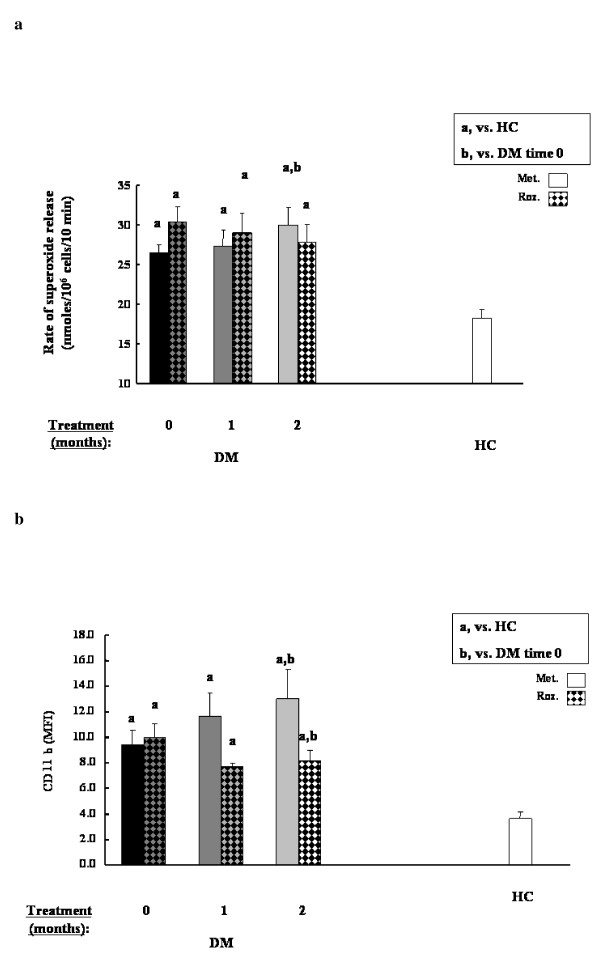
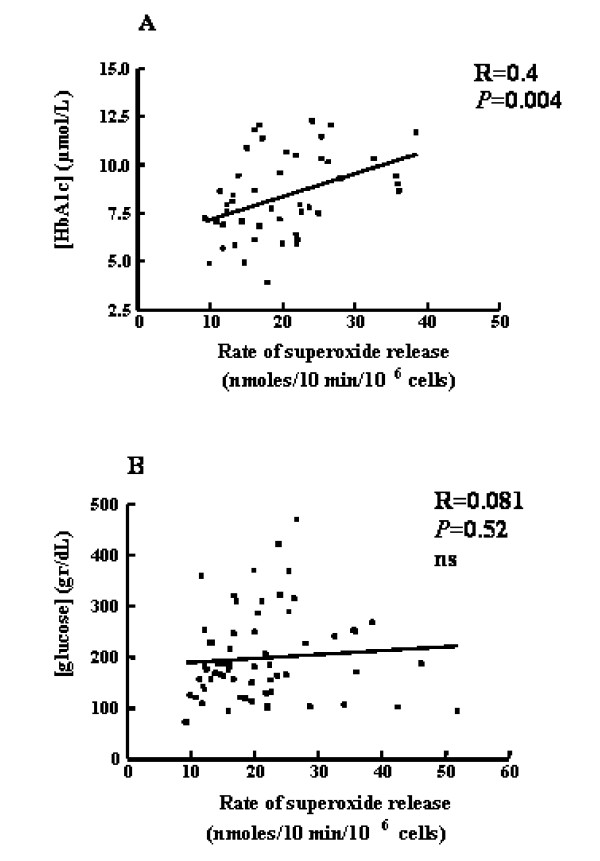
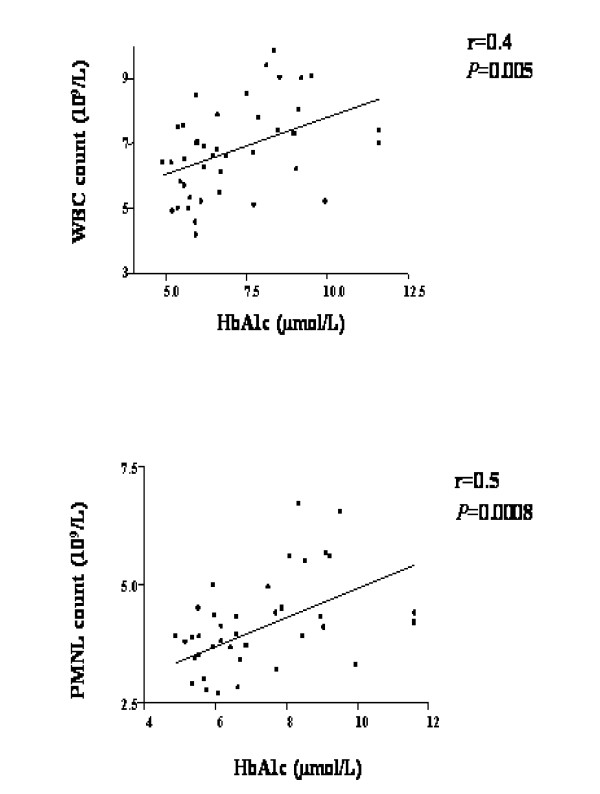
Results: Both metformin and rosiglitazone treatments reduced significantly the high levels of glucose and HbA1c, and slightly improved lipid profile during 2 months. PMNL priming parameters, higher compared to HC, increased after 2 months of metformin treatment. Rosiglitazone treatment decreased PMNL priming. ALP, higher in DM, significantly decreased following 2 months of both treatments. Systemic inflammation markers (fibrinogen, CRP), higher in DM, decreased following both treatments. Transferrin and albumin were similar to HC. PMNL-related inflammation markers were higher in DM; however, only PMNL apoptosis decreased after both treatments. Monocyte counts, higher in DM compared to HC, decreased following both treatments. Serum insulin levels, higher in DM compared to HC, decreased following both treatments. PMNL-related priming and inflammation parameters positively correlated with HbA1c.
Conclusion: The present research adds new facet in evaluating anti-hyperglycemic treatment in type 2 DM patients. Despite sufficient glycemic control using both treatments, some PMNL-related parameters deteriorated. Thus, anti hyperglycemic treatment should be favored due to its combined anti-PMNL priming and anti-inflammatory effect, in addition to its anti-hyperglycemic characteristics, according to the correlation among these parameters. Such combined treatment may reduce morbidity and mortality common in DM patients.
Figures
References
-
- Medical management of type 2 diabetes. 4. Vol. 10. American Diabetes Association; 1998. p. 108.
-
- Laakso M, Lehto S. Epidemiology of macrovascular disease in diabetes. Diabetes Rev. 1997;5:294–295.
MeSH terms
Substances
LinkOut - more resources
Full Text Sources
Medical
Research Materials
Miscellaneous
