


In vitro biliary clearance of angiotensin II receptor blockers and 3-hydroxy-3-methylglutaryl-coenzyme A reductase inhibitors in sandwich-cultured rat hepatocytes: comparison with in vivo biliary clearance
- PMID: 18574002
- PMCID: PMC2581923
- DOI: 10.1124/jpet.108.138073
In vitro biliary clearance of angiotensin II receptor blockers and 3-hydroxy-3-methylglutaryl-coenzyme A reductase inhibitors in sandwich-cultured rat hepatocytes: comparison with in vivo biliary clearance
Abstract
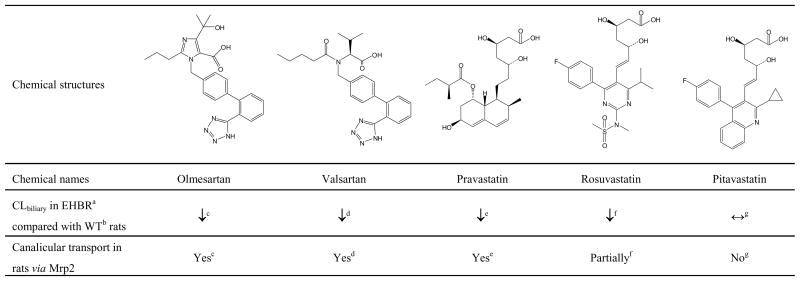
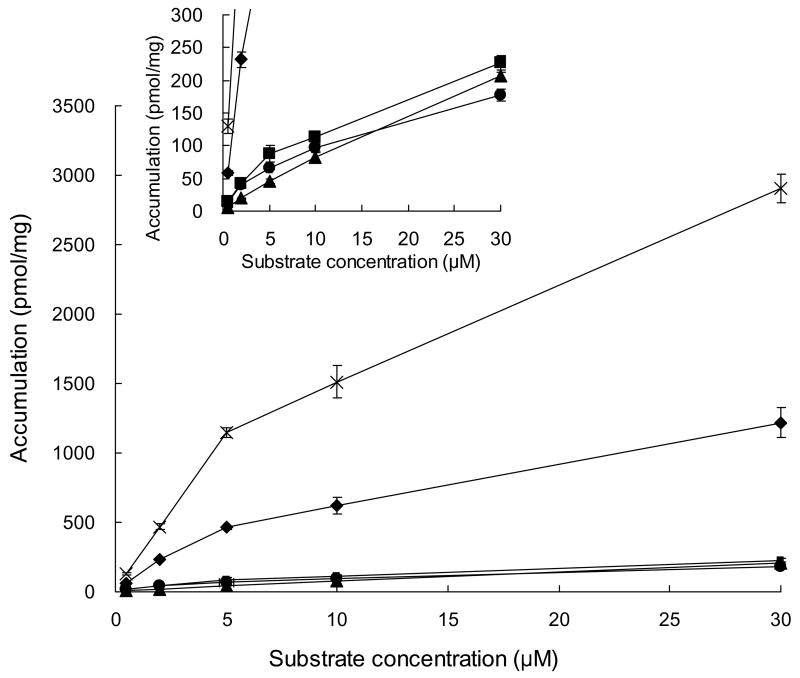
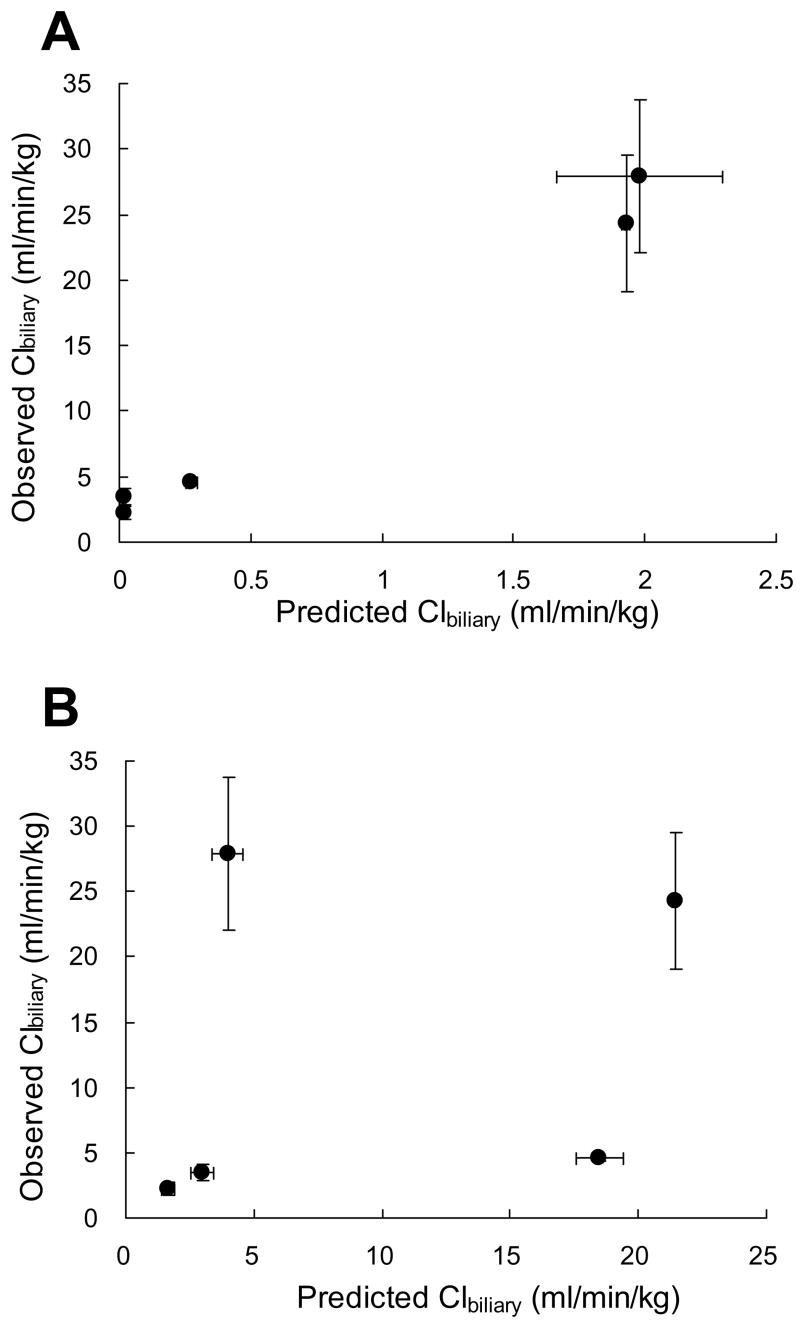
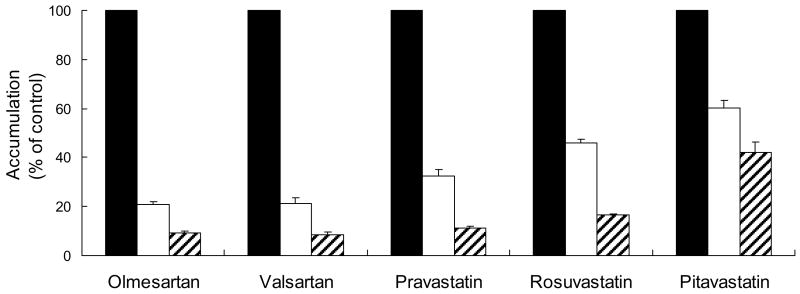
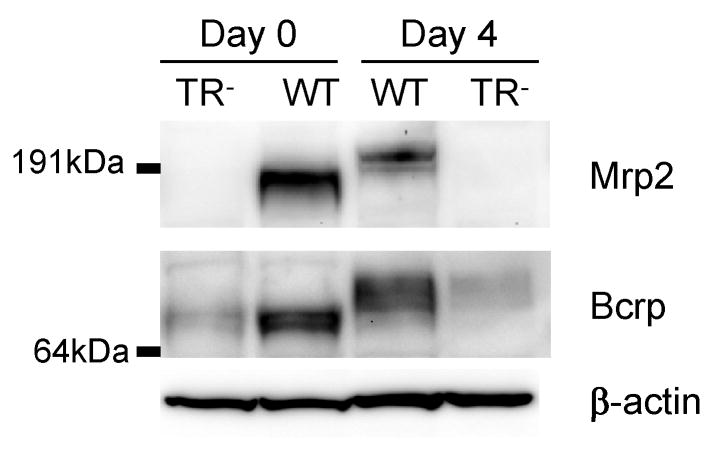
Previous reports have indicated that in vitro biliary clearance (Cl(biliary)) determined in sandwich-cultured hepatocytes correlates well with in vivo Cl(biliary) for limited sets of compounds. This study was designed to estimate the in vitro Cl(biliary) in sandwich-cultured rat hepatocytes (SCRHs) of angiotensin II receptor blockers and HMG-CoA reductase inhibitors that undergo limited metabolism, to compare the estimated Cl(biliary) values with published in vivo Cl(biliary) data in rats, and to characterize the mechanism(s) of basolateral uptake and canalicular excretion of these drugs in rats. The average biliary excretion index (BEI) and in vitro Cl(biliary) values of olmesartan, valsartan, pravastatin, rosuvastatin, and pitavastatin were 15, 19, 43, 45, and 20%, respectively, and 1.7, 3.2, 4.4, 46.1, and 34.6 ml/min/kg, respectively. Cl(biliary) predicted from SCRHs, accounting for plasma unbound fraction, correlated with reported in vivo Cl(biliary) for these drugs. The rank order of Cl(biliary) values predicted from SCRHs was consistent with in vivo Cl(biliary) values. Bromosulfophthalein inhibited the uptake of all drugs. BEI and Cl(biliary) values of olmesartan, valsartan, pravastatin, and rosuvastatin, known multidrug resistance-associated protein (Mrp) 2 substrates, were reduced in SCRHs from Mrp2-deficient (TR(-)) compared with wild-type (WT) rats. Although Mrp2 plays a minor role in pitavastatin biliary excretion, pitavastatin BEI and Cl(biliary) were reduced in TR(-) compared with WT SCRHs; Bcrp expression in SCRHs from TR(-) rats was decreased. In conclusion, in vitro Cl(biliary) determined in SCRHs can be used to estimate and compare in vivo Cl(biliary) of compounds in rats and to characterize transport proteins responsible for their hepatic uptake and excretion.
Figures

References
-
- Basile JN, Chrysant S. The importance of early antihypertensive efficacy: the role of angiotensin II receptor blocker therapy. J Hum Hypertens. 2006;20:169–175. - PubMed
-
- Brousil JA, Burke JM. Olmesartan medoxomil: an angiotensin II-receptor blocker. Clin Ther. 2003;25:1041–1055. - PubMed
-
- Chandra P, Brouwer KLR. The complexities of hepatic drug transport: current knowledge and emerging concepts. Pharm Res. 2004;21:719–735. - PubMed
-
- Fujino H, Saito T, Ogawa S, Kojima J. Transporter-mediated influx and efflux mechanisms of pitavastatin, a new inhibitor of HMG-CoA reductase. J Pharm Pharmacol. 2005;57:1305–1311. - PubMed
Publication types
MeSH terms
Substances
Grants and funding
LinkOut - more resources
Full Text Sources
Medical
