


Nuclear factor-kappa B signaling in skeletal muscle atrophy
- PMID: 18574572
- PMCID: PMC2597184
- DOI: 10.1007/s00109-008-0373-8
Nuclear factor-kappa B signaling in skeletal muscle atrophy
Abstract
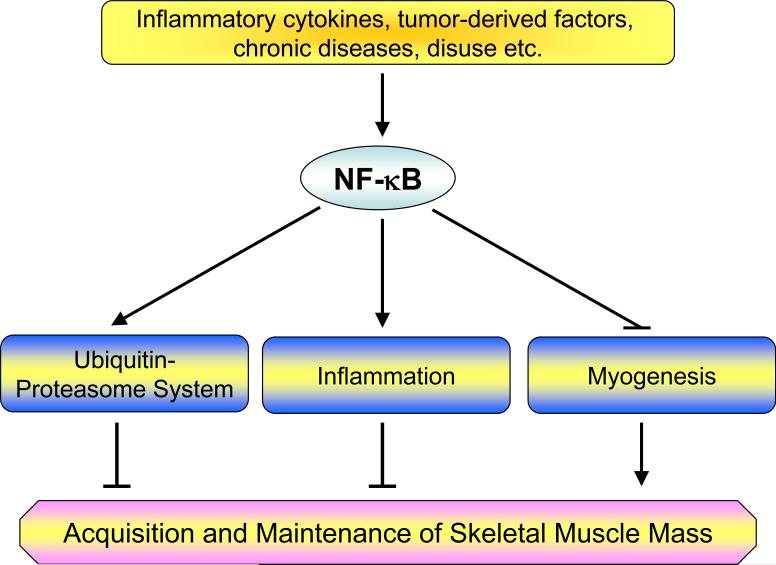
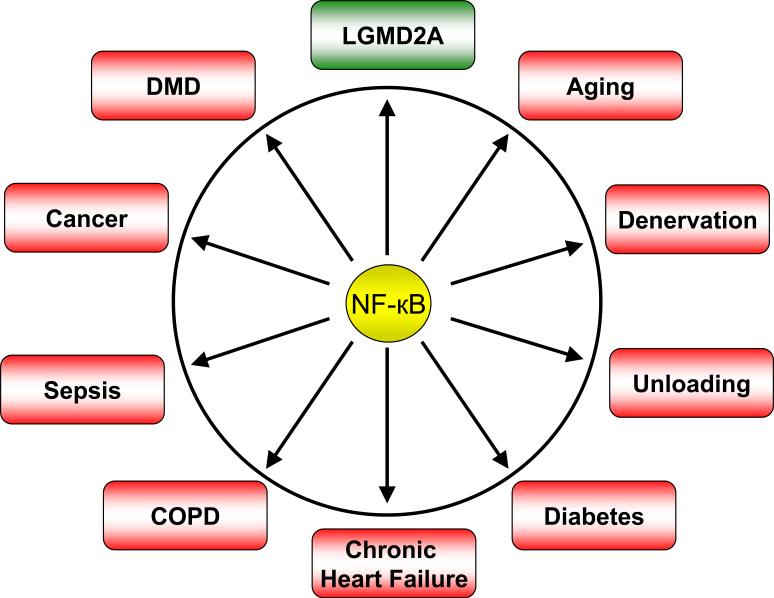
Skeletal muscle atrophy/wasting is a serious complication of a wide range of diseases and conditions such as aging, disuse, AIDS, chronic obstructive pulmonary disease, space travel, muscular dystrophy, chronic heart failure, sepsis, and cancer. Emerging evidence suggests that nuclear factor-kappa B (NF-kappaB) is one of the most important signaling pathways linked to the loss of skeletal muscle mass in various physiological and pathophysiological conditions. Activation of NF-kappaB in skeletal muscle leads to degradation of specific muscle proteins, induces inflammation and fibrosis, and blocks the regeneration of myofibers after injury/atrophy. Recent studies employing genetic mouse models have provided strong evidence that NF-kappaB can serve as an important molecular target for the prevention of skeletal muscle loss. In this article, we have outlined the current understanding regarding the role of NF-kappaB in skeletal muscle with particular reference to different models of muscle wasting and the development of novel therapy.
Figures
References
-
- Jackman RW, Kandarian SC. The molecular basis of skeletal muscle atrophy. Am J Physiol Cell Physiol. 2004;287:C834–843. - PubMed
-
- Kandarian SC, Jackman RW. Intracellular signaling during skeletal muscle atrophy. Muscle Nerve. 2006;33:155–165. - PubMed
-
- Boonyarom O, Inui K. Atrophy and hypertrophy of skeletal muscles: structural and functional aspects. Acta Physiol (Oxf) 2006;188:77–89. - PubMed
-
- Tisdale MJ. Cancer cachexia. Langenbecks Arch Surg. 2004;389:299–305. - PubMed
-
- Ventadour S, Attaix D. Mechanisms of skeletal muscle atrophy. Curr Opin Rheumatol. 2006;18:631–635. - PubMed
Publication types
MeSH terms
Substances
Grants and funding
LinkOut - more resources
Full Text Sources
Other Literature Sources
