


A laminar flow model of aerosol survival of epidemic and non-epidemic strains of Pseudomonas aeruginosa isolated from people with cystic fibrosis
- PMID: 18582388
- PMCID: PMC2443368
- DOI: 10.1186/1471-2180-8-105
A laminar flow model of aerosol survival of epidemic and non-epidemic strains of Pseudomonas aeruginosa isolated from people with cystic fibrosis
Abstract
Background: Cystic fibrosis (CF) is an inherited multi-system disorder characterised by chronic airway infection with pathogens such as Pseudomonas aeruginosa. Acquisition of P. aeruginosa by patients with CF is usually from the environment, but recent studies have demonstrated patient to patient transmission of certain epidemic strains, possibly via an airborne route. This study was designed to examine the survival of P. aeruginosa within artificially generated aerosols.
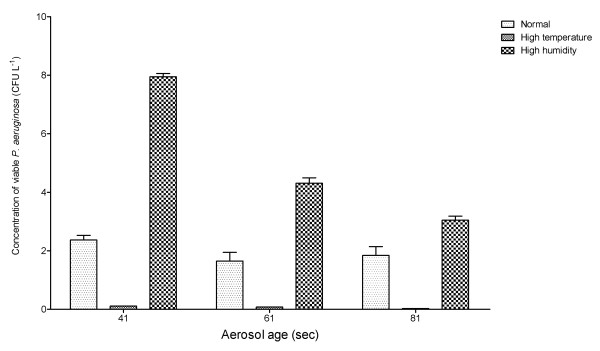
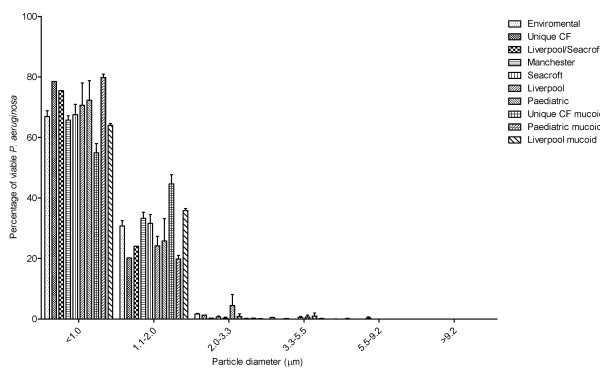
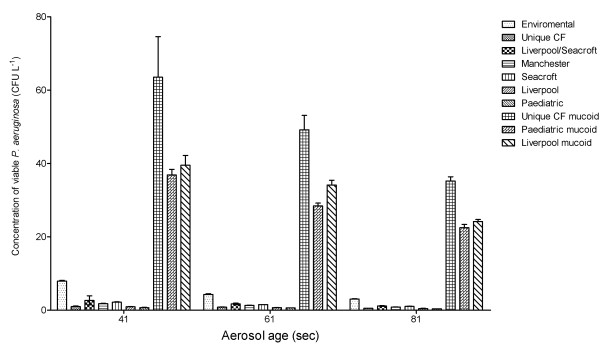
Results: Survival was effected by the solution used for aerosol generation. Within the aerosols it was adversely affected by an increase in air temperature. Both epidemic and non-epidemic strains of P. aeruginosa were able to survive within the aerosols, but strains expressing a mucoid phenotype had a survival advantage.
Conclusion: This would suggest that segregating individuals free of P. aeruginosa from those with chronic P. aeruginosa infection who are more likely to be infected with mucoid strains may help reduce the risk of cross-infection. Environmental factors also appear to influence bacterial survival. Warming and drying the air within clinical areas and avoidance of humidification devices may also be beneficial in reducing the risk of cross-infection.
Figures
References
-
- Doring G, Ulrich M, Muller W, Bitzer J, Schmidt-Koenig L, Munst L, et al. Generation of Pseudomonas aeruginosa aerosols during handwashing from contaminated sink drains, transmission to hands of hospital personnel, and its prevention by use of a new heating device. Zentralbl Hyg Umweltmed. 1991;191:494–505. - PubMed
-
- Frederiksen B, Koch C, Hoiby N. Antibiotic treatment of initial colonization with Pseudomonas aeruginosa postpones chronic infection and prevents deterioration of pulmonary function in cystic fibrosis. Pediatr Pulmonol. 1997;23:330–335. doi: 10.1002/(SICI)1099-0496(199705)23:5<330::AID-PPUL4>3.0.CO;2-O. - DOI - PubMed
Publication types
MeSH terms
Substances
LinkOut - more resources
Full Text Sources
Medical
