


The Role of PPARs in Cancer
- PMID: 18584037
- PMCID: PMC2435221
- DOI: 10.1155/2008/102737
The Role of PPARs in Cancer
Abstract
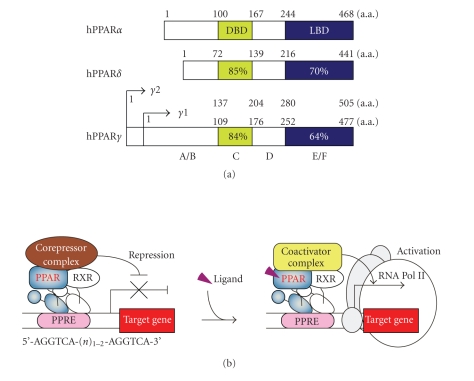
Peroxisome proliferator-activated receptors (PPARs) are ligand-activated transcription factors that belong to the nuclear hormone receptor superfamily. PPARalpha is mainly expressed in the liver, where it activates fatty acid catabolism. PPARalpha activators have been used to treat dyslipidemia, causing a reduction in plasma triglyceride and elevation of high-density lipoprotein cholesterol. PPARdelta is expressed ubiquitously and is implicated in fatty acid oxidation and keratinocyte differentiation. PPARdelta activators have been proposed for the treatment of metabolic disease. PPARgamma2 is expressed exclusively in adipose tissue and plays a pivotal role in adipocyte differentiation. PPARgamma is involved in glucose metabolism through the improvement of insulin sensitivity and represents a potential therapeutic target of type 2 diabetes. Thus PPARs are molecular targets for the development of drugs treating metabolic syndrome. However, PPARs also play a role in the regulation of cancer cell growth. Here, we review the function of PPARs in tumor growth.
Figures
References
-
- Hsu M-H, Palmer CNA, Song W, Griffin KJ, Johnson EF. A carboxyl-terminal extension of the zinc finger domain contributes to the specificity and polarity of peroxisome proliferator-activated receptor DNA binding. Journal of Biological Chemistry. 1998;273(43):27988–27997. - PubMed
-
- Gervois P, Chopin-Delannoy S, Fadel A, et al. Fibrates increase human REV-ERBα expression in liver via a novel peroxisome proliferator-activated receptor response element. Molecular Endocrinology. 1999;13(3):400–409. - PubMed
-
- Schoonjans K, Staels B, Auwerx J. Role of the peroxisome proliferator-activated receptor (PPAR) in mediating the effects of fibrates and fatty acids on gene expression. Journal of Lipid Research. 1996;37(5):907–925. - PubMed
LinkOut - more resources
Full Text Sources
Other Literature Sources
