


Habitual fish consumption does not prevent a decrease in LCPUFA status in pregnant women (the Seychelles Child Development Nutrition Study)
- PMID: 18585023
- PMCID: PMC2517988
- DOI: 10.1016/j.plefa.2008.04.005
Habitual fish consumption does not prevent a decrease in LCPUFA status in pregnant women (the Seychelles Child Development Nutrition Study)
Erratum in
- Prostaglandins Leukot Essent Fatty Acids. 2011 Dec;85(6):407
Abstract
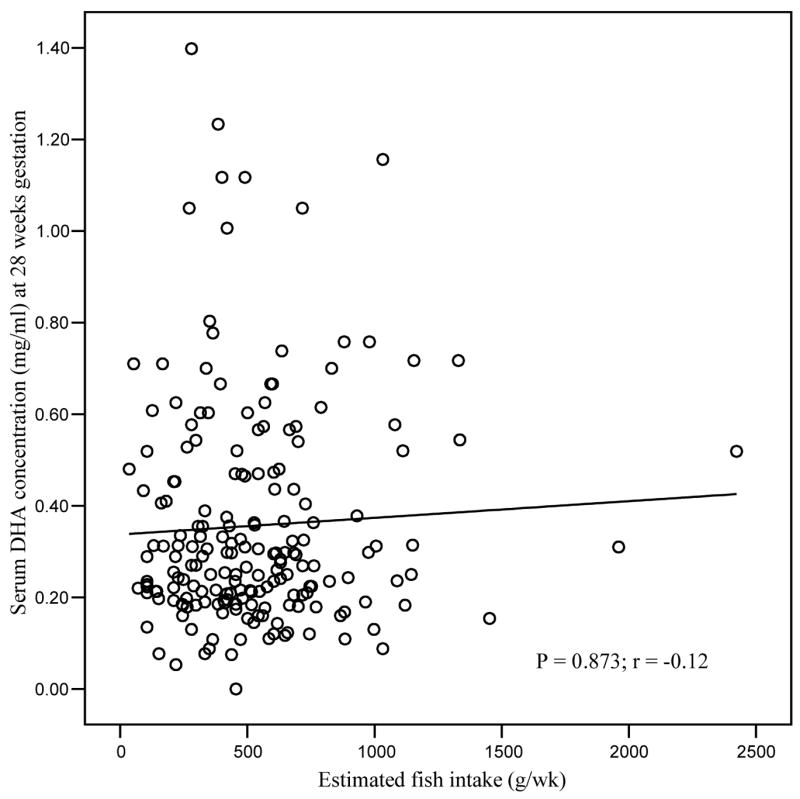
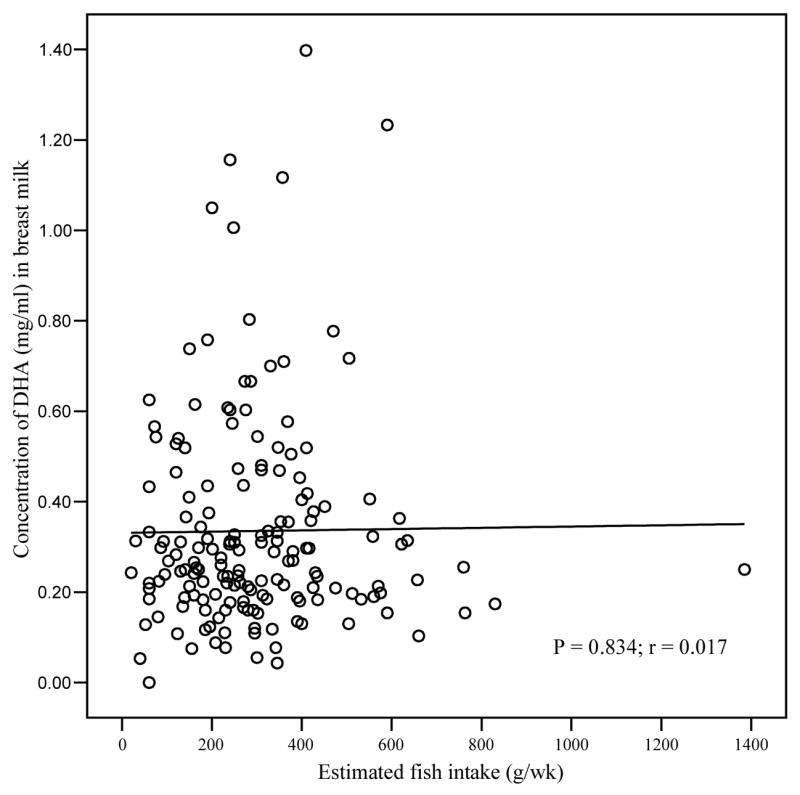
Information on the status of long-chain polyunsaturated fatty acids (LCPUFAs) in pregnancy and breast milk in very high fish-eating populations is limited. The aim of this study was to examine dietary intake and changes in fatty acid status in a population of pregnant women in the Republic of Seychelles. Serum docosahexaenoic acid (DHA) decreased significantly between 28-week gestation and delivery (n=196). DHA status did not correlate significantly with length of gestation and was not associated with self-reported fish intake, which was high at 527 g/week. In breast milk, the ratio of DHA to arachidonic acid (AA) was consistent with those observed in other high fish-eating populations. Overall the data suggest that high exposure to LCPUFAs from habitual fish consumption does not prevent the documented decrease in LCPUFA status in pregnancy that occurs as a result of foetal accretion in the third trimester of pregnancy.
Figures
References
-
- Sastry PS. Lipids of nervous tissue: composition and metabolism. Prog Lipid Res. 1985;24:169–76. - PubMed
-
- Svennerholm L. Distribution and fatty acid composition of phosphoglycerides in normal human brain. J Lipid Res. 1986;9:570–579. - PubMed
-
- De Vriese SR, Matthys C, De Henauw S, De Backer G, Dhont M, Christophe AB. Maternal and umbilical fatty acid status in relation to maternal diet. Prostaglandins Leukot Essent Fatty Acids. 2002;67:389–396. - PubMed
-
- Clandinin MT, Chappell JE, Leong S, Heim T, Swyer PR, Chance GW. Intrauterine fatty acid accretion rates in human brain: implications for fatty acid requirements. Early Hum Dev. 1980;4:121–129. - PubMed
-
- Clandinin MT, Chappell JE, Heim T, Swyer GW PR. Fatty acid accretion in fetal and neonatal liver: implications for fatty acid requirements. Early Hum Dev. 1981;5:7–14. - PubMed
Publication types
MeSH terms
Substances
Grants and funding
LinkOut - more resources
Full Text Sources
