


P21 and p27: roles in carcinogenesis and drug resistance
- PMID: 18590585
- PMCID: PMC2678956
- DOI: 10.1017/S1462399408000744
P21 and p27: roles in carcinogenesis and drug resistance
Abstract
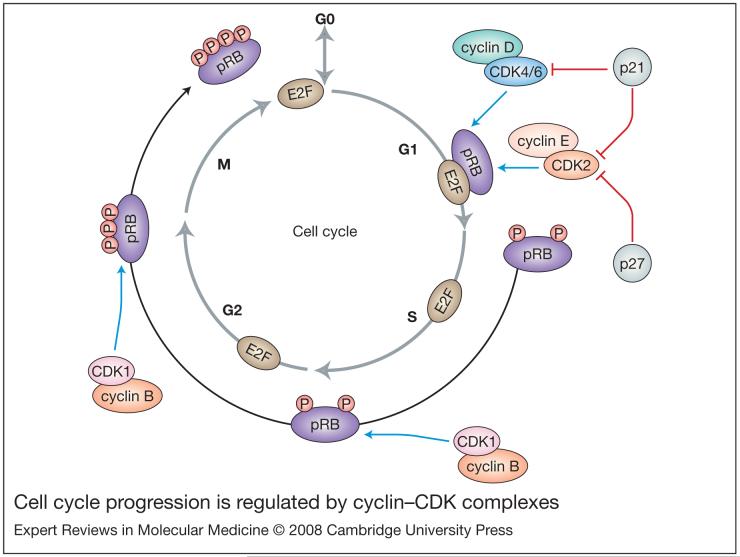
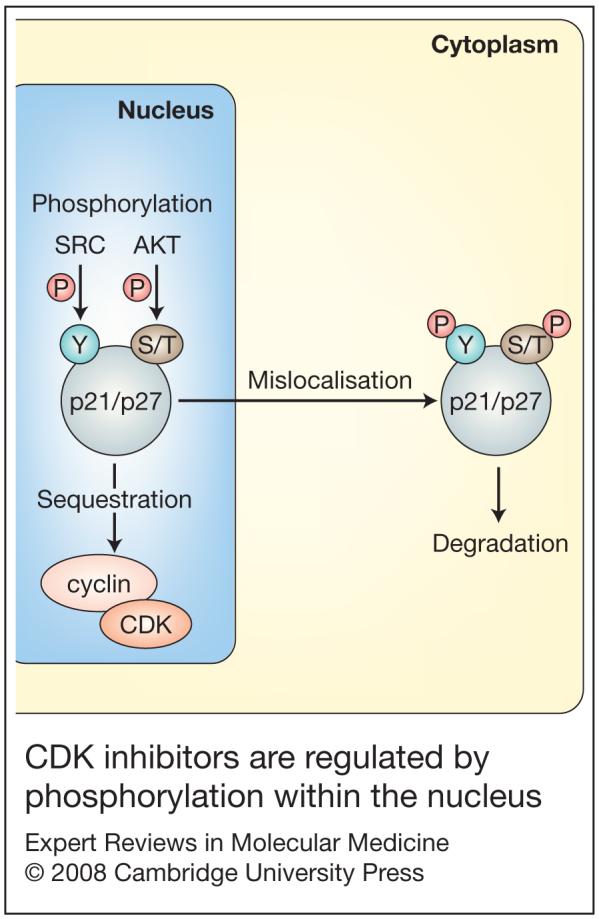
Human cancers arise from an imbalance of cell growth and cell death. Key proteins that govern this balance are those that mediate the cell cycle. Several different molecular effectors have been identified that tightly regulate specific phases of the cell cycle, including cyclins, cyclin-dependent kinases (CDKs) and CDK inhibitors. Notably, loss of expression or function of two G1-checkpoint CDK inhibitors - p21 (CDKN1A) and p27 (CDKN1B) - has been implicated in the genesis or progression of many human malignancies. Additionally, there is a growing body of evidence suggesting that functional loss of p21 or p27 can mediate a drug-resistance phenotype. However, reports in the literature have also suggested p21 and p27 can promote tumours, indicating a paradoxical effect. Here, we review historic and recent studies of these two CDK inhibitors, including their identification, function, importance to carcinogenesis and finally their roles in drug resistance.
Figures
References
-
- Evans T, et al. Cyclin: a protein specified by maternal mRNA in sea urchin eggs that is destroyed at each cleavage division. Cell. 1983;33:389–396. - PubMed
-
- Slingerland J, Pagano M. Regulation of the cdk inhibitor p27 and its deregulation in cancer. J Cell Physiol. 2000;183:10–17. - PubMed
-
- Sherr CJ. G1 phase progression: cycling on cue. Cell. 1994;79:551–555. - PubMed
-
- Lew DJ, Dulic V, Reed SI. Isolation of three novel human cyclins by rescue of G1 cyclin (Cln) function in yeast. Cell. 1991;66:1197–1206. - PubMed
-
- Xiong Y, et al. Human D-type cyclin. Cell. 1991;65:691–699. - PubMed
Publication types
MeSH terms
Substances
Grants and funding
LinkOut - more resources
Full Text Sources
Other Literature Sources
Miscellaneous
