


Nonselective suppression of operant ethanol and sucrose self-administration by the mGluR7 positive allosteric modulator AMN082
- PMID: 18593591
- PMCID: PMC2562464
- DOI: 10.1016/j.pbb.2008.06.006
Nonselective suppression of operant ethanol and sucrose self-administration by the mGluR7 positive allosteric modulator AMN082
Abstract
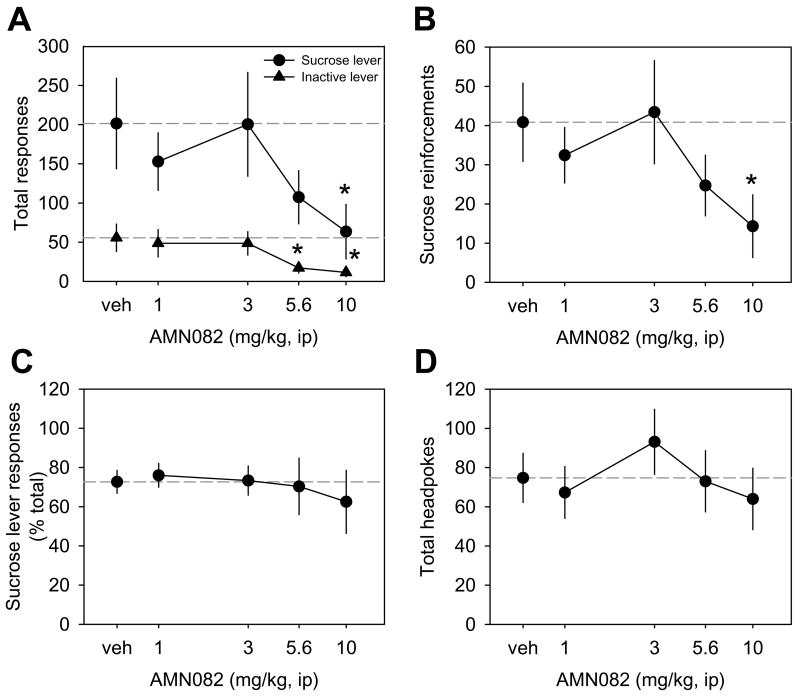
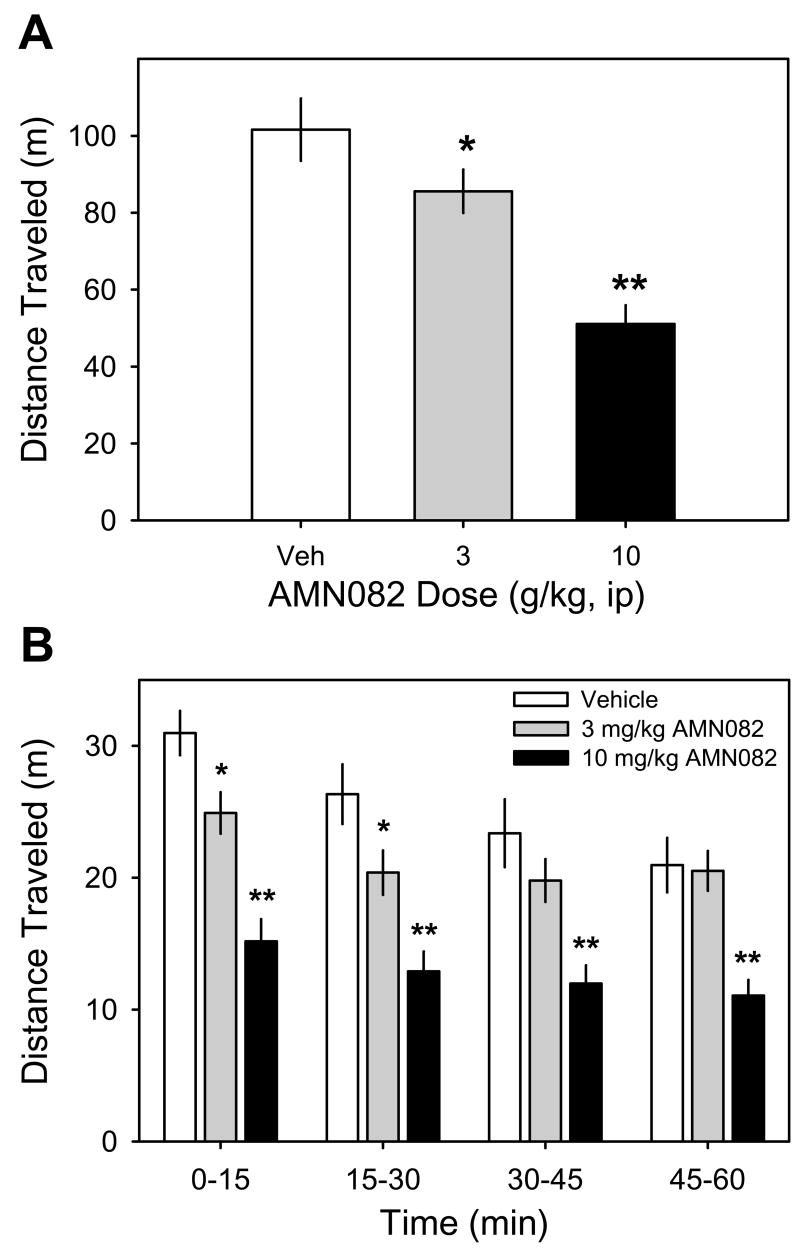
Emerging evidence indicates that specific metabotropic glutamate receptors (mGluRs) modulate ethanol self-administration. In general, inhibition of glutamate transmission through blockade of postsynaptic mGluRs, or activation of presynaptic mGluRs, inhibits ethanol self-administration. The goal of this preclinical study was to further characterize mGluR regulation of ethanol self-administration by examining effects of AMN082, an allosteric positive modulator of presynaptic mGluR7 activity. Separate groups of C57BL/6J male mice were trained to self-administer ethanol or sucrose on a fixed-ratio 4 schedule of reinforcement during 1 h sessions. On test days, mice were pretreated with AMN082 (0, 1.0, 3.0, 5.6, or 10 mg/kg) 30 min prior to self-administration sessions. Functional specificity and activity was examined by testing the effects of AMN082 (0-10 mg/kg) on open-field locomotor activity and HPA axis function as measured by plasma corticosterone levels. AMN082 (10 mg/kg) produced a significant reduction in ethanol and sucrose reinforced responding, and inhibited locomotor activity. Plasma corticosterone levels were significantly increased following AMN082 (5.6 and 10 mg/kg) suggesting a dose-dependent dissociation between the behavioral and hormonal effects of the compound. These data suggest that activation of mGluR7 by AMNO82 produces nonspecific reductions in motivated behavior that are associated with negative effects on motor activity.
Figures

References
-
- Backstrom P, Bachteler D, Koch S, Hyytia P, Spanagel R. mGluR5 antagonist MPEP reduces ethanol-seeking and relapse behavior. Neuropsychopharmacology. 2004;29:921–928. - PubMed
-
- Backstrom P, Hyytia P. Suppression of alcohol self-administration and cue-induced reinstatement of alcohol seeking by the mGlu2/3 receptor agonist LY379268 and the mGlu8 receptor agonist (S)-3,4-DCPG. Eur J Pharmacol. 2005;528:110–118. - PubMed
-
- Baude A, Nusser Z, Roberts JD, Mulvihill E, McIlhinney RA, Somogyi P. The metabotropic glutamate receptor (mGluR1 alpha) is concentrated at perisynaptic membrane of neuronal subpopulations as detected by immunogold reaction. Neuron. 1993;11:771–787. - PubMed
-
- Besheer J, Cox AA, Hodge CW. Coregulation of ethanol discrimination by the nucleus accumbens and amygdala. Alcohol Clin Exp Res. 2003;27:450–456. - PubMed
Publication types
MeSH terms
Substances
Grants and funding
LinkOut - more resources
Full Text Sources
