


The p53 homologue DeltaNp63alpha interacts with the nuclear factor-kappaB pathway to modulate epithelial cell growth
- PMID: 18593911
- PMCID: PMC2692507
- DOI: 10.1158/0008-5472.CAN-07-6123
The p53 homologue DeltaNp63alpha interacts with the nuclear factor-kappaB pathway to modulate epithelial cell growth
Abstract
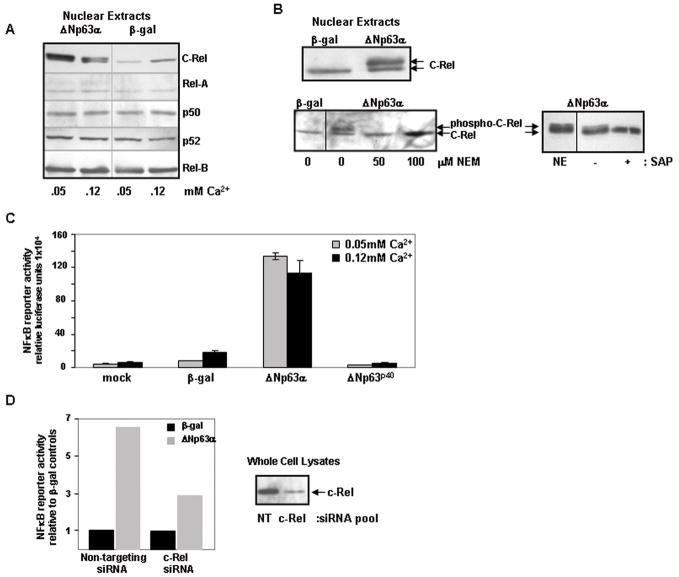
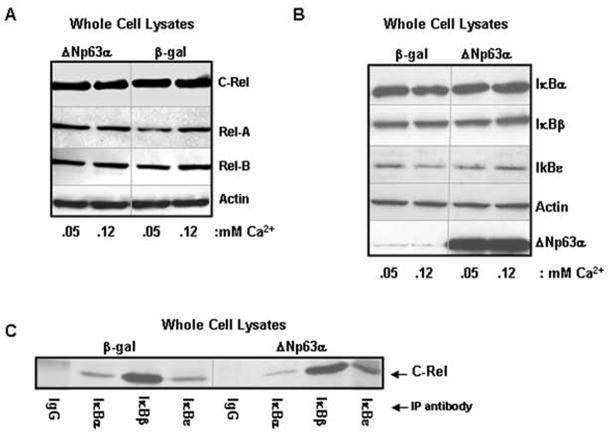
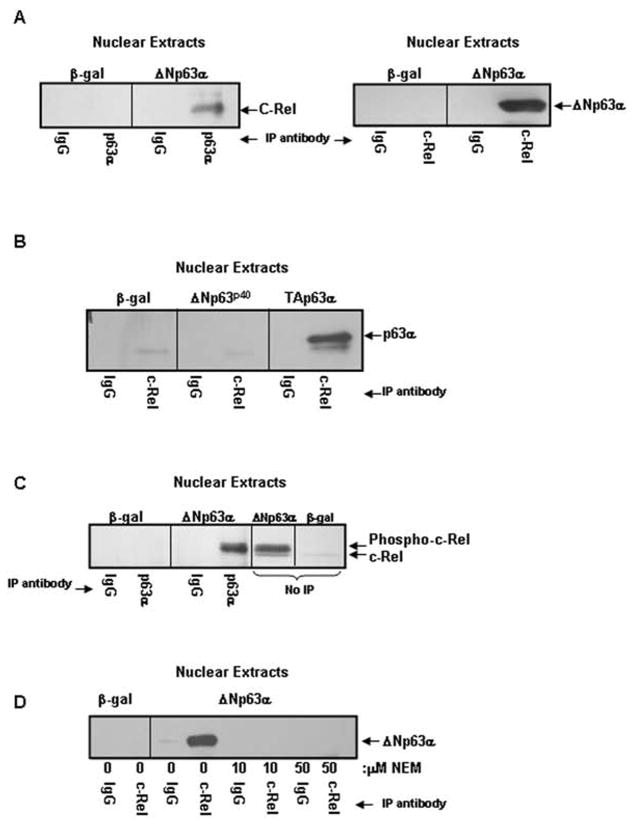
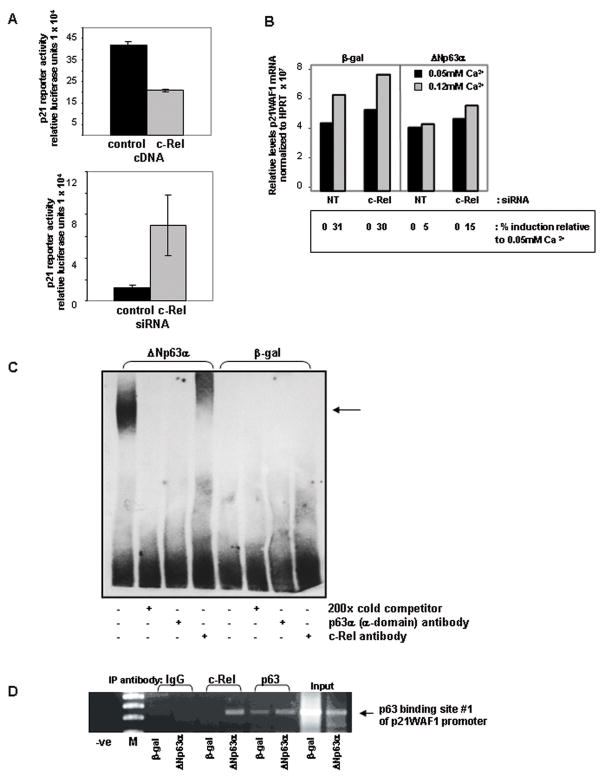
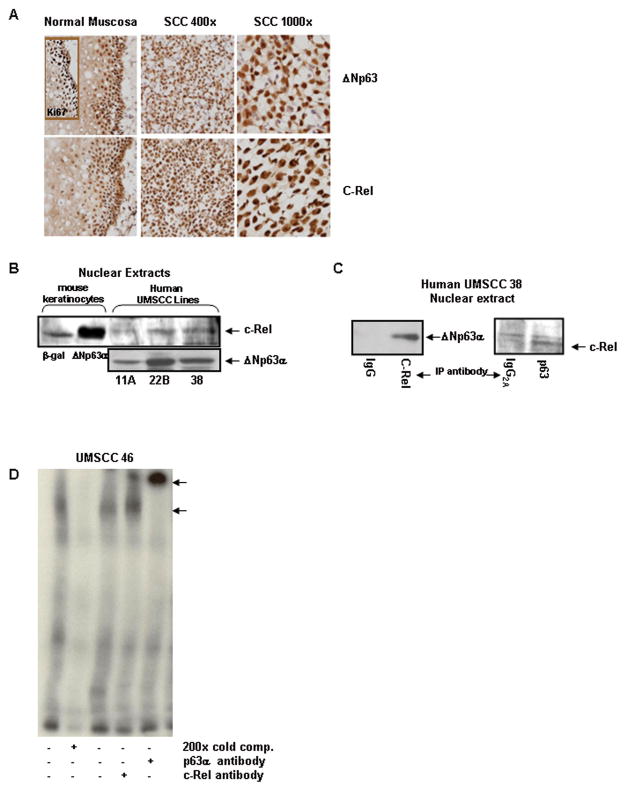
The p53 homologue DeltaNp63alpha is overexpressed and inhibits apoptosis in a subset of human squamous cell carcinomas (SCC). Here, we report that in normal keratinocytes overexpressing DeltaNp63alpha and in human squamous carcinoma cells, DeltaNp63alpha physically associates with phosphorylated, transcriptionally active nuclear c-Rel, a nuclear factor-kappaB family member, resulting in increased c-Rel nuclear accumulation. This accumulation and the associated enhanced proliferation driven by elevated DeltaNp63alpha are attenuated by c-Rel small interfering RNA or overexpression of mutant IkappaBalphaM, indicating that c-Rel-containing complex formation is critical to the ability of elevated DeltaNp63alpha to maintain proliferation in the presence of growth arresting signals. Consistent with a role in growth regulation, DeltaNp63alpha-c-Rel complexes bind a promoter motif and repress the cyclin-dependent kinase inhibitor p21WAF1 in both human squamous carcinoma cells and normal keratinocytes overexpressing DeltaNp63alpha. The relationship between DeltaNp63alpha and activated c-Rel is reflected in their strong nuclear staining in the proliferating compartment of primary head and neck SCC. This is the first report indicating that high levels of DeltaNp63alpha interact with activated c-Rel in keratinocytes and SCC, thereby promoting uncontrolled proliferation, a key alteration in the pathogenesis of cancers.
Figures

References
-
- King KE, Weinberg WC. p63: defining roles in morphogenesis, homeostasis, and neoplasia of the epidermis. Mol Carcinog. 2007;46:716–24. - PubMed
-
- Wrone DA, Yoo S, Chipps LK, et al. The expression of p63 in actinic keratoses, seborrheic keratosis, and cutaneous squamous cell carcinomas. Dermatol Surg. 2004;30:1299–302. - PubMed
-
- Yang A, Kaghad M, Wang Y, et al. p63, a p53 homolog at 3q27–29, encodes multiple products with transactivating, death-inducing, and dominant-negative activities. Mol Cell. 1998;2:305–16. - PubMed
Publication types
MeSH terms
Substances
Grants and funding
LinkOut - more resources
Full Text Sources
Research Materials
Miscellaneous
