


Individual differences in reinforcement learning: behavioral, electrophysiological, and neuroimaging correlates
- PMID: 18595740
- PMCID: PMC2548326
- DOI: 10.1016/j.neuroimage.2008.05.032
Individual differences in reinforcement learning: behavioral, electrophysiological, and neuroimaging correlates
Abstract
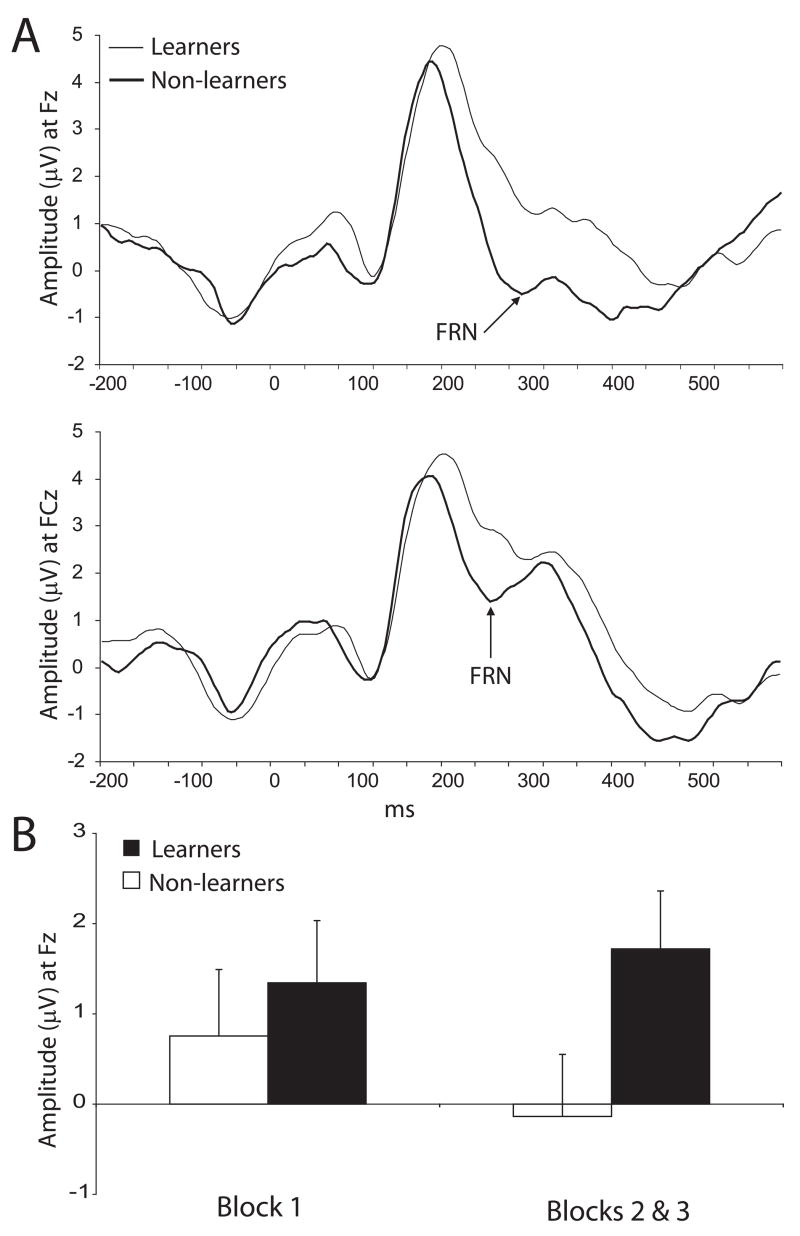
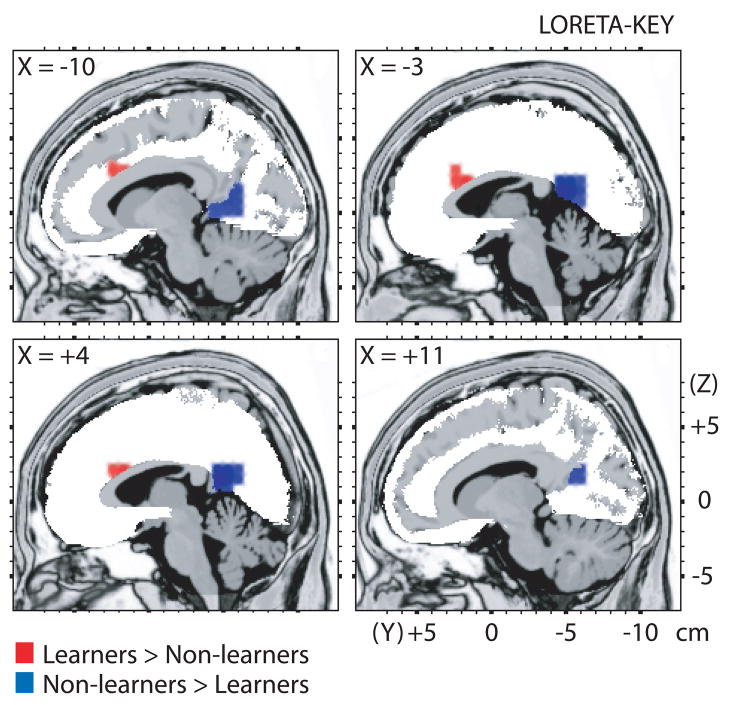
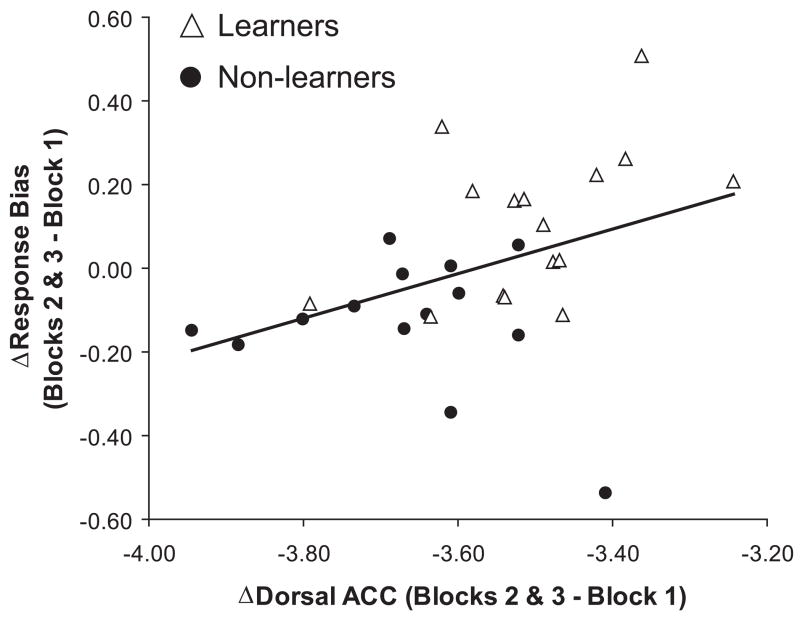
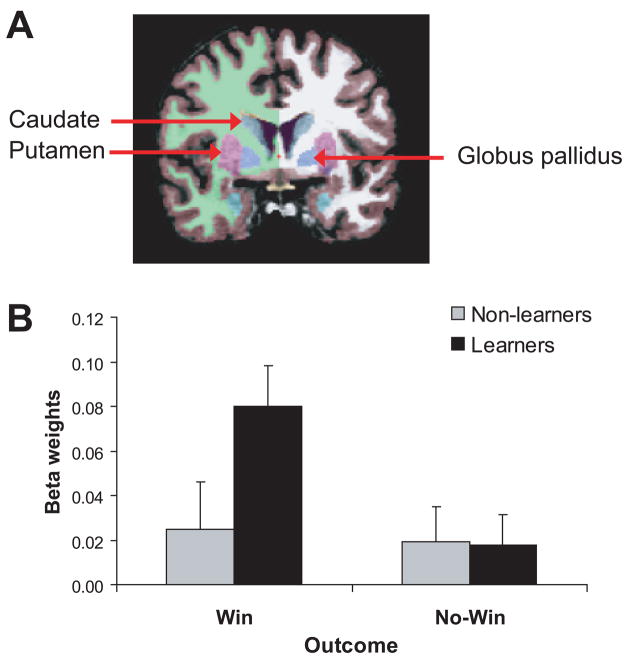
During reinforcement learning, phasic modulations of activity in midbrain dopamine neurons are conveyed to the dorsal anterior cingulate cortex (dACC) and basal ganglia (BG) and serve to guide adaptive responding. While the animal literature supports a role for the dACC in integrating reward history over time, most human electrophysiological studies of dACC function have focused on responses to single positive and negative outcomes. The present electrophysiological study investigated the role of the dACC in probabilistic reward learning in healthy subjects using a task that required integration of reinforcement history over time. We recorded the feedback-related negativity (FRN) to reward feedback in subjects who developed a response bias toward a more frequently rewarded ("rich") stimulus ("learners") versus subjects who did not ("non-learners"). Compared to non-learners, learners showed more positive (i.e., smaller) FRNs and greater dACC activation upon receiving reward for correct identification of the rich stimulus. In addition, dACC activation and a bias to select the rich stimulus were positively correlated. The same participants also completed a monetary incentive delay (MID) task administered during functional magnetic resonance imaging. Compared to non-learners, learners displayed stronger BG responses to reward in the MID task. These findings raise the possibility that learners in the probabilistic reinforcement task were characterized by stronger dACC and BG responses to rewarding outcomes. Furthermore, these results highlight the importance of the dACC to probabilistic reward learning in humans.
Figures
References
-
- Akitsuki Y, Sugiura M, Watanabe J, Yamashita K, Sassa Y, Awata S, Matsuoka H, Maeda Y, Matsue Y, Fukuda H, Kawashima R. Context-dependent cortical activation in response to financial reward and penalty: an event-related fMRI study. NeuroImage. 2003;19:1674–1685. - PubMed
-
- Beck AT, Steer RA, Brown GK. Beck Depression Inventory Manual. 2. The Psychological Corporation; San Antonio: 1996.
Publication types
MeSH terms
Grants and funding
LinkOut - more resources
Full Text Sources
