Antenatal diagnosis, prevalence and outcome of major congenital anomalies in Saudi Arabia: a hospital-based study
- PMID: 18596401
- PMCID: PMC6074342
- DOI: 10.5144/0256-4947.2008.272
Antenatal diagnosis, prevalence and outcome of major congenital anomalies in Saudi Arabia: a hospital-based study
Abstract
Background and objectives: The exact antenatal prevalence of congenital anomalies in Saudi society is unknown. Early antenatal diagnosis of congenital anomalies is crucial for early counselling, intervention and possible fetal therapy. The objective of this study was to evaluate the antenatal frequency of major congenital anomalies and malformation patterns in our hospital population and to evaluate the outcome and perinatal mortality rates for major congenital anomalies.
Patients and methods: This was a prospective study of the antenatal diagnosis of major fetal congenital anomalies conducted in the Ultrasound Department of the Women's Specialized Hospital at King Fahad Medical City from March 2005 to February 2007. During this period, 16 639 obstetrical ultrasound examinations were performed for 7762 patients and 5379 babies delivered in our institution.
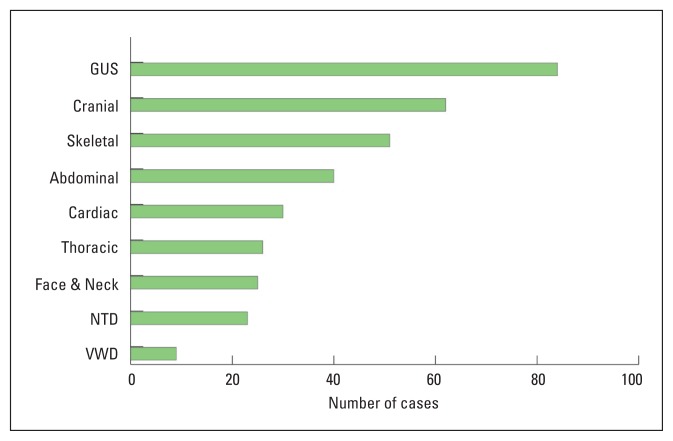
Results: We diagnosed 217 cases of fetal anomalies. The antenatal prevalence of congenital anomalies was 27.96 per 1000. The median maternal age at diagnosis was 27.5 years. The median gestational age at diagnosis was 31 weeks. Genitourinary and cranial anomalies were the commonest; for 186 patients delivered in our institution, the birth prevalence was 34.57 per 1000 births. The median gestational age at delivery was 38 weeks. The perinatal mortality rate was 34.9% (65/186), including all cases of intrauterine fetal and neonatal deaths.
Conclusion: The prevalence of major congenital anomalies in our population appears to be similar to international figures. Major congenital anomalies are a major cause of perinatal mortality.
Figures

References
-
- March of Dimes Resource Center. Birth Defects. 1998. Available from: www.modimes.org.
-
- Taffel S. Congenital anomalies and birth injuries among live births: United States, 1973--74. Vital Health Stat 21. 1978 Nov;(31):i–vi. 1–58. - PubMed
-
- Nelson K, Holmes LB. Malformations due to presumed spontaneous mutations in newborn infants. N Eng J Med. 1989 Jan 5;320(1):19–23. - PubMed
-
- Canfield MA, Honein MA, Yuskiv N, Xing J, Mai CT, Collins JS, Devine O, Petrini J, Ramadhani TA, Hobbs CA, Kirby RS. National estimates and race/ethnic-specific variation of selected birth defects in the United States, 1999–2001. Birth defects Res A Clin Mol Teratol. 2006 Nov;76(11):747–756. - PubMed
-
- Patel ZM, Adhia RA. Birth defects surveillance study, year 2005. Indian J Pediatr. 2005 Jun;72(6):489–491. - PubMed
MeSH terms
LinkOut - more resources
Full Text Sources
Medical