


Longitudinal selenium status in healthy British adults: assessment using biochemical and molecular biomarkers
- PMID: 18598587
- PMCID: PMC3137460
- DOI: 10.1017/S0007114508006831
Longitudinal selenium status in healthy British adults: assessment using biochemical and molecular biomarkers
Abstract
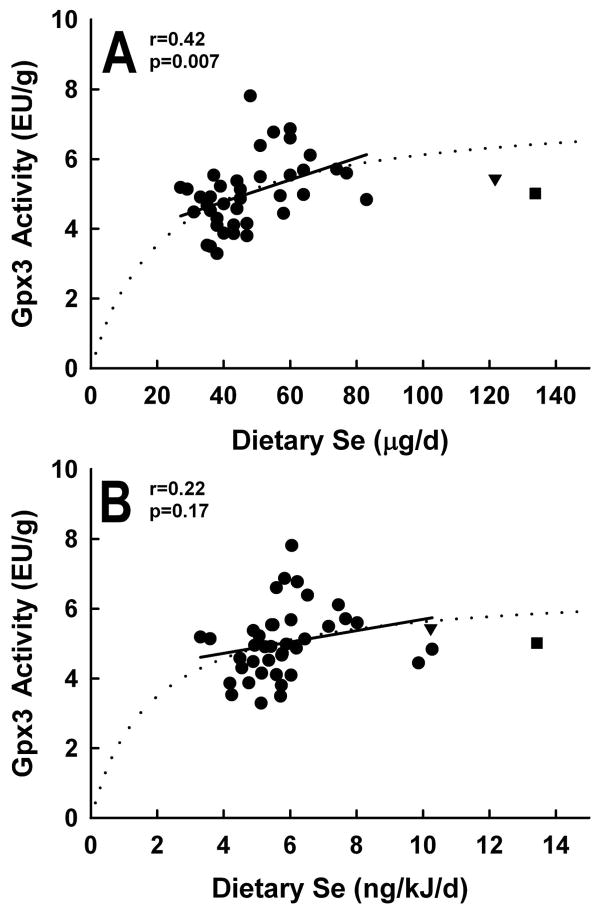
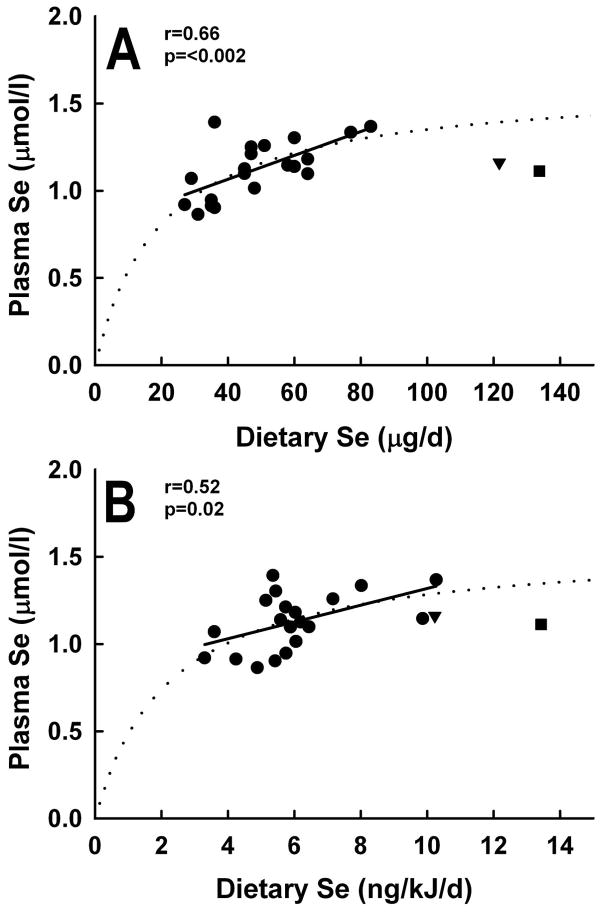
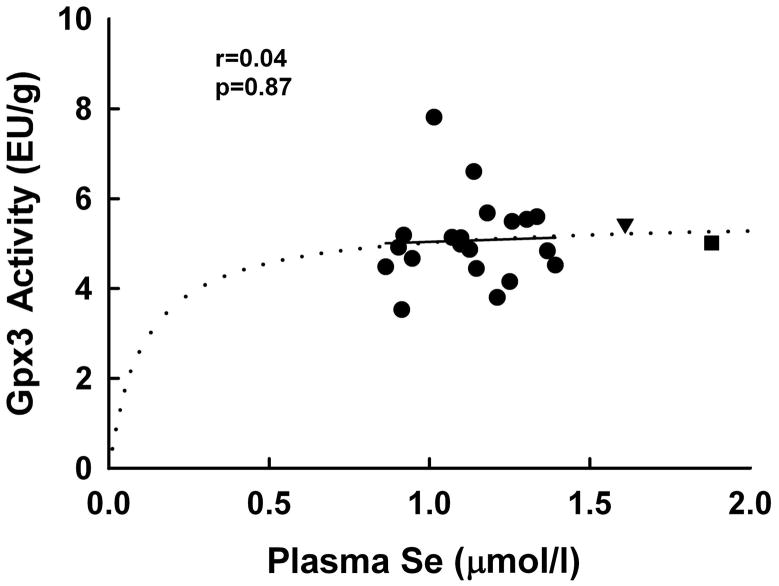
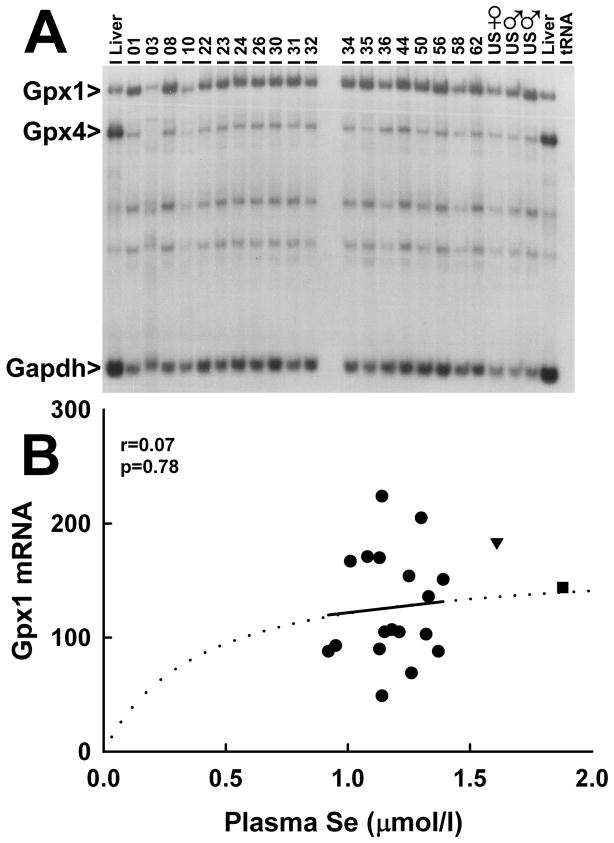
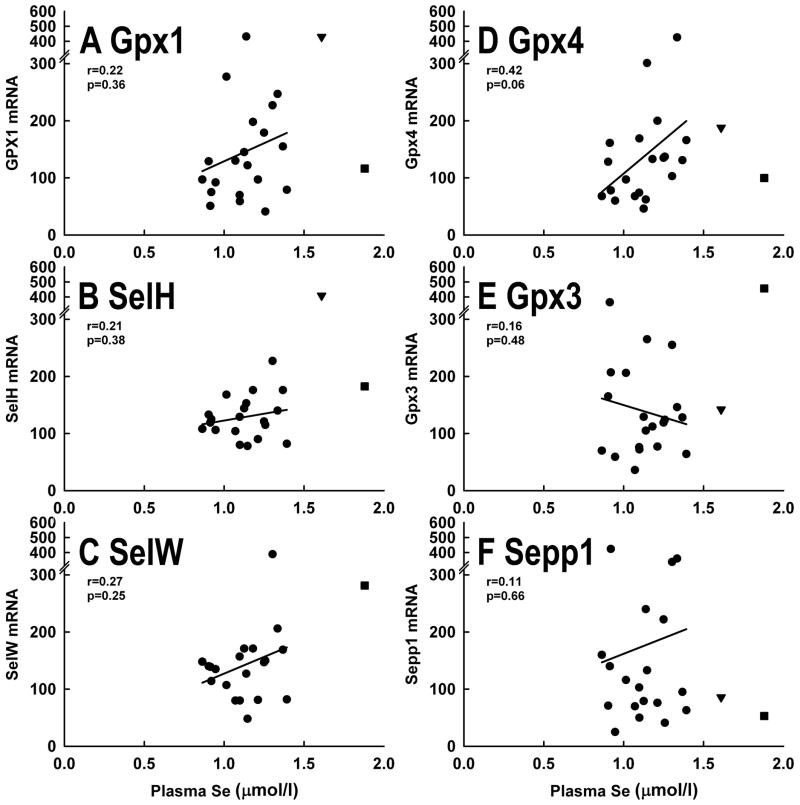
Human selenium (Se) requirements are currently based on biochemical markers of Se status. In rats, tissue glutathione peroxidase-1 (Gpx1) mRNA levels can be used effectively to determine Se requirements; blood Gpx1 mRNA levels decrease in Se-deficient rats, so molecular biology-based markers have potential for human nutrition assessment. To study the efficacy of molecular biology markers for assessing Se status in humans, we conducted a longitudinal study on 39 subjects (age 45 +/- 11) in Reading, UK. Diet diaries (5 day) and blood were obtained from each subject at 2, 8, 17 and 23 weeks, and plasma Se, glutathione peroxidase (Gpx3) enzyme activity, and selenoprotein mRNA levels were determined. There were no significant longitudinal effects on Se biomarkers. Se intake averaged 48 +/- 14 microg/d. Plasma Se concentrations averaged 1.13 +/- 0.16 micromol/l. Plasma Se v. energy-corrected Se intake (ng Se/kJ/d) was significantly correlated, but neither Gpx3 activity v. Se intake (ng Se/kJ/d) nor Gpx3 activity v. plasma Se was significantly correlated. Collectively, this indicates that subjects were on the plateaus of the response curves. Selenoprotein mRNAs were quantitated in total RNA isolated from whole blood, but mRNA levels for Gpx1, selenoprotein H, and selenoprotein W (all highly regulated by Se in rodents), as well selenoprotein P, Gpx3, and phospholipid hydroperoxide glutathione peroxidase were also not significantly correlated with plasma Se. Thus selenoprotein molecular biomarkers, as well as traditional biochemical markers, are unable to further distinguish differences in Se status in these Se replete subjects. The efficacy of molecular biomarkers to detect Se deficiency needs to be tested in Se-deficient populations.
Figures
References
-
- Clark LC, Combs GF, Turnbull BW, et al. Effects of selenium supplementation for cancer prevention in patients with carcinoma of the skin. JAMA. 1996;276:1957–1963. - PubMed
-
- Broadley MR, White PJ, Bryson RJ, et al. Biofortification of UK food crops with selenium. Proc Nutr Soc. 2006;65:169–181. - PubMed
-
- Rayman MP. The importance of selenium to human health. Lancet. 2000;356:233–241. - PubMed
-
- Elsom R, Sanderson P, Hesketh JE, Jackson MJ, Fairweather-Tait SJ, Akesson B, Handy J, Arthur JR. Functional markers of selenium status: UK Foods Standards Agency workshop report. Br J Nutr. 2006;96:980–984. - PubMed
-
- Rayman MP. Food-chain selenium and human health: emphasis on intake. Br J Nutr. 2008:1–15. - PubMed
Publication types
MeSH terms
Substances
Grants and funding
LinkOut - more resources
Full Text Sources
Miscellaneous
