


Muscle performance and ankle joint mobility in long-term patients with diabetes
- PMID: 18601723
- PMCID: PMC2453126
- DOI: 10.1186/1471-2474-9-99
Muscle performance and ankle joint mobility in long-term patients with diabetes
Abstract
Background: Long-term patients with diabetes and peripheral neuropathy show altered foot biomechanics and abnormal foot loading. This study aimed at assessing muscle performance and ankle mobility in such patients under controlled conditions.
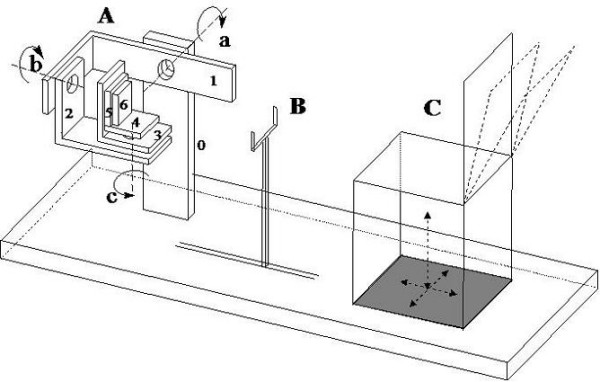
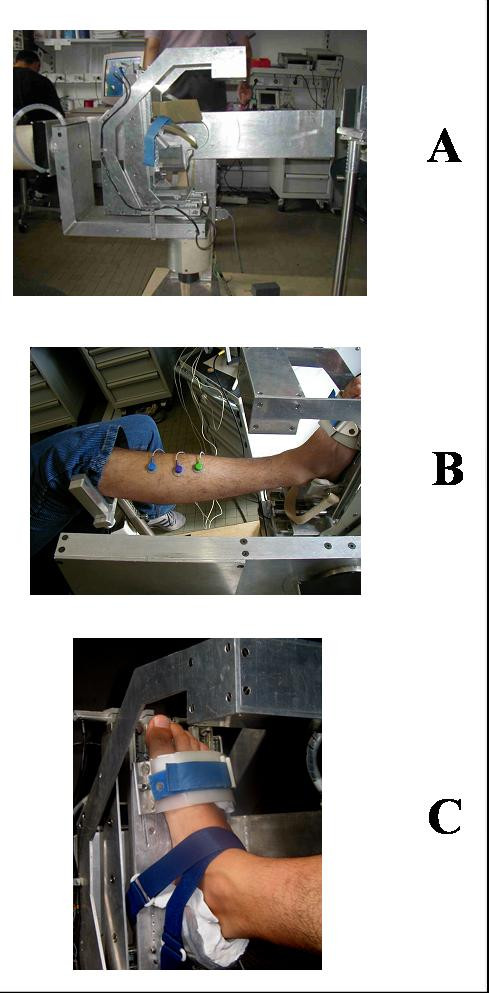
Methods: Forty six long-term diabetes patients with (DN) and without (D) peripheral neuropathy, and 21 controls (C) were examined. Lower leg muscle performance and ankle mobility were assessed by means of a dedicated equipment, with the patient seated and the examined limb unloaded. 3D active ranges of motion and moments of force were recorded, the latter during maximal isometric contractions, with the foot blocked in different positions.
Results: All patients showed reduced ankle mobility. In the sagittal and transversal planes reduction vs C was 11% and 20% for D, 20% and 21% for DN, respectively.Dorsal-flexing moments were significantly reduced in all patients and foot positions, the highest reduction being 28% for D and 37% for DN. Reductions of plantar-flexing moments were in the range 12-15% for D (only with the foot blocked in neutral and in dorsal-flexed position), and in the range 10-24% for DN. In all patients, reductions in the frontal and transversal planes ranged 14-41%.
Conclusion: The investigation revealed ankle functional impairments in patients with diabetes, with or without neuropathy, thus suggesting that other mechanisms besides neuropathy might contribute to alter foot-ankle biomechanics. Such impairments may then play a role in the development of abnormal gait and in the onset of plantar ulcers.
Figures
References
-
- Boulton AJM. Clinical presentation and management of diabetic neuropathy and foot ulceration. Diab Med. 1991;8:S52–S57. - PubMed
-
- Barbagallo M, Novo S, Licata G, Resnick LM. Diabetes, hypertension and atherosclerosis: pathophysiological role of intracellular ions. Int Angiol. 1993;12:365–370. - PubMed
MeSH terms
LinkOut - more resources
Full Text Sources
Medical
