


Effects of early intervention on EEG power and coherence in previously institutionalized children in Romania
- PMID: 18606035
- PMCID: PMC3518069
- DOI: 10.1017/S0954579408000412
Effects of early intervention on EEG power and coherence in previously institutionalized children in Romania
Abstract
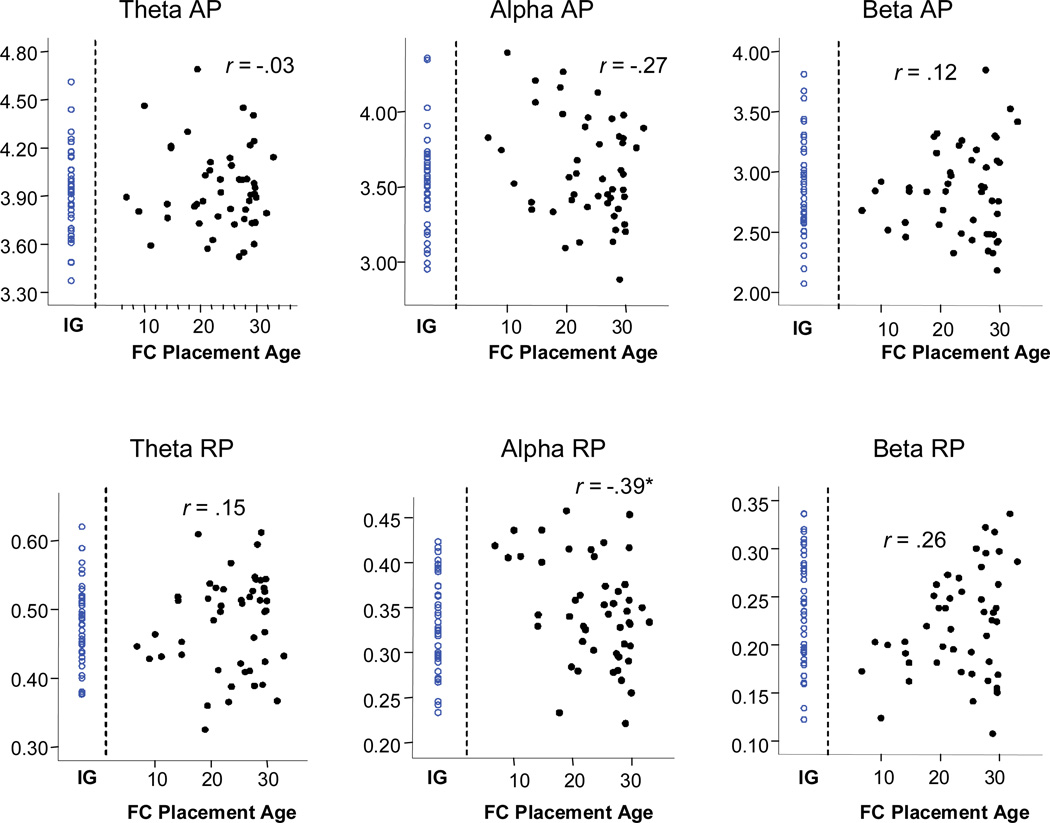
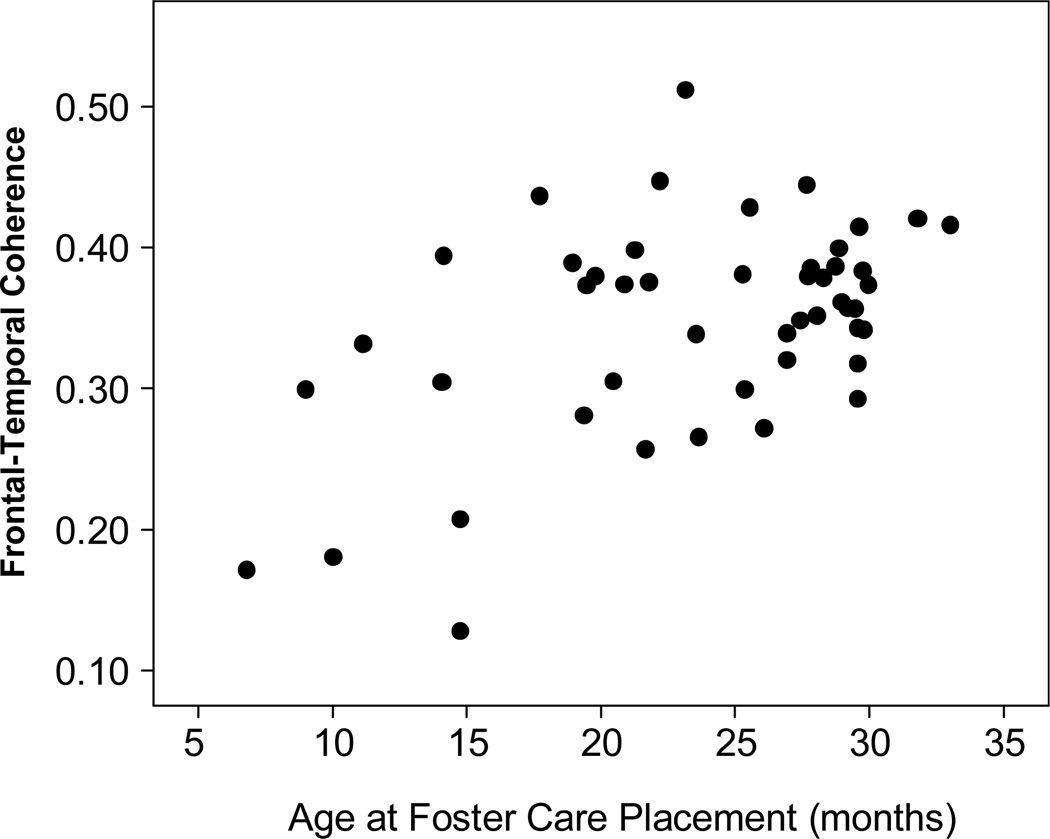
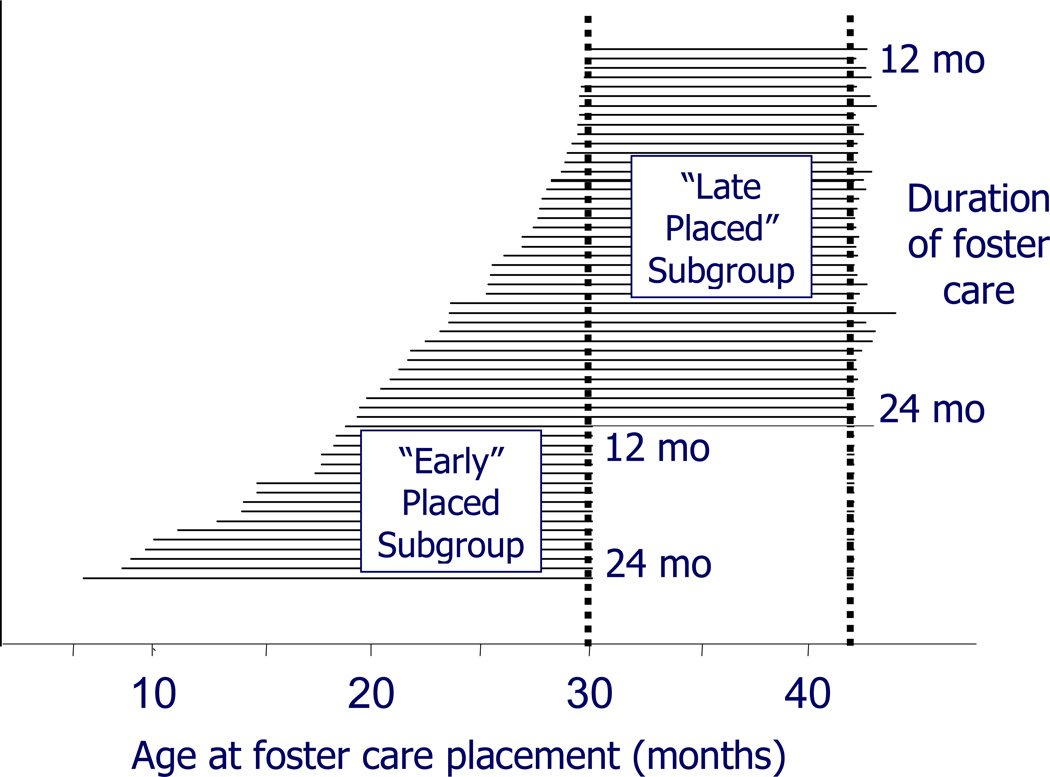
Two groups of Romanian children were compared on spectral power and coherence in the electroencephalogram (EEG) in early childhood. One group consisted of previously institutionalized children who had been randomly assigned to a foster care intervention at a mean age of 23 months. The second group had been randomized to remain in institutional care. Because of a policy of noninterference, a number of these children also experienced placement into alternative family care environments. There were minimal group differences between the foster care and institutionalized groups in EEG power and coherence across all measured frequency bands at 42 months of age. However, age at foster care placement within the foster care group was correlated with certain measures of EEG power and coherence. Earlier age at foster care placement was associated with increased alpha power and decreased short-distance EEG coherence. Further analyses separating age at placement from duration of intervention suggest that this effect may be more robust for EEG coherence than EEG band power. Supplementary analyses examined whether the EEG measures mediated changes in intellectual abilities within the foster care children, but no clear evidence of mediation was observed.
Figures
References
-
- Barry RJ, Clarke AR, Johnstone SJ. A review of electrophysiology in attention-deficit/hyperactivity disorder: I. Qualitative and quantitative electroencephalography. Clinical Neurophysiology. 2003;114:171–183. - PubMed
-
- Barry RJ, Clarke AR, McCarthy R, Selikowitz M. Adjusting EEG coherence for inter-electrode distance effects: an exploration in normal children. International Journal of Psychophysiology. 2005;55:313–321. - PubMed
-
- Bayley N. Bayley Scales of Infant Development. 2nd ed. San Antonio, TX: Psychological Corporation; 1993.
-
- Bell MA. Brain electrical activity associated with cognitive processing during a looking version of the A-Not-B task. Infancy. 2001;2:311–330. - PubMed
-
- Bell MA, Fox NA. Crawling experience is related to changes in cortical organization during infancy: Evidence from EEG coherence. Developmental Psychobiology. 1996;29:551–561. - PubMed
Publication types
MeSH terms
Grants and funding
LinkOut - more resources
Full Text Sources
