Optimization of light source parameters in the photodynamic therapy of heterogeneous prostate
- PMID: 18612172
- PMCID: PMC3276881
- DOI: 10.1088/0031-9155/53/15/007
Optimization of light source parameters in the photodynamic therapy of heterogeneous prostate
Abstract
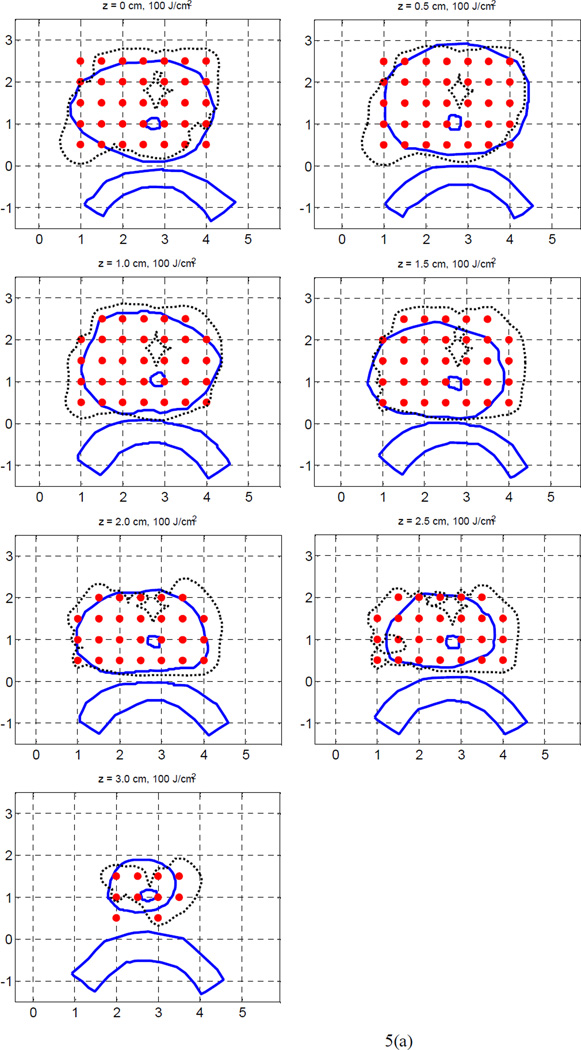
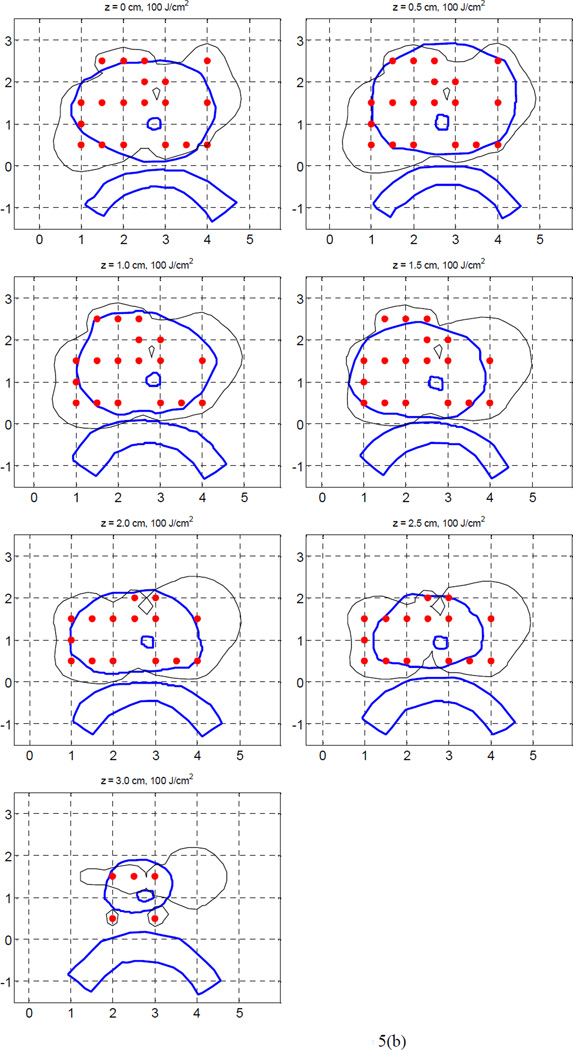
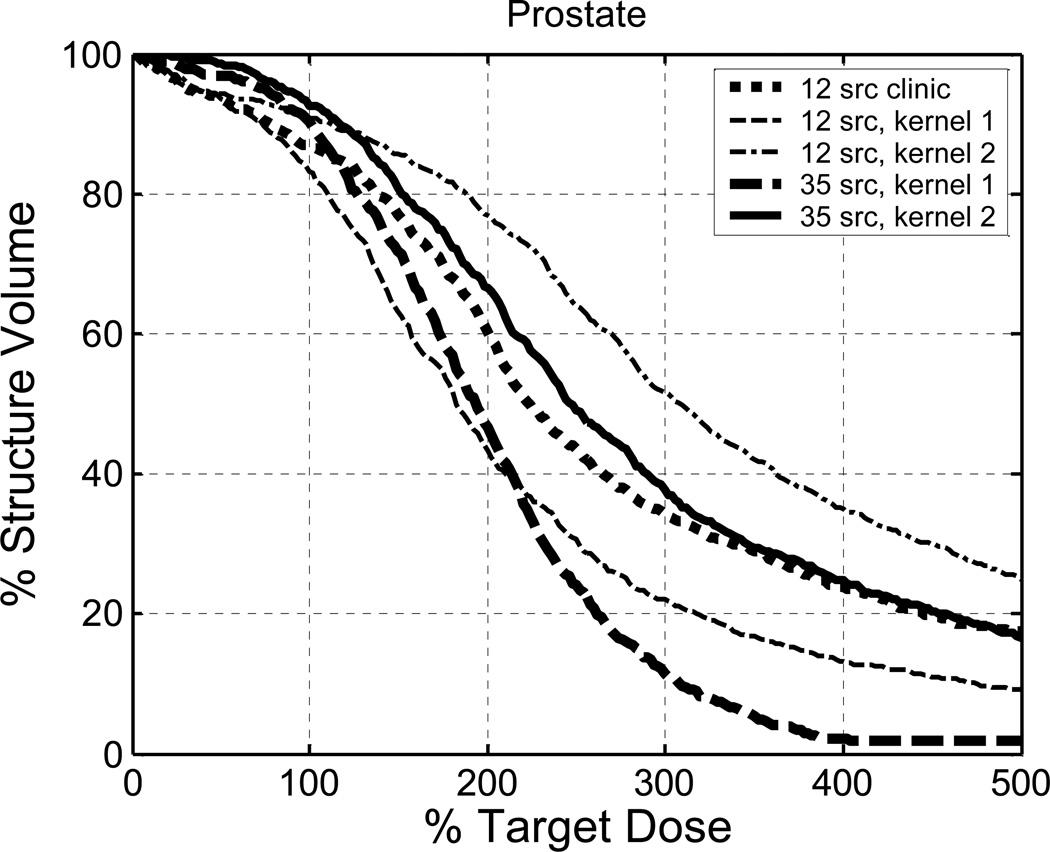
The three-dimensional (3D) heterogeneous distributions of optical properties in a patient prostate can now be measured in vivo. Such data can be used to obtain a more accurate light-fluence kernel. (For specified sources and points, the kernel gives the fluence delivered to a point by a source of unit strength.) In turn, the kernel can be used to solve the inverse problem that determines the source strengths needed to deliver a prescribed photodynamic therapy (PDT) dose (or light-fluence) distribution within the prostate (assuming uniform drug concentration). We have developed and tested computational procedures to use the new heterogeneous data to optimize delivered light-fluence. New problems arise, however, in quickly obtaining an accurate kernel following the insertion of interstitial light sources and data acquisition. (1) The light-fluence kernel must be calculated in 3D and separately for each light source, which increases kernel size. (2) An accurate kernel for light scattering in a heterogeneous medium requires ray tracing and volume partitioning, thus significant calculation time. To address these problems, two different kernels were examined and compared for speed of creation and accuracy of dose. Kernels derived more quickly involve simpler algorithms. Our goal is to achieve optimal dose planning with patient-specific heterogeneous optical data applied through accurate kernels, all within clinical times. The optimization process is restricted to accepting the given (interstitially inserted) sources, and determining the best source strengths with which to obtain a prescribed dose. The Cimmino feasibility algorithm is used for this purpose. The dose distribution and source weights obtained for each kernel are analyzed. In clinical use, optimization will also be performed prior to source insertion to obtain initial source positions, source lengths and source weights, but with the assumption of homogeneous optical properties. For this reason, we compare the results from heterogeneous optical data with those obtained from average homogeneous optical properties. The optimized treatment plans are also compared with the reference clinical plan, defined as the plan with sources of equal strength, distributed regularly in space, which delivers a mean value of prescribed fluence at detector locations within the treatment region. The study suggests that comprehensive optimization of source parameters (i.e. strengths, lengths and locations) is feasible, thus allowing acceptable dose coverage in a heterogeneous prostate PDT within the time constraints of the PDT procedure.
Figures
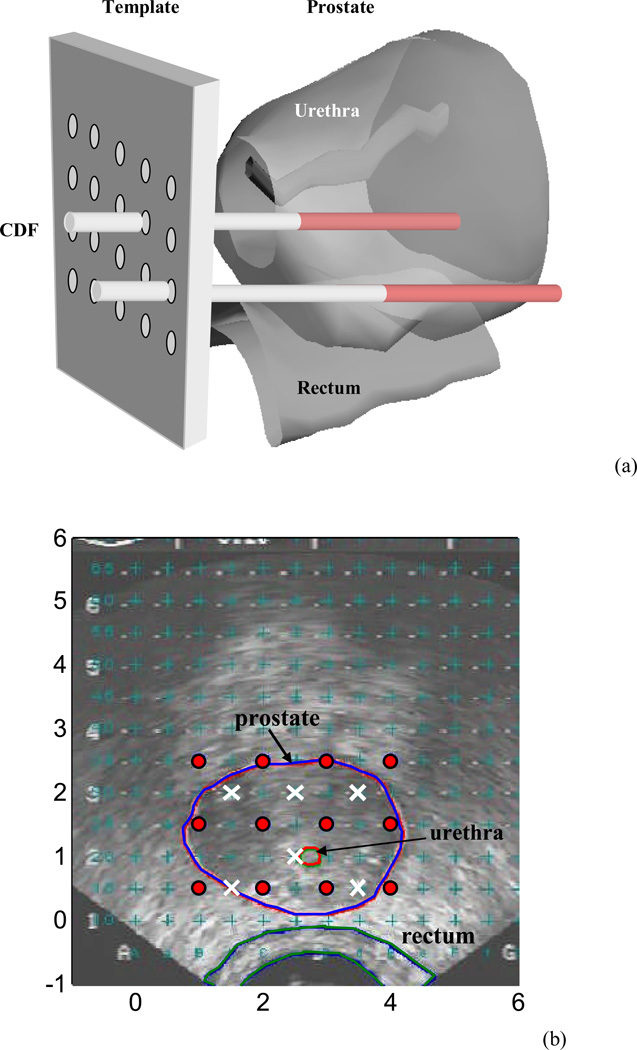
 ”).
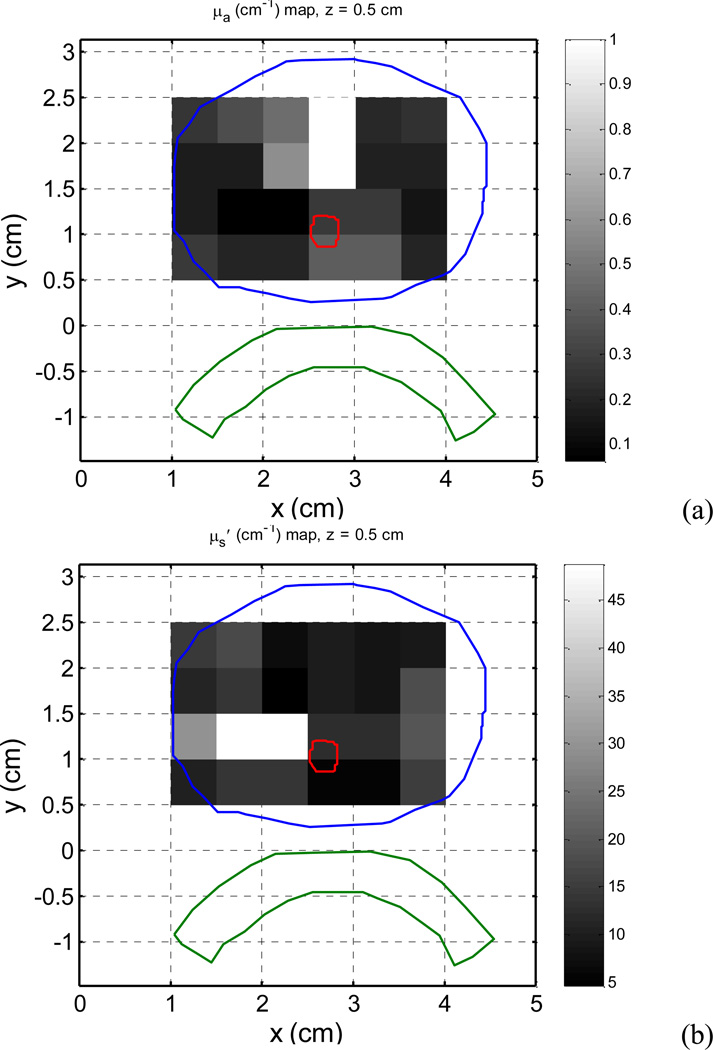
”).
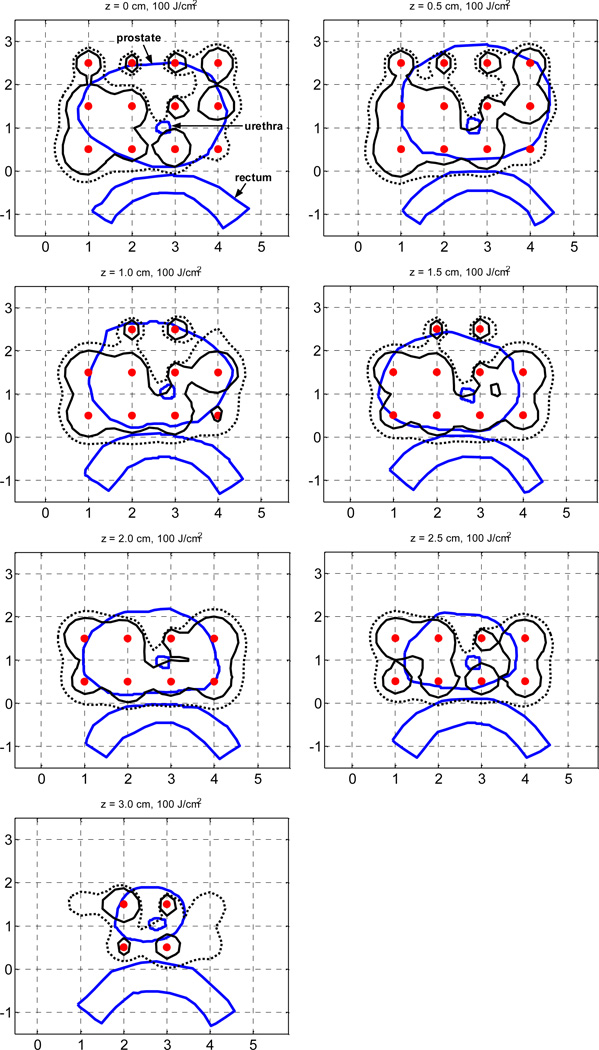
 ”.
”.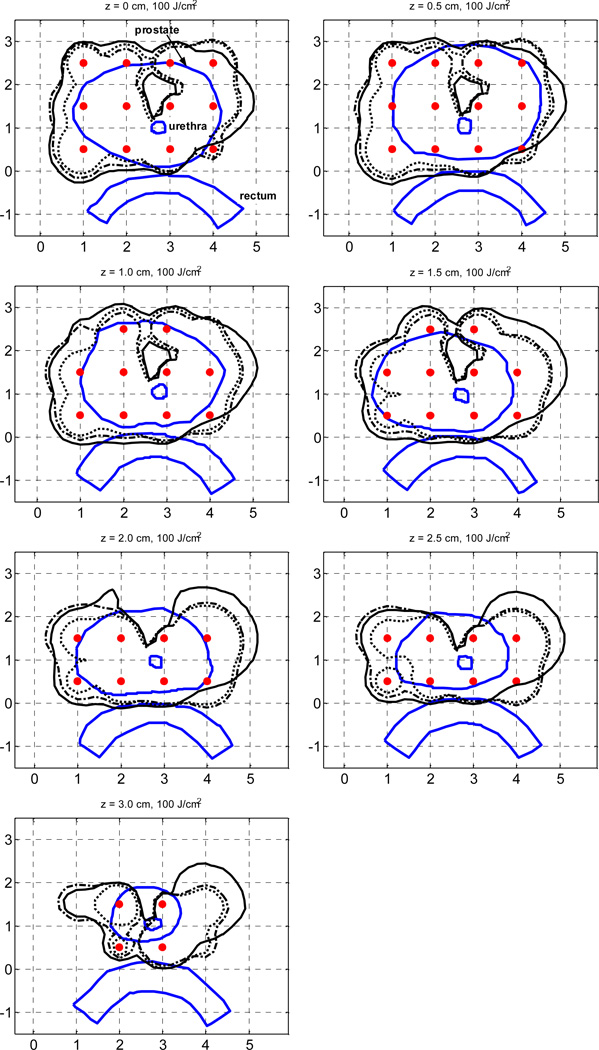 ”.
”.
References
-
- Benzi M. Technical Report TR-2004-031-A. Emory University: Department of Mathematics and Computer Science; 2004. Gianfranco Cimmino's contributions to numerical mathematics.
-
- Censor Y, Altschuler MD, Powlis W. On the use of Cimmino’s Simultaneous Projections Method for computing a solution of the Inverse Problem in Radiation Therapy Treatment Planning. J. of Inverse Problems. 1988;4:607–623.
-
- Censor Y, Goron D, Gordon R. Component averaging: An efficient iterative parallel algorithm for large and sparse unstructured problems. Parallel Computing. 2001;27:777–808.
-
- Chang SC, Buonaccorsi G, MacRobert A, Bown SG. Interstitial photodynamic therapy of the canine prostate using meso-tetra-(m-hydroxyphenyl) chlorin. Int. J. Cancer. 1996;67:555–562. - PubMed
Publication types
MeSH terms
Grants and funding
LinkOut - more resources
Full Text Sources